
Trees
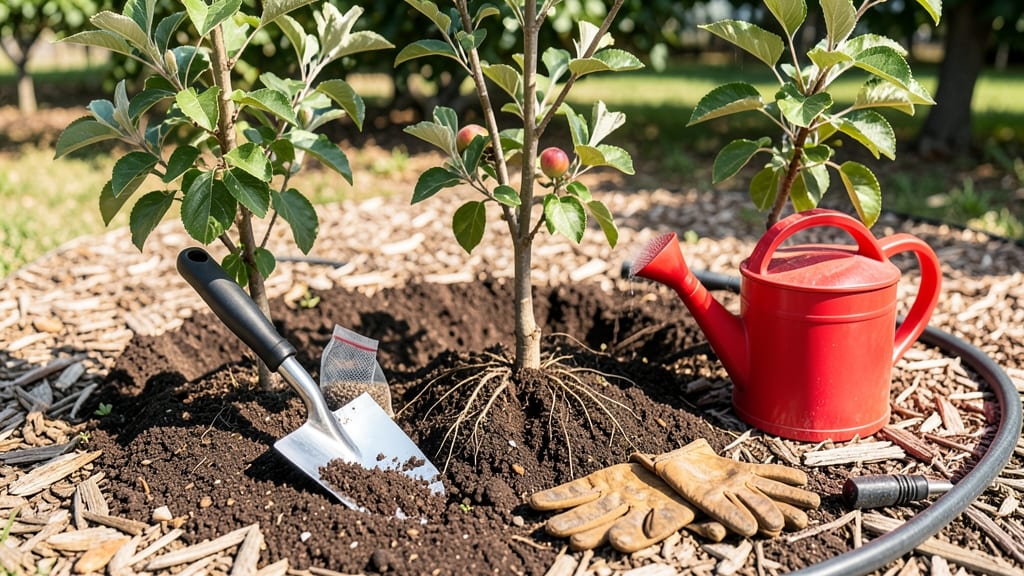
Planting fruit trees in Zone 6 at the wrong time can mean the difference between a thriving orchard and years of disappointment. The key isn't just picking the right month—it's matching your tree's chill-hour needs with your local frost dates.
I've seen firsthand how a peach tree planted too early in spring can get nipped by late frost, while the same tree thrives when set in fall. Zone 6's 6a-6b climate gives us two prime windows: early spring (March-April) or fall (September-October).
But here's what most gardeners miss: not all fruit trees are created equal. Apples need 800-1000 chill hours, while peaches demand 500-700. We'll break down exactly when to plant each type to maximize your harvest potential.
Ready to turn your backyard into a productive orchard? Let's dive into the science of timing that will have your 🍎 trees bearing fruit in no time.
Zone 6 fruit tree planting calendar by chill-hour requirements
In Zone 6, where winters dip to 0-10°F and summers average 70-80°F, timing your fruit tree planting around chill hours (cumulative hours below 45°F) makes the difference between a thriving orchard and a frost-zapped failure.
Most Zone 6 varieties need 500-1,000 chill hours, but some like peaches demand 800+ hours, while apples often thrive with 300-600 hours. Planting too early risks root damage from late frosts, while waiting too long delays root establishment before winter dormancy.
Your last frost date (typically mid-April in Zone 6) and first frost (around mid-October) bookend the ideal windows: early spring (March-April) or fall (September-October). Spring planting gives roots 6-8 weeks to establish before summer heat, while fall planting leverages cool soil temperatures and reduced transplant shock.
Below, I’ve mapped out the optimal transplant windows for 10+ popular fruit trees, including dormancy needs and frost-risk periods.
🌱 Pro Tip: Always check your local chill-hour zone (Zone 6a vs. 6b) and adjust dates by 1-2 weeks if your microclimate runs warmer (e.g., urban areas) or cooler (e.g., valleys). Use USDA chill-hour maps or your local Cooperative Extension Service for precise data.
For spring planting, aim to get your apple and pear
How to calculate your local chill hours and Adjust planting dates
Understanding your local chill hours is the key to selecting the right fruit tree varieties for Zone 6. Chill hours measure the number of hours below 45°F (7°C) during winter dormancy, and most fruit trees need between 200-1,000 hours to break dormancy and bloom properly.
Without enough chill hours, trees may fail to produce fruit or bloom erratically.
Start by checking the USDA chill-hour map for your specific location in Zone 6. For example, western Zone 6 (like parts of Colorado) often has 800-1,000 chill hours, while eastern Zone 6 (like Pennsylvania) typically ranges from 400-600 hours.
This difference explains why a peach tree (which needs 500+ chill hours) thrives in the east but may struggle in the west.
🌱
🔢 How to Calculate Your Local Chill Hours
- 📊 Use a weather station or online tool like NOAA Climate Data to gather hourly temperature readings from November 1 to March 31.
- 🌡️ Count hours below 45°F (7°C) during this period. Many weather apps or agricultural extensions offer chill-hour calculators to automate this.
- 📉 Adjust for microclimates: Slopes, urban areas, and bodies of water can add or subtract 100-300 chill hours. For example, a south-facing slope may receive fewer chill hours than a north-facing valley.
- 📅 Compare with tree requirements: Match your total to the chill-hour needs of your desired fruit tree. For instance, apples need 400-800 hours, while cherries require 600-1,000 hours.
- ⏰ Adjust planting dates if your chill hours are borderline. For example, if you’re in a 500-chill-hour zone and want to plant a peach tree (which needs 500+ hours), opt for a low-chill variety like 'Redhaven' or plant in a cooler microclimate.
Once you’ve calculated your chill hours, use them to fine-tune your planting window. For example, if your area typically gets 600 chill hours, avoid planting stone fruits like plums or cherries (which need 800+ hours) unless you’re in a cooler pocket of Zone 6.
Instead, focus on apples, pears, or low-chill peaches that align with your local climate.
Microclimates can also shift your planting timeline. If you live near a large body of water or in an urban heat island, your last frost date might be 2-3 weeks later than the average for Zone 6.
Use a local weather station or ask your county extension office for precise data. For instance, Chicago’s last frost often lands in mid-April, while Denver’s can be as late as May 1.
For container-grown trees, you can plant 1-2 weeks earlier than bare-root trees because their roots are already established. However, always wait until the soil temperature reaches at least 45°F (7°C) to avoid root shock. Use a soil thermometer to monitor conditions, especially in early spring when temperatures fluctuate wildly.
Finally, keep a planting journal to track how your trees perform over time. Note any adjustments you make to dates based on weather patterns, and share your findings with local gardening groups.
This community knowledge can help others in your area avoid common mistakes and achieve healthier, more productive orchards.
✂️