
Trees
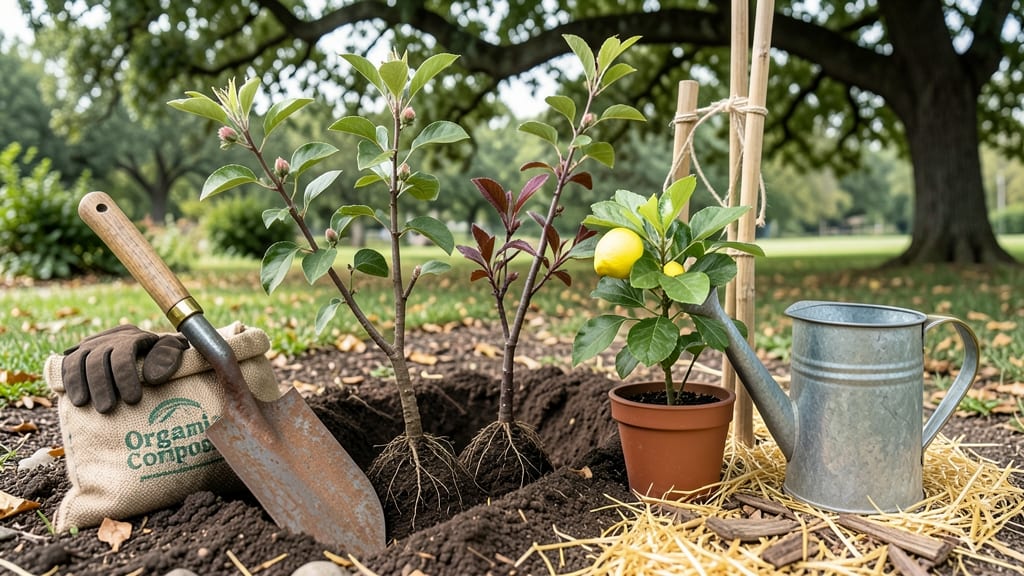
Planting a fruit tree 🌳 in South Carolina can feel like a gamble if you don’t nail the timing—get it wrong, and your $100+ investment could wilt before it even takes root.
The key isn’t just waiting for spring; it’s understanding chill-hour needs and your local frost dates to give your tree the best shot at thriving.
Most gardeners in zones 7b-9a reach for their shovels in early spring, but that’s not always the smartest move. Late winter (February-March) is actually the sweet spot for most varieties, letting roots establish before the heat of summer arrives.
But if you’re planting peaches or apples, you’ll need to work faster—these trees demand 300-900 chill hours, and waiting too long risks stunted growth.
Here’s what you’ll discover: the exact planting windows for your region, how to prep soil for SC’s humid climate, and which fruit trees actually thrive here without needing a mountain’s worth of winter chill.
Whether you’re eyeing a dwarf fig for your backyard or a full-size peach tree for your orchard, timing makes all the difference.
Let’s break it down by variety so you can plant with confidence—and start harvesting in as little as 2 years. Ready to turn your yard into a fruit-bearing paradise? The clock’s ticking.
South Carolina fruit tree planting timeline by chill-hours and frost dates
Timing your fruit tree planting in South Carolina depends on two critical factors: chill-hours (the number of hours below 45°F needed for dormancy) and local frost dates. The Upstate (Zone 7b) averages 500-900 chill-hours, while the Lowcountry (Zone 8a-9a) sees 300-500 chill-hours.
Planting outside these windows risks poor root growth or frost damage. Let’s break down the best times for each region.
For Upstate SC, the ideal window spans late winter to early spring (February–March), aligning with dormancy periods. In the Midlands, extend this to March–April to avoid late frosts. The Lowcountry’s warmer climate allows for fall planting (October–November) or early spring (February–March), but avoid summer heat stress.
Always check your last frost date—Upstate averages March 15, while Charleston’s Lowcountry sees frost-free conditions by February 15.
Here’s how chill-hour requirements influence your choices. Trees needing 900+ chill-hours (like peaches or apples) thrive in the Upstate but struggle in the Lowcountry. Opt for low-chill varieties (300-500 hours), such as figs, persimmons, or loquats, for warmer zones.
Matching variety to climate ensures blooming success and fruit production.
⚠️ CRITICAL NOTE: Bare-root trees (sold dormant) plant best in winter (December–February), while container-grown trees can go in year-round—except during extreme heat. Always dig a test hole first to check soil drainage, especially in coastal areas where poor drainage can drown roots.
Fall planting (October–November) works best for container-grown trees in the Lowcountry, allowing roots to establish before summer heat. In contrast, bare-root trees planted in winter (December–February) benefit from cooler temps and spring rains.
For Upstate growers, early spring (February–March) aligns with bud break, ensuring optimal root growth before summer’s heat.
Soil prep is non-negotiable. South Carolina’s clay-heavy soils drain poorly, so amend with compost or sand to improve aeration. Test your soil’s pH—most fruit trees prefer 6.0–7.0. Dig a hole twice as wide as the root ball but no deeper.
Place the tree so the graft union sits 2–3 inches above soil level to prevent rot. Backfill with native soil (no amendments) to avoid suffocating roots.
After planting, mulch heavily (3–4 inches of wood chips) to retain moisture and regulate soil temps. Water deeply twice weekly for the first month, then taper to once weekly once established.
Avoid overhead watering to prevent fungal diseases like peach leaf curl. In the Upstate, young trees may need winter protection (burlap wraps) if temps drop below 10°F.
Monitor your tree’s progress. New growth in spring signals successful root establishment. If leaves appear yellow or wilted, it may indicate overwatering or poor drainage. Adjust care accordingly. For Lowcountry citrus, protect young trees from unexpected frosts with frost cloth or row covers.
With the right timing and care, your fruit tree will thrive—and you’ll enjoy homegrown harvests for decades.
🌳💧✂️
Best fruit tree varieties for South Carolina: chill-hour requirements and planting tips
South Carolina’s diverse climate—from the Upstate’s cooler zones to the Lowcountry’s subtropical heat—means you can grow a wide range of fruit trees if you pick the right varieties. Chill-hour requirements (the number of hours below 45°F needed to set fruit) are critical here, as SC ranges from 300 to 900+ hours.
For example, peaches and apples thrive in the Upstate, while figs and loquats flourish in the coast.
Choosing the wrong variety can mean no fruit production or stunted growth. Low-chill varieties (under 300 hours) are perfect for the Lowcountry and Grand Strand, while moderate-chill (300-600 hours) options work for the Midlands and Pee Dee.
Always match your USDA zone (7b-9a) with the tree’s needs—this ensures better survival and harvests.
🌱 Below is a curated list of top-performing fruit trees for SC, organized by chill-hour needs, heat tolerance, and planting tips.
| Variety | Chill-Hours | Best SC Regions | Planting Time | Heat Tolerance |
|---|---|---|---|---|
| Peach (e.g., Redhaven) | 500-800 | Upstate, Midlands | Late winter (Feb-March) | Moderate |
| Plum (e.g., Santa Rosa) | 300-500 | Midlands, Pee Dee | Early spring (March) | High |
| Fig (e.g., Celeste) | 0-200 | Lowcountry, Grand Strand | Fall or early spring | Very High |
| Persimmon (e.g., Fuyu) | 200-400 | Midlands, Upstate | Late winter (Feb) | Moderate |
| Loquat (e.g., Large Red) | 0-100 | Lowcountry, Coastal | Fall or early spring | Very High |
For Upstate gardeners (zones 7b-8a), focus on peaches, apples, and pears, which need 500+ chill hours. In the Midlands (zone 8a), plums and persimmons are ideal with 300-500 hours.
Meanwhile, Lowcountry growers (zone 9a) should prioritize figs, loquats, and citrus relatives like poncirus trifoliata (hardy orange), which thrive with 0-200 chill hours.
When planting, always dig a hole twice as wide as the root ball and amend the soil with compost or organic matter to improve drainage—a must in SC’s clay-heavy soils.
Space dwarf varieties 8-12 feet apart and standard trees 20-30 feet apart to allow airflow and reduce disease risk. Mulch heavily (3-4 inches) to retain moisture and regulate soil temperature, especially in the hot, humid summers.
Water deeply once a week for the first year, focusing on the root zone rather than the leaves. Avoid overhead watering to prevent fungal diseases like peach leaf curl, common in SC’s wet springs.
After establishment, most fruit trees are drought-tolerant, but consistent moisture is key during flowering and fruiting seasons.
Finally, consider season extension techniques like row covers for early blooms or shade cloth in the Lowcountry to protect fruit from sun scald. With the right variety and care, your SC fruit trees will reward you with abundant harvests for decades! 🍑🌳