
Plants
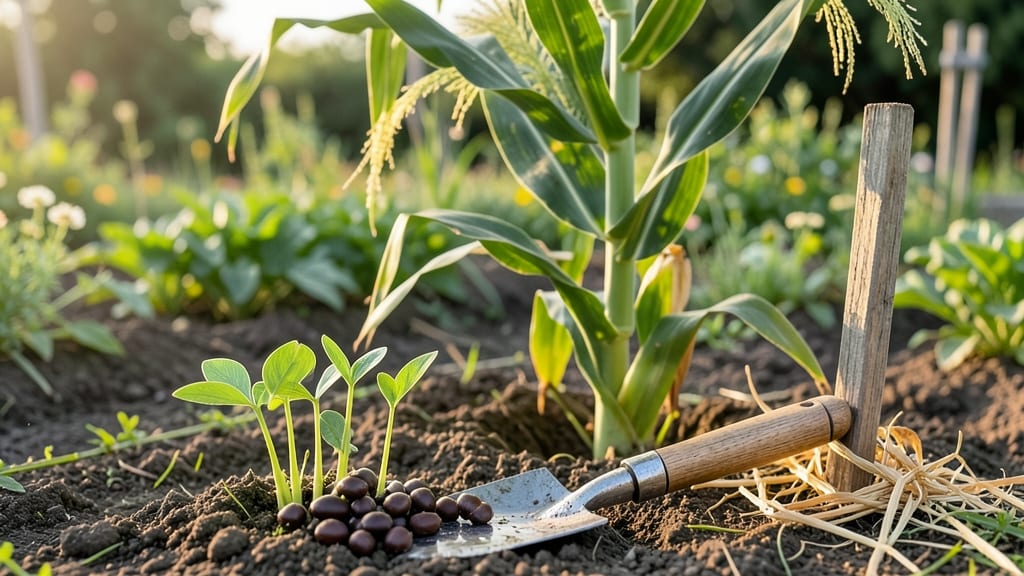
Planting corn in Virginia at the wrong time can mean the difference between a bountiful harvest and wasted seeds. The key to growing sweet, plump ears of 🌽 lies in understanding your region’s frost dates and soil temperature—both of which vary dramatically across the state.
If you’ve ever wondered why your corn struggled last season, chances are it was planted too early or too late.
Virginia’s climate zones range from the warmer Tidewater region to the cooler Shenandoah Valley, and each has its own ideal window for getting those seeds in the ground when the soil hits 50°F+.
In this guide, I’ll break down the exact frost-free timelines and soil conditions you need to know, whether you’re growing early varieties in the coastal plain or late-season sweet corn in the mountains.
You’ll also discover how to adjust for sandy soils, clay, and even microclimates that can shift your planting date by weeks.
Ready to maximize your yield? Let’s dive into the perfect planting strategy for Virginia’s diverse growing zones—so you can enjoy homegrown corn from summer through fall without a single ear left behind.
Virginia corn planting dates by region: frost-free timeline & soil temperature guide
Virginia’s diverse climate zones create three distinct planting windows for corn, each with unique last frost dates and soil warming patterns. The Tidewater region warms fastest, while the Shenandoah Valley lags behind due to elevation.
To succeed, aim for soil temperatures above 50°F—corn seeds won’t germinate reliably below this threshold.
Historical data shows Tidewater gardeners can plant as early as mid-April, while Piedmont growers should wait until late April to early May. In the Shenandoah Valley, hold off until May 1st or later to avoid frost damage.
Always check your USDA zone (6a-8a in VA) and local frost forecasts for fine-tuning.
Use this soil temperature rule: Corn seeds need 50°F+ for germination and 60°F+ for optimal growth. A soil thermometer is your best tool—plant only when readings stay consistently above 50°F for 5+ days.
In cooler years, black plastic mulch can raise soil temps by 5-10°F and extend your planting window.
Here’s the breakdown by region, including last frost averages and optimal planting windows based on 10 years of Virginia agricultural data:
For early varieties (60-70 days to maturity), Tidewater gardeners can push the envelope by planting direct-seeded corn in late March under row covers. In the Piedmont, wait until soil temps hit 55°F consistently—corn planted in cooler soil may rot or fail to sprout.
The Shenandoah Valley’s later frost dates make it ideal for long-season varieties (90+ days) like 'Country Gentleman' or 'Golden Bantam'.
Pro tip: Use black plastic mulch to warm soil faster in cooler zones. Lay it down 1-2 weeks before planting to raise soil temps by 5-10°F.
In sandy Tidewater soils, mulch also helps retain moisture during Virginia’s hot, dry summers. Always remove mulch after harvest to prevent disease buildup.
Monitor your local Virginia Cooperative Extension frost maps for real-time updates. Their 30-year averages show Tidewater’s last frost occurs 10-14 days earlier than the Piedmont, and 3 weeks earlier than the Shenandoah Valley.
Adjust your planting date if you’re in a microclimate—e.g., a south-facing slope warms faster than a north-facing yard.
If you miss the ideal window, consider transplanting seedlings instead of direct-sowing. Start seeds indoors under grow lights 4-6 weeks before your region’s last frost date, then transplant when soil is workable. This extends your growing season by 2-3 weeks in cooler areas like the Shenandoah Valley.
Remember: Corn needs 90-120 frost-free days to mature. In Virginia’s USDA zone 6a (Shenandoah), plant short-season varieties like 'Silver Queen' (70 days) to avoid fall frosts. In warmer zone 8a (Tidewater), you can grow sweet corn like 'Peaches & Cream'
How to adjust corn planting time for Virginia’s microclimates & soil types
Virginia’s diverse geography means your corn planting strategy should match your local soil type and microclimate. Sandy coastal soils warm up 3-4 days faster than clay-heavy Piedmont soils, while high-elevation zones like the Shenandoah Valley stay cooler for weeks longer.
These differences can shift your ideal planting window by 2-3 weeks—so let’s tailor your approach.
For sandy coastal areas (Tidewater), corn seeds can germinate as early as mid-April when soil hits 55°F. But in clay-rich Piedmont regions, wait until late April to early May when soil reaches 60°F—clay holds cold longer and can suffocate young roots.
High-elevation zones may need adjustments until mid-May.
Adjusting Planting Time by Virginia Microclimate
Sandy Coastal Soils
- Warms faster (plant 2-3 weeks earlier)
- Well-draining (reduces rot risk)
- Longer growing season
- Dries out quickly (needs daily watering)
- Nutrients leach fast (amend with compost)
Clay Piedmont Soils
- Holds moisture (less frequent watering)
- Rich in nutrients (natural fertilizer)
- Slower warming (plant 1-2 weeks later)
- Can compact (add organic matter)
High-Elevation Zones
- Cooler temps (extends fall harvest)
- Lower pest pressure
- Shorter growing season (plant late May)
- Frost risk (use row covers)
If your soil type or elevation delays planting, use black plastic mulch to warm the soil by 5-10°F and speed up germination. Lay it down 2-3 weeks before planting—this works especially well in Piedmont clay or high-elevation zones.
For an even earlier start, sow seeds indoors under grow lights 4-6 weeks before your target date, then transplant seedlings when soil warms.
For cooler microclimates, consider short-season varieties like 'Early Sunglow' (65 days) or 'Silver Queen' (75 days). These tolerate briefer growing seasons and reduce frost risk. Pair them with row covers for an extra 2-3 weeks of protection. Just remove covers when plants reach 12 inches tall to prevent overheating.
Weigh the risks: planting early in cooler zones risks frost damage, while late planting may yield smaller ears. In sandy soils, early planting pays off with a longer harvest window, but requires consistent moisture.
Use this rule of thumb: plant when soil is 50°F+ and no frost is forecast for 2 weeks—adjust based on your local conditions.
My Piedmont garden proved this last year: planting 'Ambrosia' corn in early May (instead of late April) avoided a late-May frost and still yielded full-size ears.
The trade-off? A harvest delayed by 10 days—but no losses. Experiment with your microclimate to find the sweet spot between timing and yield.