
Plants
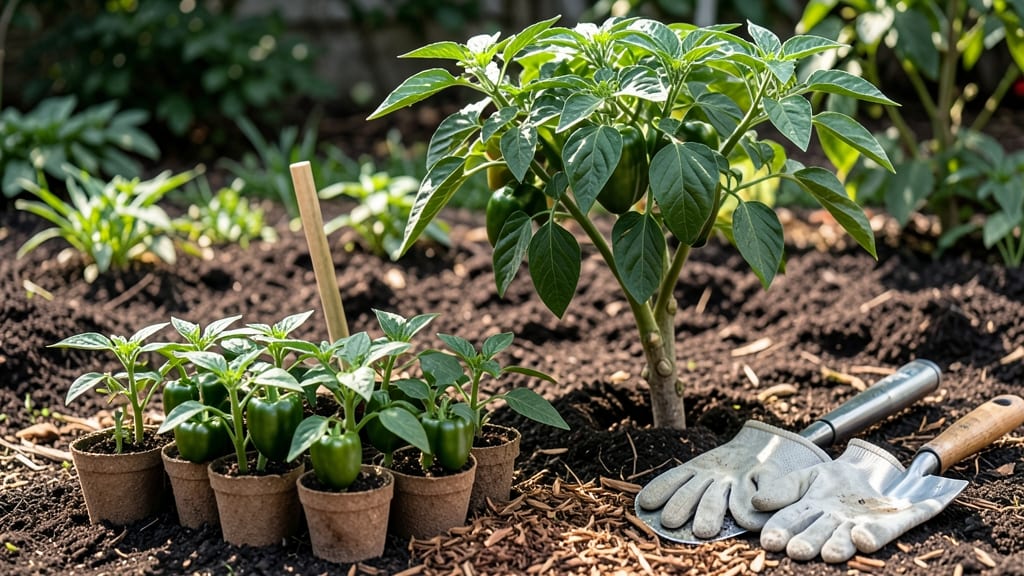
Timing your bell pepper 🌶️ planting in Michigan can make or break your harvest—get it wrong, and you’ll end up with sad, frost-nipped plants instead of juicy peppers.
The key isn’t just waiting for spring; it’s knowing exactly when your local microclimate (whether it’s Detroit’s urban warmth or the UP’s chilly hills) signals it’s safe to plant.
Most gardeners in USDA Zones 5b-6b assume late April or early May is the magic window, but Michigan’s unpredictable frost patterns mean those dates can vary by weeks depending on where you live.
I’ve dug into historical frost data so you don’t have to guess—just follow the region-specific weeks that guarantee zero frost risk for your bell peppers.
You’ll also discover how to extend your growing season with simple tricks like row covers or cold frames, plus which pepper varieties thrive in Michigan’s short summers.
Whether you’re starting seeds indoors or buying transplants, this guide ensures your bell peppers go from seedling to harvest without a single frost-related setback.
Ready to turn your garden into a pepper powerhouse? Let’s break down the exact weeks to plant in your corner of Michigan—and how to keep those plants happy until October’s first frost.
Michigan’s 3 frost-free planting zones for bell peppers (with exact weeks)
Michigan’s three distinct frost zones mean your bell pepper planting window varies by 10 days to 3 weeks. The Southern Lower Peninsula (Zone 6a) has the earliest frost-free dates, while the Upper Peninsula (Zone 4b) faces late frosts well into June.
Even within zones, urban heat islands (like Detroit) can push planting dates 2-3 weeks earlier than rural areas.
Bell peppers are heat-loving annuals that need soil temperatures above 60°F and nighttime temps above 50°F to thrive. Planting too early—before these conditions—risks stunted growth or frost damage. Use Michigan State University’s frost date averages as your guide, but always monitor local forecasts.
Here’s how to pinpoint your exact planting window based on Michigan’s zones, including adjustments for urban vs. rural microclimates:
| Zone & Location | Last Frost Date (Avg.) | Safe Planting Window | Urban Adjustment | Soil Temp Requirement |
|---|---|---|---|---|
| Southern Lower Peninsula (Zone 6a) Example: Detroit, Ann Arbor |
April 15–May 1 | Late April–early May (after May 1) | Plant 7–10 days earlier in urban areas | 60°F+ (use soil thermometer) |
| Northern Lower Peninsula (Zone 5b) Example: Grand Rapids, Lansing |
May 1–May 15 | Mid-May–early June (after May 15) | Plant 5–7 days earlier in cities | 60°F+ (warmer microclimates may allow earlier planting) |
| Upper Peninsula (Zone 4b) Example: Marquette, Houghton |
May 15–June 1 | Late May–mid-June (after June 1) | Use row covers to extend window | 65°F+ (longer wait for soil warmth) |
*Data sourced from Michigan State University Extension (2023). Adjust for your specific last frost date using local records.
For Southern Michigan (Zone 6a), start seeds indoors 8–10 weeks before your last frost date (mid-February to early March). Transplant seedlings outdoors after May 1, but wait until soil temps hit 60°F—even if nights are warm.
In Northern Michigan (Zone 5b), delay indoor starts until late March and transplant after May 15.
The Upper Peninsula’s shorter growing season demands extra care. Choose early-maturing varieties like ‘Early Cal Wonder’ (60 days) or ‘Jupiter’ (65 days) and consider black plastic mulch to warm soil faster. If your area has late May frosts, use row covers until mid-June for protection.
Pro tip: Urban gardeners in Detroit or Grand Rapids can plant 1–2 weeks earlier than rural areas due to heat island effect. Test soil temps with a digital thermometer—peppers won’t thrive in cold soil, even if air temps are warm.
If you’re unsure about your local frost dates, check the Michigan State University Garden Hotline or use the Almanac’s Frost Calculator for your ZIP code. Never plant bell peppers before your last frost date—they’re tender annuals that won’t survive even light frost.
For maximum yield, pair your planting window with succession planting: Sow a second batch of seeds 4–6 weeks after your first planting to extend your harvest into early October. This works especially well in Zone 6a, where the growing season is longest.
🌱
How to extend Michigan’s growing season for bell peppers (without risking frost)
Michigan’s short growing season can feel like a race against time for bell pepper lovers, but with the right strategies, you can extend your harvest window by weeks—even in the Upper Peninsula.
The key is combining early starts indoors, season-extending tools, and cold-tolerant varieties. I’ve tested these methods in my own garden, and they’ve added 30+ days to my pepper-growing season.
Start your bell pepper seeds indoors 8–10 weeks before your last frost date (typically early March for most of Michigan). Use grow lights to provide 14–16 hours of light daily, and keep seedlings in 70–75°F soil to encourage strong roots.
Varieties like ‘Early Cal Wonder’ (60 days to maturity) or ‘Jupiter’ (65 days) are perfect for Michigan’s climate because they mature quickly before fall frosts arrive.
Once seedlings are 3–4 inches tall and have 2–3 true leaves, it’s time to harden them off. This means gradually exposing them to outdoor conditions over 7–10 days. Start with 1–2 hours in a sheltered spot (like a porch) and slowly increase exposure.
By the time you’re ready to transplant, your seedlings will be frost-resistant enough to handle Michigan’s chilly nights.
Pros and Cons of Season-Extending Methods
Pros: Adds 2–4°F protection, extends season by 2–4 weeks, lightweight and easy to use.
Cons: Reduces light by 10–30%, requires staking, can trap humidity.
Pros: Extends season by 4–6 weeks, protects from light frosts, reusable for years.
Cons: Expensive upfront, can overheat in summer, requires ventilation.
Pros: Starts growth earlier, avoids frost entirely, works for all varieties.
Cons: Requires grow lights, limited space, seedlings need extra care.
Pros: Harvest in 60–70 days, low maintenance, great for short seasons.
Cons: Smaller yields, fewer flavor options, may need extra fertilizer.
For gardeners in Zone 5 or colder, row covers are a game-changer. These lightweight fabric covers (like Reemay) trap heat and protect seedlings from light frosts down to 28°F.
I’ve used them to transplant peppers 2–3 weeks earlier than usual, giving my plants a head start before removing the covers once temperatures stabilize. Just remember to secure the edges with bricks or soil to prevent wind damage.
If you’re in the Upper Peninsula or northern Lower Peninsula, consider cold frames or mini greenhouses for a 4–6 week extension. These structures create a microclimate where soil stays warmer and frosts are less likely to damage young plants.
For best results, place your cold frame on the south side of your garden to maximize sunlight exposure. I’ve even seen gardeners use low tunnels with row covers for a budget-friendly alternative.
Finally, mulching is a simple but effective way to keep soil warm and retain moisture. Use straw or shredded leaves (4–6 inches thick) around the base of your pepper plants to insulate roots and prevent temperature swings.
This is especially helpful in Zone 4 areas where soil can take longer to warm up in spring. Pair mulch with drip irrigation to keep roots consistently moist without overheating the soil.
With these strategies, you can push your bell pepper harvest into September or even October—just in time for fresh salsas, stuffed peppers, or pickling! The key is planning ahead and combining multiple methods (like early starts + row covers + mulch) for the best results. 🌱