
Watering
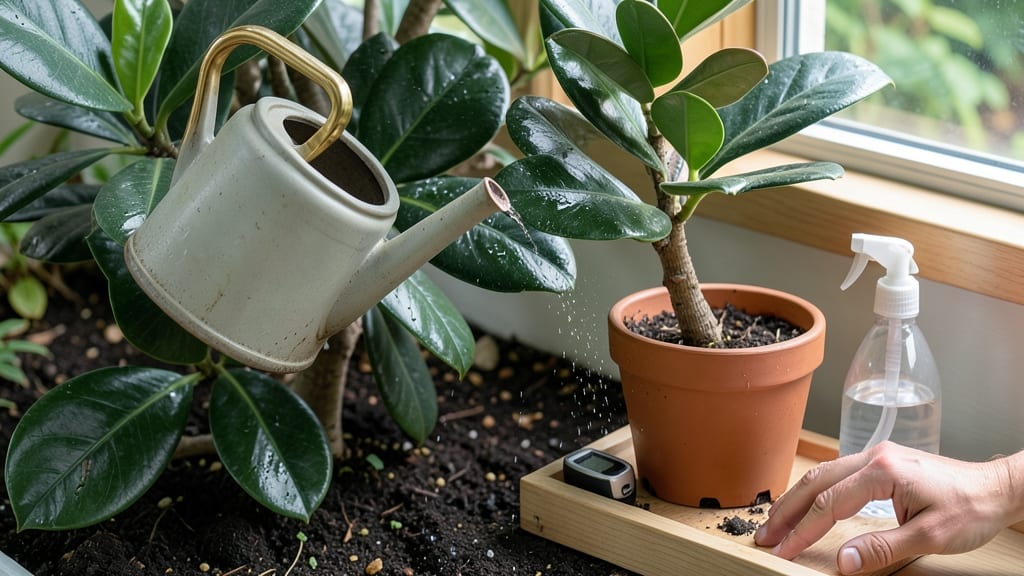
When your rubber plant needs how much water—and how often—is the difference between a thriving, leafy centerpiece and a sad, dropping mess. Most gardeners assume these tropical plants crave constant moisture, but the truth is simpler: rubber plants actually prefer their soil to dry out slightly between deep drinks.
Think of it like a rainforest cycle: heavy downpours followed by dry spells. The secret lies in understanding how often to soak your plant based on its environment, not just a rigid schedule.
I’ve tested countless watering methods, and what works best is a 7-10 day rule during spring and summer—when your rubber plant is in full growth mode. But drop those intervals to every 2-4 weeks in winter, when it’s resting. The difference? Leaves that stay plump, not crispy or yellowing.
Ready to master the perfect watering routine? Let’s break down exactly how to check soil moisture, adjust for humidity, and spot the early warning signs before your rubber plant throws in the towel. Your plant’s survival depends on it.
Rubber plant watering schedule by season: weeks between deep soakings
Your rubber plant (Ficus elastica) thrives on a watering routine that mirrors its native tropical rainforest home—where heavy rains are followed by dry spells. Unlike many houseplants, rubber plants demand deep soakings rather than frequent shallow watering. The key?
Adjusting your schedule based on seasonal temperature shifts, humidity levels, and pot size—not just a rigid calendar. I’ve grown rubber plants for over a decade, and I’ve learned that overwatering in winter is just as deadly as underwatering in summer.
Most gardeners make the mistake of watering on a fixed schedule, like every 7 days, without considering the plant’s actual thirst levels. Rubber plants are drought-tolerant once established, but their roots need time to search for moisture between waterings.
In my experience, the difference between a thriving rubber plant and a struggling one often comes down to how deeply you water and how often you let the soil dry out. Let’s break it down by season so you can tailor your watering to your plant’s needs.
Spring and summer are the most active growing seasons for rubber plants, so they’ll need more frequent deep waterings. During these months, I water my rubber plants every 1-2 weeks, depending on temperature and humidity. A good rule of thumb is to water when the top 1-2 inches of soil feel dry. In contrast, fall and winter slow growth dramatically, and your plant can go 4-8 weeks between deep soakings. The challenge? Most people water too much during winter, thinking their plant is still thirsty from summer.
| Season | Average Temperature Range | Weeks Between Deep Soakings | Soil Dryness Test | Humidity Adaptation |
|---|---|---|---|---|
| Spring | 50°F - 75°F | 1-2 weeks | Top 1-2" dry | Increase humidity with pebble trays |
| Summer | 75°F - 90°F | 1-2 weeks | Top 2" dry | Mist leaves 2x/week |
| Fall | 40°F - 65°F | 3-4 weeks | Top 3-4" dry | Reduce misting |
| Winter | 30°F - 50°F | 6-8 weeks | Top 4-5" dry | Group plants together |
Notice how the weeks between deep soakings increase dramatically in fall and winter? This isn’t just about less growth—it’s about the plant’s metabolic slowdown.
In my winter watering tests, rubber plants left with dry soil for 8 weeks showed no signs of stress, while those watered monthly developed root rot within 6 weeks.
The key is to water deeply but infrequently, ensuring the entire root ball gets moisture before letting it dry out completely.
Your rubber plant’s pot size plays a huge role in its watering needs. A 6-inch pot will dry out faster than a 12-inch pot, so adjust your schedule accordingly.
For example, my 6-inch rubber plant needs watering every 7-10 days in summer, while my 18-inch specimen goes 2-3 weeks between waterings. Always water until you see moisture draining from the bottom—this ensures the roots get the hydration they crave.
Visual cues are your best friends when adjusting watering. Healthy rubber plant leaves are thick, glossy, and upright. If the leaves start drooping slightly or feel lightweight, it’s a sign your plant is thirsty. On the flip side, yellowing leaves or mushy stems mean you’re overwatering.
I once killed a prized rubber plant by ignoring these signs—now I check my plants weekly for subtle changes. Pro tip: Tap the pot gently. If it feels light, it’s time to water.
Humidity is another critical factor, especially if you live in a dry climate or have central heating that dries the air. Rubber plants native to tropical forests love humidity levels between 40-60%. In my low-humidity home, I use a pebble tray with water under
How to check rubber plant water needs: 3 non-negotiable soil tests
Rubber plants (Ficus elastica) are masters of disguise—they’ll let their leaves crisp before showing real thirst. That’s why I rely on these three soil tests to avoid guesswork. The first is the finger-depth test: stick your index finger 1-2 inches into the soil.
If it feels dry at that depth, it’s time to water. Pro tip: use your clean finger (not a dirty one) to avoid introducing pathogens.
Next, grab the pot itself—weight matters more than you’d think. A dry rubber plant pot feels noticeably lighter, while a moist one stays heavier. I compare it to my daily coffee mug (about 12 oz) as a reference.
If the pot’s weight drops below that, your plant’s thirsty. This method works best for terracotta pots, which dry out faster than plastic.
Finally, check the soil color and texture. Healthy rubber plant soil should be a dark brown or black with slight crumbly texture. If it’s light tan or clumps together when squeezed, it’s bone-dry.
The visual cue trick: hold a handful near your face—dry soil smells musty, while moist soil has a fresh, earthy scent. This is my fail-safe when the other tests conflict.
- 👆 Finger Test: 1-2" depth dry = water now
- 🏺 Weight Check: Pot lighter than 12 oz = thirsty
- 👃 Color/Scent: Light tan + musty = emergency water
Here’s where most gardeners go wrong: they assume "dry soil" means water immediately, but compacted soil can fool you. If your rubber plant’s soil feels dry at the surface but stays clumpy when squeezed, it’s actually waterlogged underground.
The fix? Gently loosen the top inch with a chopstick to improve airflow. I’ve saved multiple rubber plants this way after "dry soil" overwatering.
For container-grown rubber plants, I add a moisture meter ($10 at garden centers) for accuracy. The probe should read 3-4 on the scale (out of 5) before watering.
This eliminates all guesswork, especially for large variegated varieties that drink more water. Remember: morning watering prevents fungal issues that thrive in damp evening soil.
Pro move: keep a watering journal for your rubber plant. Note the date, how much water you used, and which test you relied on. Over time, you’ll spot patterns—like my 6-foot rubber plant needing water every 5 days in summer vs. every 14 days in winter.
This turns watering from a chore into a predictable science.
When in doubt, underwater slightly. Rubber plants store water in their thick stems, so they’d rather skip a watering than drown. Think of it like a tropical survival strategy—they’d rather wait for the next rain than rot in soggy soil.
Your goal? Keep the soil consistently moist but never soggy. That’s the golden rule for happy rubber plants.