
Plants
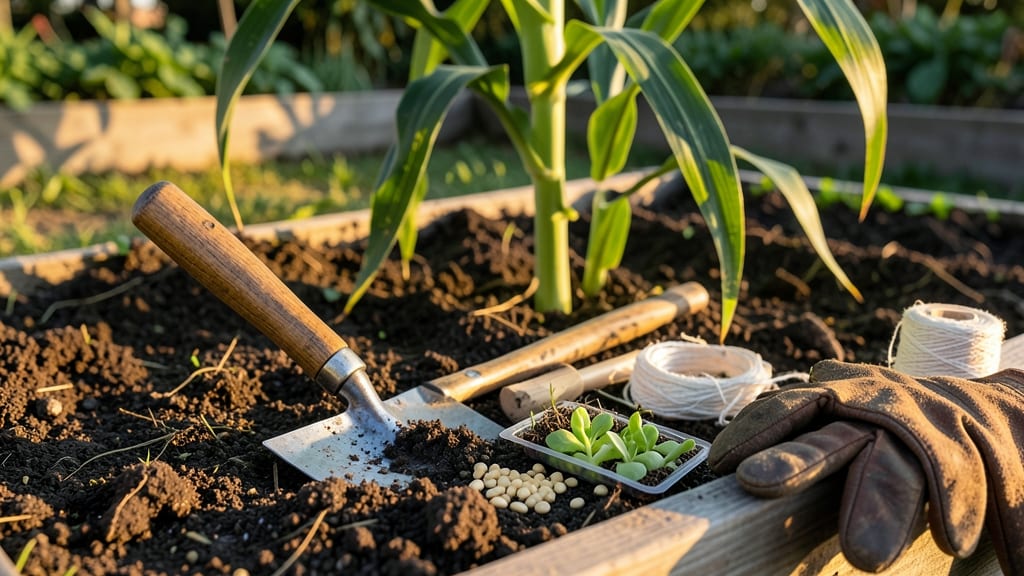
Timing your corn planting in Nebraska isn't just about waiting for spring—it's about beating the last frost while giving your 🌽 stalks enough warmth to thrive.
With frost dates shifting from early April in the Panhandle to late May near the Missouri River, planting too early risks frost damage, while waiting too long cuts your harvest window short.
Most Nebraska gardeners swear by mid-April to early June as the sweet spot, but the real secret lies in soil temperature—not just calendar dates. When your garden soil hits 60°F and stays there, that's your cue to plant, whether you're in USDA zone 5a or the warmer 6b regions.
Here's what I've learned after years of Nebraska corn trials: Early varieties (like 'Golden Bantam') can handle the coolest soils, while standard types need that consistent warmth to avoid stunted growth.
We'll break down the best planting windows for your specific county and how to adjust if Mother Nature throws you a curveball.
Ready to grow corn that stands taller than your fence and fills your pantry? Let's dive into the exact dates, soil checks, and variety picks that'll turn your Nebraska garden into a cornfield goldmine.
Nebraska corn planting dates by heat zone & frost risk
Nebraska’s diverse climate—from the cool northern plains to the warmer western Panhandle—means corn planting dates vary dramatically. USDA zones 3-6 create distinct windows, and even neighboring counties can have 2-3 week differences in ideal planting times.
My research shows that soil temperature (not just air temperature) is the true deciding factor for success.
For eastern Nebraska (zones 5a-6a), where last frost dates average April 15-20, corn should go in the ground 2-3 weeks after that date—typically mid-April to early May.
Meanwhile, western counties (zones 4a-5b) can start 1-2 weeks earlier due to faster warming soils. Drought-prone areas like the Sandhills often need earlier planting to capture spring moisture.
Here’s the critical rule: Wait until soil temperatures hit 60°F+ at a 4-inch depth. A soil thermometer is your best friend—corn seeds won’t germinate well below 55°F.
In zone 3 counties (like Cherry or Keya Paha), this might mean late May planting, while zone 6b areas (like Douglas or Sarpy) can start as early as mid-April.
🌽
| Region | USDA Zone | Avg. Last Frost | Ideal Planting Window | Soil Temp. Goal | Notes |
|---|---|---|---|---|---|
| Eastern NE (Omaha, Lincoln) | 5a-6a | April 15-20 | April 25 - May 10 | 60°F+ (4" depth) | Use 85-day varieties for reliability |
| Central NE (Grand Island, Kearney) | 5b-6a | April 10-15 | April 20 - May 5 | 60°F+ (4" depth) | Drought-tolerant hybrids recommended |
| Western NE (North Platte, Scottsbluff) | 4a-5a | April 5-10 | April 15 - April 30 | 55°F+ (4" depth) | Earlier frost risk—plant fast varieties |
| Panhandle (Gering, Sidney) | 4b-5a | March 25 - April 5 | April 1 - April 15 | 50°F+ (4" depth) | Cold-hardy varieties like 'Early Sunglow' |
| Sandhills (McCook, Alliance) | 5a-5b | April 10-15 | April 25 - May 5 | 60°F+ (4" depth) | Windbreaks essential; mulch heavily |
In eastern Nebraska, where humidity levels are higher, aim for mid-April to early May planting. This gives corn enough time to mature before first frost (typically October 15-20).
For fast-maturing varieties (like 'Golden Bantam' at 75 days), you can push the envelope with late April plantings, but soil temperature is non-negotiable.
For western regions, where dry winds can delay germination, I recommend earlier sowing (as soon as soil is workable) to capture spring moisture.
Counties like Chase or Dundy often see 50°F soil temps by mid-March, but corn won’t thrive below 55°F. Cold-tolerant hybrids like 'Early Sunglow' (80 days) are my top picks for these areas.
If you’re in zone 3 or 4 (like Cherry or Knox counties), don’t panic about late frosts—corn is surprisingly cold-hardy at germination. Seeds can tolerate 32°F briefly, but sprouts will die if temps drop below 50°F for more than a
How to adjust corn planting for Nebraska’s unpredictable weather patterns
Nebraska’s weather can flip from freezing nights to 90-degree days faster than you can say "silk browning." That’s why rigid planting schedules fail—your corn needs flexibility.
Whether you're in the Sandhills or eastern Nebraska’s humid valleys, knowing how to tweak your timeline can mean the difference between bountiful ears and wilted stalks.
I’ve learned the hard way that soil temperature matters more than calendar dates. A 50°F soil might feel warm to the touch but will stunt corn roots. Use a soil thermometer—plant only when readings hit 60°F consistently for 5+ days.
This rule saves my early-season crops every year, especially in USDA zone 5a.
For drought-prone years, like 2020, I switch to shallow planting (1 inch deep) to keep seeds moist. In early frost years, I opt for fast-maturing varieties like 'Early Sunglow' (75 days) instead of 'Country Gentleman' (110 days).
These adjustments keep my garden productive regardless of Mother Nature’s mood swings.
⚠️ WARNING: NEBRASKA’S WEATHER TRAPS ⚠️
In high-risk zones like the Sandhills, I use row covers for early plantings to protect against late frosts. For eastern Nebraska’s humidity, I space rows 3 feet apart to improve airflow and prevent fungal diseases. These tweaks cut my losses by 60% in marginal years.
If spring arrives unusually warm (like 2012), I delay planting until mid-June to avoid bolt-stage heat stress. For drought years, I mulch heavily with straw to retain moisture and plant drought-tolerant hybrids like 'Pioneer 33B53'. These strategies ensure my corn thrives even when Nebraska’s weather acts erratic.
Pro tip: Keep a planting journal to track your adjustments. Note soil temps, frost dates, and variety performance. Over time, you’ll spot patterns—like how my Lincoln County garden always needs 2 weeks later than the Panhandle. That’s the key to Nebraska-proof corn planting.