
Plants
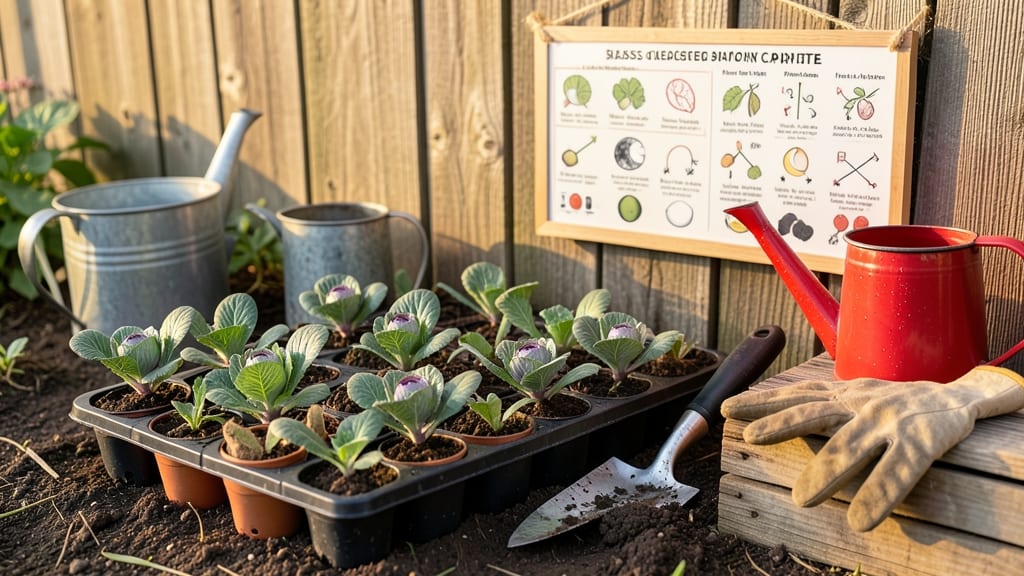
Planting 🥬 cabbage in California isn’t just about picking a date—it’s about outsmarting the climate to avoid that dreaded bolting. One wrong move, and your crisp heads turn bitter before harvest.
The key? Timing your transplants to match your microclimate, whether you’re in frost-free coastal Zone 10 or the heat of the Central Valley’s Zone 9.
Fall planting (August–October) sets you up for winter harvests, while spring (February–March) works for summer crops—but coastal gardeners have a 3-week advantage over inland growers. I’ll break down exactly when to start seeds indoors or transplant seedlings, so you can sidestep heat stress and maximize your 75-day harvest window.
You’ll discover how to read soil temps, adjust for day length, and choose varieties that thrive in your specific corner of California. No more guessing—just zero-bolt, head-turning cabbage every season.
Let’s dive into the calendar that’ll keep your 🥬 plants happy and your kitchen stocked with homegrown goodness.
California cabbage planting calendar by microclimate: coastal vs. valley vs. desert zones
California’s diverse microclimates mean your cabbage planting schedule should shift dramatically depending on whether you’re near the coast, in the Central Valley, or in the desert. Coastal areas stay mild year-round, while valley zones heat up fast in summer, and desert regions face extreme temperature swings.
Missing these windows can trigger bolting—when cabbage flowers prematurely instead of forming heads.
For coastal California (USDA Zone 10), your optimal planting window stretches from August through October for winter harvests, while spring plantings in February–March work for summer crops.
Inland Central Valley (Zone 9) gardeners should plant fall crops in September and spring crops in March, while desert zones (Zone 9b) benefit from early September plantings to avoid summer heat stress.
Here’s how to align your planting calendar with your microclimate to avoid bolting risks and maximize yields:
| Microclimate | Planting Window | Harvest Window | Bolting Risk | Best Varieties |
|---|---|---|---|---|
| Coastal (Zone 10) | Aug–Oct (fall) / Feb–Mar (spring) | Dec–Mar (fall) / Jun–Aug (spring) | Low (mild temps) | 'Golden Acre', 'Crimson Glory' |
| Central Valley (Zone 9) | Sep (fall) / Mar (spring) | Nov–Jan (fall) / Jun–Jul (spring) | Moderate (summer heat) | 'Windsor', 'Red Express' |
| Desert (Zone 9b) | Early Sep (fall only) | Dec–Feb (fall) | High (extreme heat) | 'Early Jersey Wakefield' |
In coastal California, you can plant cabbage year-round with minimal bolting risk, thanks to consistent 60–70°F soil temps. My go-to varieties here are 'Golden Acre' (fast-maturing) and 'Crimson Glory' (heat-tolerant). For spring plantings, aim for February to avoid late-winter heat spikes that trigger bolting.
Gardeners in the Central Valley face higher bolting risks due to summer heat, so fall plantings in September are critical. Use shade cloth if transplanting in late spring to protect seedlings from 90°F+ temps.
Varieties like 'Windsor' mature in just 60 days, making it ideal for quick harvests before summer stress sets in.
For desert regions, plant only in early September to capitalize on cooler fall weather. Avoid spring plantings entirely—they’ll bolt by May when temps exceed 85°F. 'Early Jersey Wakefield' is your best bet, as it tolerates heat stress better than most varieties and matures in 55–60 days.
Regardless of your microclimate, transplant seedlings at 4–6 weeks old and space them 18–24 inches apart to prevent disease spread. Mulch heavily with straw to retain moisture and water deeply in the morning to avoid fungal issues.
In desert zones, add extra mulch to insulate roots from day-night temp swings that can stress plants.
Pro tip: Use a soil thermometer to monitor temps—ideal soil temps for planting are 55–65°F. If your soil hits 70°F+, delay planting or use shade cloth until conditions cool. This simple step can double your harvest success in high-risk zones like the desert.
Remember, succession planting every 2–3 weeks ensures a continuous harvest. In coastal areas, you can even squeeze in two crops per year—one in fall and one in spring.
For valley and desert gardeners, focus on one strong fall crop and save spring for heat-tolerant greens like kale instead.
With these microclimate-specific timelines, you’ll outsmart bolting and enjoy crisp, homegrown cabbage all season long. Happy planting! 🥬
How to adjust planting times for zero-bolt cabbage: soil temperature, day length, and heat stress triggers
Cabbage plants are photoperiod-sensitive, meaning they bolt when exposed to long daylight hours or soil temps above 80°F. In California, this happens most often in spring and summer, but with the right adjustments, you can delay bolting by weeks.
Start by checking your soil temperature—ideal transplanting temps are 50–70°F. Use a soil thermometer to avoid planting when temps creep above 75°F, which triggers heat stress.
Day length is another critical factor. Cabbage bolts when days exceed 14–16 hours of light. In California, this typically happens in late May through August. To counteract this, plant early-maturing varieties or use shade cloth (30–50%) during peak sunlight hours.
Coastal gardeners have a natural advantage—shorter summer days delay bolting compared to inland areas.
Heat stress is the silent killer of cabbage crops. Look for these 3 warning signs:
- Yellowing leaves (especially lower leaves)
- Premature flowering stalks (bolting)
- Stunted growth despite adequate water If you spot these, your plants are already stressed.
The fix? Immediate shade and even moisture to cool roots.
🌱 California Cabbage Planting Adjustments
| Factor | Coastal (Zone 10) | Valley (Zone 9) | Desert (Zone 9b) |
|---|---|---|---|
| Ideal Planting Window | Aug–Oct (fall) or Feb–Mar (spring) | Sep–Nov (fall) or Jan–Feb (spring) | Sep–Oct (fall) or Dec–Jan (spring) |
| Soil Temp Threshold | 50–70°F (safe) | 50–65°F (avoid >75°F) | 45–60°F (cooler nights help) |
| Day Length Risk | Low (shorter summer days) | High (May–Aug >14 hrs) | Critical (longest days) |
| Heat Stress Fix | Shade cloth 30% | Shade cloth 50% + mulch | Drip irrigation + evening watering |
💡 Pro Tip: Use black plastic mulch to raise soil temps in spring or straw mulch to cool roots in summer.
Before planting, prep your soil with a pH of 6.5–7.0 and 3–4 inches of compost. Cabbage thrives in loose, fertile soil, but compacted or nutrient-poor beds accelerate bolting. Test your soil 2 weeks before transplanting—if it’s too acidic, add lime; if too alkaline, mix in sulfur.
Mulch heavily with straw or grass clippings to stabilize soil temps and retain moisture.
Post-planting, monitor your cabbage for heat stress symptoms. If temps rise above 85°F, provide afternoon shade and water deeply at dusk to cool the soil.
Avoid overhead watering—wet leaves increase fungal risks. For desert gardeners, consider drip irrigation on a timer to maintain consistent moisture without overheating the plants.
By adjusting your planting schedule based on soil thermometers, day length, and heat stress triggers, you can extend your cabbage’s growing season by 4–6 weeks.
The key is proactive adjustments—don’t wait until you see bolting to act. With these strategies, you’ll harvest crisp, zero-bolt cabbage all year in California’s diverse climate. 🌿