
Plants
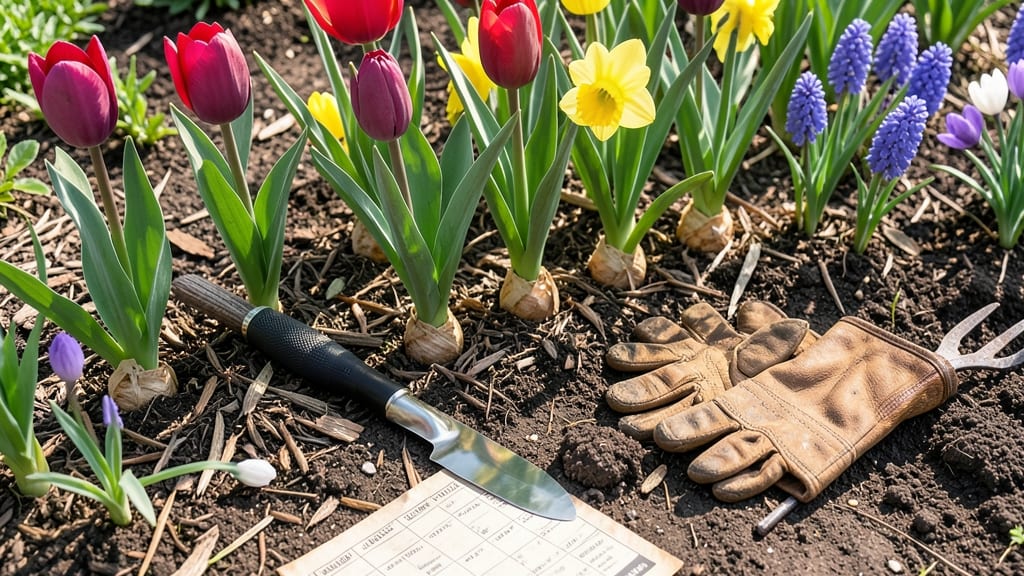
Planting your spring-planted bulbs 🌱 at the wrong time can mean the difference between a garden bursting with color and a sad, wilted disappointment. The key isn't just waiting for spring—it's understanding how chill-hours and soil temperatures work together to wake these dormancy-loving plants from their winter nap.
In USDA Zone 6a, where many gardeners call home, the perfect window opens 4-6 weeks before your last frost date—typically mid-March to early April. But here's the catch: some bulbs like tulips need 12-16 weeks of cold, while daffodils can handle 12-20 weeks.
Plant too early, and you risk rotting bulbs in cold soil; too late, and you'll miss the chance for those vibrant blooms to appear by summer.
I'll break down exactly how to time your planting based on your local climate, plus soil prep tricks that'll give your bulbs the best possible start. No more guessing—just a foolproof system to ensure your garden becomes a springtime spectacle.
Ready to transform your yard? Let's dive into the chill-hour secrets and soil temperature rules that'll have your 🌱 spring-planted bulbs thriving in no time.
Spring bulb planting timeline: chill-hours vs. soil temperature guide
Planting spring bulbs at the wrong time can leave you with sad, wilted blooms instead of the vibrant displays you dream of. The secret lies in understanding two key factors: chill-hour requirements and soil temperature.
Most spring bulbs need a period of cold dormancy (chill hours) followed by warm soil to trigger growth. For example, tulips typically need 12-16 weeks of temperatures below 45°F, while daffodils require 12-20 weeks of chill.
But timing isn't just about cold—your soil must also warm to 40-50°F before planting for roots to establish properly.
Your USDA zone plays a huge role in determining the perfect planting window. In Zone 3-5, where winters are long and cold, you can plant bulbs as early as September or October for spring blooms.
Meanwhile, gardeners in Zones 6-10 often wait until November or December to plant, ensuring bulbs get enough chill before soil warms. The goal is to plant bulbs 4-6 weeks before your average last frost date, giving roots time to grow before the ground thaws completely.
Here’s how chill hours and soil temperatures interact to create your planting timeline:
If you’re in Zone 6 or warmer, where winters are milder, you might need to pre-chill bulbs in your fridge for 8-12 weeks before planting. Store bulbs in a paper bag in the crisper drawer (not plastic) at 35-45°F to mimic winter conditions.
This trick works wonders for tulips and hyacinths in areas where natural chill hours are insufficient.
Another critical factor is soil temperature at planting time. If your soil is still below 40°F, bulbs won’t root properly and may rot. Use a soil thermometer to check—plant when temps consistently reach 40-50°F during the day.
In Zone 7-10, this often means waiting until late November or December to plant, even if bulbs are ready earlier.
For northern climates (Zones 3-5), aim to plant bulbs 6-8 weeks before the ground freezes. This gives roots time to establish before winter sets in. In my Zone 5 garden, I plant daffodils in October and tulips in November to ensure they get enough
Moon phase & soil prep checklist for perfect spring bulb planting
Spring bulb planting success starts with two critical factors: moon phases and soil preparation. While bulbs don't need moonlight like tomatoes, planting during the root phase (waning moon) encourages stronger root development before shoots emerge.
This timing aligns perfectly with when soil temperatures reach 40-50°F, ideal for breaking dormancy without stressing tender bulbs.
I've planted tulips and daffodils for years, and the difference between a thriving garden and a lackluster one comes down to these details. Proper soil prep—focused on drainage and organic matter—gives bulbs the energy they need to push through winter's aftermath and bloom vibrantly.
Let's break down the exact steps to prepare your soil and choose the perfect planting window.
🌱 5 Critical Steps for Spring Bulb Planting
- 1. Plant during the root phase (waning moon) for stronger root growth before shoots emerge.
- 2. Wait for soil temps of 40-50°F—use a soil thermometer to check 6 inches deep.
- 3. Loosen soil to 12 inches deep and mix in 2-3 inches of compost for nutrients.
- 4. Plant bulbs 2-3x their diameter deep (e.g., 6-8 inches for standard tulips).
- 5. Mulch with 2-3 inches of straw or shredded leaves to retain moisture and regulate temps.
First, test your soil drainage by digging a 12-inch hole and filling it with water. If it drains in 2 hours, your soil is ready. If not, amend with perlite or sand to prevent rot.
I once planted hyacinths in heavy clay, and they rotted within weeks—don't make that mistake! Aim for soil that's loose and fertile, with a pH between 6.0-7.0.
After planting, water deeply to settle the soil and encourage root contact. Then, apply 2-3 inches of mulch (straw or shredded leaves work best) to lock in moisture and protect bulbs from temperature swings.
In my Zone 6a garden, this extra layer keeps soil temps stable and prevents early frost damage to emerging shoots.
For the first 2-3 weeks, water lightly but frequently to keep soil moist but not soggy. Once shoots appear, reduce watering slightly—overwatering at this stage can lead to fungal issues.
I use a soaker hose set to a gentle mist in the morning to avoid wetting foliage, which helps prevent diseases like botrytis.
Remember, bulbs need time to establish roots before blooming. If you rush planting, you might miss the ideal bloom window of late spring to early summer. Patience pays off—last year, my daffodils bloomed for 3 weeks straight because I followed this exact routine.
Now it's your turn to create a springtime showstopper! 🌷