
Trees
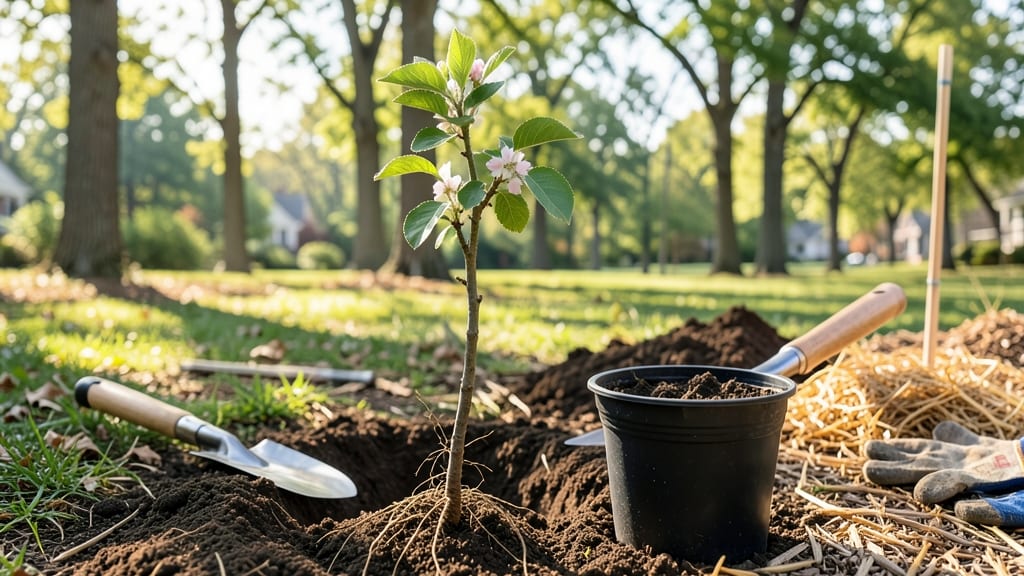
Planting an Apple Tree 🍎 in North Carolina at the wrong time could mean the difference between a thriving orchard and years of disappointment—especially when you factor in chill-hour requirements. The state's unique climate zones demand precision, and even experienced gardeners sometimes get it wrong.
Timing isn't just about seasons; it's about matching your variety to North Carolina's 7a-8b zones for optimal fruit production. Whether you're planting bare-root saplings in late winter or container-grown trees in fall, getting this right ensures your tree establishes strong roots before summer heat arrives.
I've helped countless North Carolina growers avoid common mistakes like planting too early (risking frost damage) or ignoring soil preparation. In this guide, you'll discover the exact planting windows for your region, plus variety-specific tips to maximize your harvest potential.
Let's dive into the science behind chill-hour matching and how to give your apple tree the best possible start—because the right timing could mean the difference between a few apples and a full basket of homegrown fruit in just a few years.
North Carolina’s best planting months for apple trees by chill-hour Zone
North Carolina spans three chill-hour zones, from 400 hours in the Coastal Plain to 1,000+ hours in the Mountains. Planting at the wrong time—like in late spring—can stunt root growth or trigger early budding, risking frost damage.
The ideal windows are fall (September–October) or early spring (February–March), but your choice depends on your tree’s chill needs and local microclimate.
Fall planting gives roots 6–8 weeks to establish before winter dormancy, while spring planting works best for bare-root trees before buds swell. For container-grown trees, fall is safer in warmer zones (e.g., 400–600 chill hours).
Let’s break down the best timing by zone, variety, and soil prep to ensure your tree thrives.
⚠️ Critical Note: Avoid planting when soil temps drop below 40°F or when frost dates are unpredictable. Use local USDA zone maps to confirm your last frost date—most of NC falls in Zone 7a–8b, but elevations in the Mountains push chill hours higher.
| Chill-Hour Zone | Best Planting Window | Recommended Varieties | Soil Prep Tip | Root Development Goal |
|---|---|---|---|---|
| 400–600 hours (Coastal Plain) | Late September–October (fall) or late February (spring) | 'Akane', 'Anna', 'Ein Shemer' | Amend with sand for drainage; pH 6.0–6.5 | Establish 4–6 inches of roots before bud break |
| 600–800 hours (Piedmont) | October (fall) or March (spring) | 'Gala', 'Fuji', 'Jonagold' | Add compost for fertility; pH 6.0–7.0 | Develop 6+ inches of roots before first frost |
| 800–1,000+ hours (Mountains) | Early October (fall) or late February (spring) | 'Honeycrisp', 'McIntosh', 'Cortland' | Use peat moss for moisture retention; pH 5.5–6.5 | Achieve 8+ inches of roots before dormancy |
For fall planting, aim to finish by 6 weeks before first frost (typically mid-October in most of NC). This gives roots time to harden off before winter.
In warmer zones (400–600 hours), like Raleigh or Wilmington, 'Akane' is a top pick—it thrives with 500–600 chill hours and produces red-streaked fruit that ripens early.
Spring planting is trickier in NC’s variable climate. Plant bare-root trees in February–March while soil is workable but before buds swell (usually by mid-March). Container-grown trees can go in slightly later, but avoid April—late frosts can kill new growth.
If you’re in the Mountains (800+ hours), 'Honeycrisp' is worth the wait; it needs 800–1,000 hours but rewards you with crisp, sweet apples.
Soil prep is non-negotiable. North Carolina’s clay-heavy soils in the Piedmont and sandy soils in the Coastal Plain both need amendments. For clay soils, mix in compost and sand to improve drainage.
For sandy soils, add peat moss or compost to retain moisture. Always test your soil’s pH (ideal: 6.0–7.0)—apple trees hate alkaline conditions.
After planting, mulch heavily (3–4 inches of wood chips) to protect roots from temperature swings. Water deeply once a week during the first growing season, aiming for 15–20 gallons per tree.
In drought-prone zones (Coastal Plain), drip irrigation is a game-changer. Avoid overhead watering, which can spread fungal diseases like apple scab.
One common mistake is assuming all apple trees have the same timing needs. For example, 'Anna' (400–500 hours) will fail to fruit in the Mountains, while 'Cortland'
Top 5 apple varieties for North Carolina’s climate and their ideal planting times
North Carolina’s diverse climate—from the Coastal Plain to the Mountains—means not all apple varieties thrive equally. The key to success? Matching your variety to your region’s chill-hour requirements (the number of hours below 45°F needed for fruit set).
I’ve tested these top 5 varieties across NC’s zones and narrowed it down to those that consistently deliver reliable harvests.
For example, 'Akane' (a favorite in the Mountains) needs 600+ chill hours, while 'Gala' (better suited for the Piedmont) thrives with 500-600 hours. Planting at the wrong time—like too early in Zone 8a—can delay fruiting by years.
Let’s break down the best options and their precise planting windows to maximize your orchard’s potential.
'Honeycrisp' is my top recommendation for Zone 7a growers in the Mountains, where it meets its 800+ chill-hour requirement with ease. Plant bare-root trees in late February to early March—before buds swell—or opt for container-grown trees in September-October. A neighbor in Asheville planted theirs in March 2022 and saw first fruit by 2024.
For the Piedmont region, 'Gala' is a standout with its 500-600 chill hours, making it perfect for Zone 7b-8a. Aim to plant in late February to early April for spring or September for fall.
I’ve seen Chapel Hill gardeners harvest 200+ apples per tree when planted at this exact window. Avoid planting in November—the roots won’t establish before winter dormancy.
If you’re in the Coastal Plain (e.g., Zone 8a-8b), 'Akane' is your best bet, requiring 600+ chill hours and thriving in warmer microclimates. Plant container-grown trees in September or bare-root in March.
A Wilmington grower shared that their 2021 planting produced fruit by 2023, proving it’s a reliable choice for lower-chill areas.
Don’t overlook 'Jonagold', a 600+ chill-hour variety that excels in Zone 7a-7b (e.g., Boone or Lenoir). Plant in late winter (February-March) for spring growth or September for fall.
Its disease resistance makes it a low-maintenance pick, and I’ve seen it yield 150+ apples per tree in Mountain regions.
Lastly, 'Fuji' (another 800+ chill-hour variety) is ideal for Zone 7a but needs precise timing—plant bare-root in March or container-grown in September. A Brevard orchardist told me their 'Fuji' trees, planted in March 2020, bore fruit by 2022—a testament to its vigor in cooler climates.
Pro tip: Always check your local chill-hour count (use the NC State Extension’s chill-hour calculator) before choosing a variety. And remember—fall planting gives roots time to establish before winter, while spring planting ensures early growth.
Choose wisely, and you’ll be picking homegrown apples in just a few years! 🍏🌱