
Plants
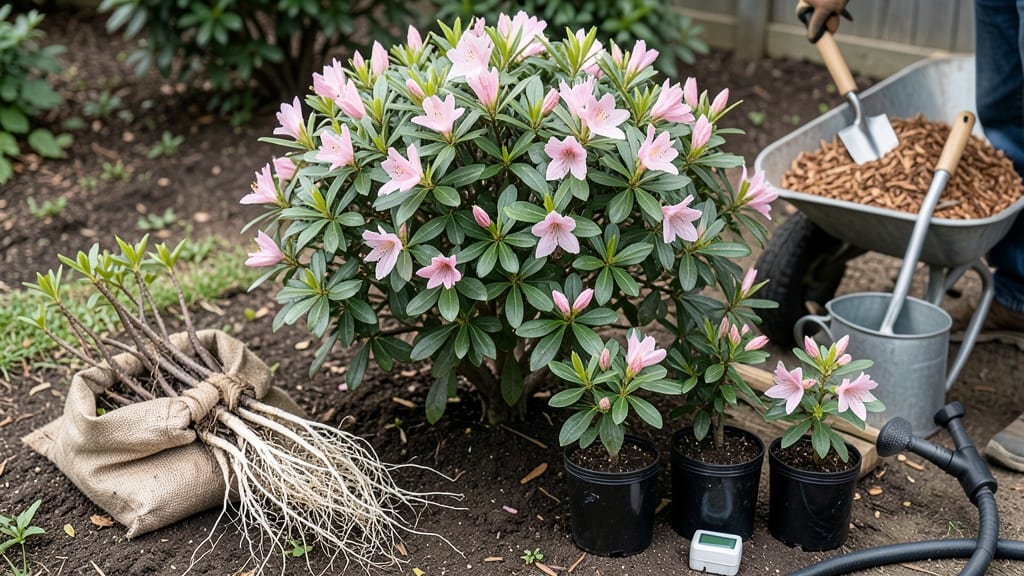
Planting azaleas in Maryland at the wrong time can mean waiting years for those stunning 🌸 blooms—or worse, never seeing them at all. The key to vibrant spring displays lies in matching your azalea variety to Maryland’s chill hours and planting during the ideal window of October-November or March-April.
Unlike many plants, azaleas thrive when given time to establish roots before Maryland’s first frost on November 15. Fall planting gives them a head start, while spring planting avoids transplant shock during summer’s heat. But here’s the catch: not all azaleas bloom the same way in our 7a-7b zones.
Southern azaleas need fewer chill hours, while native varieties like the Exbury or Knap Hill types demand more. I’ll break down exactly which varieties perform best in your specific Maryland microclimate—whether you’re in Baltimore’s urban heat islands or Frederick’s cooler hills.
Ready to transform your garden into a springtime explosion of color? Let’s dive into the chill-hour matching system that’ll have your azaleas blooming like never before—without the guesswork.
Maryland azalea planting timeline by chill-hour requirements
Maryland’s diverse climate zones (USDA 5-7) create unique challenges for azalea gardeners. Southern azaleas thrive with 300-600 chill hours, while Northern azaleas need 900-1,200 chill hours to bloom reliably.
Planting at the wrong time—like mid-summer—can shock roots and delay flowering for 1-2 years. Let’s match your azalea to Maryland’s microclimates for vibrant spring blooms.
Baltimore’s USDA Zone 7a (average 1,000 chill hours) suits Northern azaleas like ‘Girard’s Pink,’ while Frederick’s Zone 6b (closer to 1,200 chill hours) can handle even more cold-hardy varieties.
Coastal areas near Annapolis (Zone 7b) may experience 500-800 chill hours, making Southern azaleas the safer bet. Timing is everything—plant too early, and roots struggle; too late, and winter stress sets in.
Here’s your Maryland azalea planting timeline by chill-hour needs, including soil prep, watering, and mulching tips for each zone:
For Baltimore gardeners, aim for October planting—this gives roots 6-8 weeks to establish before winter. Frederick’s cooler climate (Zone 6b) benefits from early October planting to avoid early frosts. Coastal areas like Annapolis can extend planting to early November, thanks to milder winters. Spring planting (March-April) is a backup, but expect delayed blooming if roots don’t establish quickly.
Maryland’s clay-heavy soils need amendment with peat moss or pine bark to improve drainage. Test soil pH (ideal: 4.5–6.0)—use sulfur or lime to adjust. Mulch with 2–3 inches of pine straw or shredded bark to retain moisture and regulate soil temperature. Water deeply after planting, then weekly for the first month to reduce transplant shock.
If you’re in Zone 5b (Western MD), prioritize Northern azaleas like ‘Bowl of Beauty’ or ‘Korean Fire.’
These varieties handle 1,200+ chill hours and bloom reliably. Zone 7b gardeners should stick to Southern azaleas like ‘Formosa’ or ‘Oconee,’ which may struggle in colder winters. Evergreen azaleas (e.g., ‘Southern Indigo’) are a safe middle ground for transition zones like Howard County.
Pro tip: Label your azaleas by variety and planting date—this helps track bloom times. Northern azaleas typically bloom in late April–May, while Southern azaleas may flower as early as March. Adjust pruning accordingly: prune Northern azaleas after May blooms; prune Southern azaleas in late June to avoid cutting off next year’s buds.
Remember, Maryland’s humidity can stress azaleas—avoid overhead watering to prevent fungal diseases like petal blight. Deer-prone areas? Choose mildew-resistant varieties like ‘George L. Taber’ and use repellent sprays in early spring. With the right chill-hour match and plant
Best azalea varieties for Maryland gardens by bloom season
Maryland’s spring blooms come alive with azaleas, but not all varieties thrive equally in our USDA zones 6b-7b.
To extend your colorful displays, plant early, mid, and late-spring bloomers strategically. Southern azaleas (like Rhododendron x 'Girard's Pink') need fewer chill hours (300-500), while Northern azaleas (like Rhododendron x 'Hino Crimson') handle 600+ chill hours.
Matching your variety to Maryland’s microclimates ensures vibrant, reliable blooms year after year.
For early spring color (March-April), choose cold-hardy varieties that bloom before Maryland’s late frosts. Mid-spring (April-May) bloomers peak when temperatures stabilize, while late-spring (May-June) varieties shine as summer approaches. Sunlight needs vary too—most Maryland azaleas prefer morning sun and afternoon shade, but some tolerate full shade in hotter inland areas like Frederick.
🌸 Early Spring Bloomers (March-April) 🌸 Mid-Spring Bloomers (April-May) 🌸 Late Spring Bloomers (May-June)
For early spring bloomers like Girard's Pink, plant in fall (October-November) to establish roots before Maryland’s winter chill.
These varieties need 300-500 chill hours, making them perfect for coastal areas where winters are milder. Mulch heavily in late fall to protect roots from freeze-thaw cycles near the Chesapeake Bay.
Mid-spring varieties like Hino Crimson and George L. Taber handle 500-700 chill hours, ideal for inland Maryland (e.g., Frederick County). Plant these in early spring (March-April) to avoid late frost damage to buds. Prune spent blooms in early summer to encourage next year’s flowers.
Late bloomers like Bowl of Beauty extend your season into June and thrive in shadier spots, making them perfect for woodland gardens or under tall trees. Water deeply during Maryland’s