
Plants
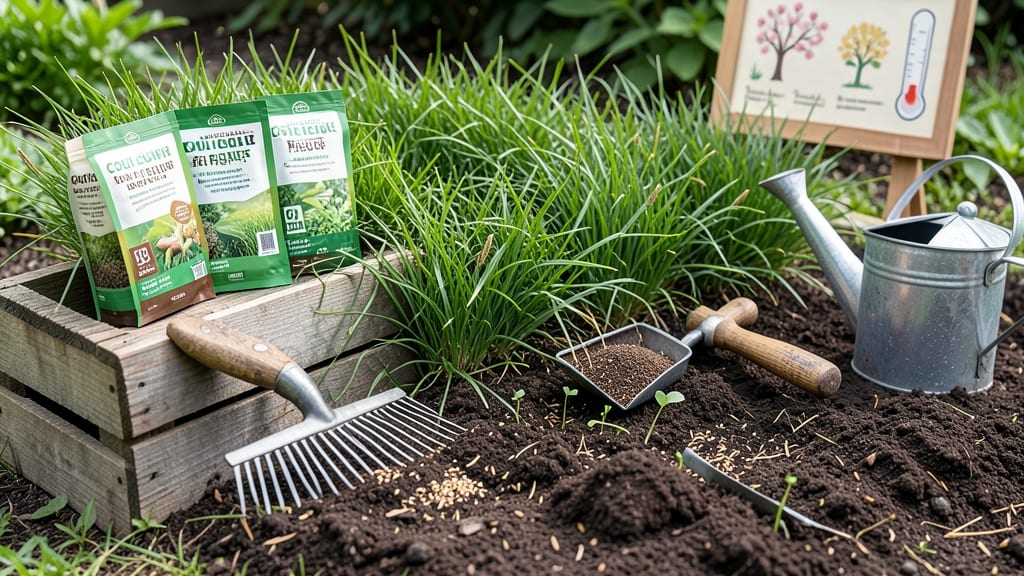
Planting grass seed in Utah at the wrong time can leave you staring at a patchy lawn—or worse, a total failure.
The best time to plant 🌱 depends on your elevation, with late summer to early fall (August-September) and early spring (March-April) offering the most reliable results for Utah's USDA zones 5-8.
Why does timing matter so much here? Utah's dramatic elevation shifts mean what works in the Wasatch Front won't necessarily suit desert areas. Too early, and frost can wipe out your efforts; too late, and summer heat stresses young seedlings.
I'll break down exactly when to plant based on your specific microclimate.
You'll discover how to prepare your soil for Utah's unique conditions, whether you're dealing with alkaline desert soil or high-altitude challenges. From irrigation scheduling to drought-resistant seed selection, these actionable tips will help you establish a strong lawn that thrives year-round.
Let's cut through the guesswork and get your grass off to the perfect start—because in Utah, timing really is everything for that lush, green result you're after.
Utah’s ideal grass-seeding windows by elevation zone: early spring vs late fall timing
Utah’s three distinct elevation zones create wildly different growing conditions—where low desert areas like St. George can handle late-spring planting, mid-altitude regions such as Salt Lake City need precise timing, and high mountain zones like Park City demand early starts.
Each zone has its own temperature thresholds for seed germination, typically between 50°F and 75°F, with root establishment requiring consistent moisture and cooler nights.
For low desert elevations (2,500–4,500 ft), late summer to early fall (August–September) is ideal because soil stays warm while afternoon heat decreases. This window aligns with Utah’s monsoon season, providing natural irrigation.
Meanwhile, early spring (March–April) works for high-altitude zones (7,000+ ft), where frost-free periods are shorter and cooler temperatures slow seed dormancy.
Here’s how Utah’s three elevation zones break down for optimal grass-seeding timing, including exceptions for northern vs. southern regions:
In low desert zones, the late-summer window (August–September) is critical because soil temperatures remain ideal for seed germination while afternoon heat wanes. This timing also coincides with Utah’s monsoon season, which provides natural irrigation—reducing your need for supplemental watering.
However, avoid planting in July, when temperatures often exceed 95°F, causing seed desiccation.
For mid-altitude regions, like the Wasatch Front, both early spring (March–April) and late fall (September–October) work, but spring planting requires vigilance against late frosts. The soil temperature threshold here is 50°F–65°F, and cooler nights help seeds germinate without stress.
In northern mid-altitude areas (e.g., Ogden), wait until April to avoid frost, while southern areas (e.g., Provo) can start as early as March.
High-altitude zones, such as Park City or Logan, have the most restrictive timeline due to short growing seasons. Planting in early spring (March–April) is non-negotiable, as first frosts arrive by October.
These areas benefit from cold-hardy grass varieties, like Kentucky Bluegrass, which tolerate 45°F–60°F soil temperatures. In northern high-altitude zones, delay until April to ensure frost-free conditions, while southern high-altitude areas (e.g., Heber) can start in March.
Regardless of elevation, soil moisture is the biggest variable. Utah’s alkaline soils often require gypsum amendments to improve water retention, and daily watering for the first 2 weeks is essential. After establishment, deep, infrequent watering (1–1.5 inches per week) encourages deep root growth, which is critical for drought resilience.
One common mistake in Utah is planting warm-season grasses (e.g., Bermuda) in high-altitude zones or cool-season grasses (e.g., Fescue) in desert areas. Always match your grass variety to your microclimate—cool-season grasses thrive in mid-to-high elevations, while warm-season types excel in low deserts.
Pro tip: Use a soil thermometer to confirm temperatures before planting. Aim for consistent daytime highs above 60°F and nighttime lows above 45°F for optimal germination. With the right timing, your Utah lawn will establish strong roots before summer’s peak heat or winter’s first frost. 🌱
Microclimate-specific preparation checklist: soil, water, and seed selection for Utah’s varied conditions
Utah’s microclimates demand precision when planting grass seed. In the low desert (e.g., St. George), alkaline soils and extreme heat require drought-resistant varieties like bermudagrass.
Meanwhile, the Wasatch Front benefits from cool-season grasses like Kentucky bluegrass that thrive in milder temperatures. Each zone needs tailored prep to avoid costly mistakes.
Start with soil testing—Utah’s desert soils often have high pH levels (7.5-8.5). For alkaline conditions, amend with sulfur or peat moss to lower pH to 6.0-7.0.
In high-altitude areas (e.g., Park City), focus on organic matter to improve drainage. Water scarcity is another challenge; drip irrigation or soaker hoses minimize waste while keeping seeds moist.
Seed selection hinges on your microclimate. Cool-season grasses (e.g., tall fescue) excel in northern Utah (USDA Zones 5-6), while warm-season grasses (e.g., buffalo grass) dominate the southern desert (Zones 7-8). Mixing varieties can create a year-round green lawn, but prioritize native species for resilience.
- 🌱 Low Desert (Zones 7-8): Test soil pH (aim for 6.5-7.0), use bermudagrass or zoysiagrass, and water deeply 2x/week.
- 🌿 Mid-Altitude (Zones 6-7): Amend soil with compost, plant tall fescue, and irrigate daily for 2 weeks, then reduce.
- ⛰️ High Mountain (Zones 5-6): Add peat moss for drainage, choose Kentucky bluegrass, and mulch to retain moisture.
- 💧 Watering Tip: Use drip irrigation to avoid runoff; early morning watering prevents fungal growth.
- 🌡️ Temperature Alert: Avoid planting when soil temps exceed 85°F (stunts germination) or drop below 40°F (causes dormancy).
Watering strategies must adapt to Utah’s arid conditions. In summer months, water deeply 2-3 times per week to encourage deep root growth. For spring/fall planting, aim for 1/2 inch of water daily for the first 2 weeks.
Mulching with straw or wood chips locks in moisture and regulates soil temperature, critical for seedling survival.
Timing your fertilizer application is equally critical. In low desert zones, apply a slow-release fertilizer (e.g., 16-4-8) at planting and again in late summer. For high-altitude areas, split applications into spring and fall to support seasonal growth. Always water fertilizer in to prevent seed burn.
Finally, monitor your lawn for stress signs like yellowing or thinning patches. These often signal overwatering, underwatering, or nutrient deficiencies. Adjust your approach based on your microclimate—desert areas may need less water, while mountain regions benefit from extra nitrogen in early spring.
With the right prep, your Utah lawn can thrive year-round.