
Companion Plants
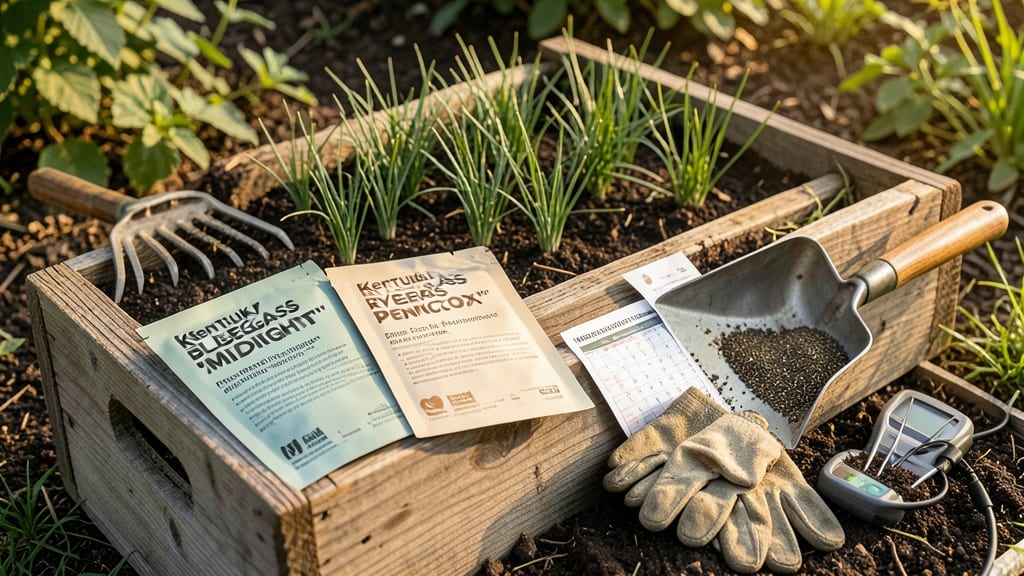
Timing your grass seed planting in Michigan can feel like guessing whether to bundle up or break out the shorts—because getting it wrong means staring at bare patches instead of a lush 🌱 lawn.
The best window for planting actually depends on where you live in the state, with southern Michigan offering earlier opportunities than the Upper Peninsula.
Most gardeners swear by early spring (March–April) or early fall (August–September), when soil temperatures hit that sweet spot of 50°F—the magic number for germination.
But if you’re in Zone 5a, you’ll need to wait until after the last frost (usually mid-April), while Zone 6b regions can start planting a week or two earlier.
Here’s the game-changer: Cool-season grasses like Kentucky bluegrass thrive when planted in these ideal windows, but even a few weeks off can mean slower growth or weed competition. I’ll break down exactly how to time it right for your region—and what to watch for if Mother Nature throws a curveball.
Ready to skip the guesswork? Let’s dive into the best months, soil prep tips, and how to keep your new grass from becoming a buffet for crows or drought.
Best months to plant grass seed in Michigan by region (southern vs Northern zones)
Michigan’s diverse climate means your grass seed planting timeline should depend on whether you’re in the Upper Peninsula, Northern Lower Peninsula, or Southern Michigan.
Cool-season grasses like Kentucky bluegrass and tall fescue thrive when planted in spring or early fall, but the exact timing varies by last frost dates and soil temperatures of at least 50°F for germination.
In Southern Michigan, where winters are milder, you can start as early as late February if the ground isn’t frozen. Meanwhile, the Upper Peninsula often waits until late April due to longer winters.
Fall planting in Northern zones should wrap up by early September, while Southern Michigan can extend until mid-October.
Here’s a quick comparison to help you decide the best window for your region:
For Southern Michigan, aim to plant 4-6 weeks before the first frost in fall (typically mid-October) to allow roots to establish before winter. In the Upper Peninsula, where summers are shorter, focus on early spring planting to maximize growth before the first frost in early October.
If you’re unsure about your last frost date, check the Michigan State University Extension or local weather reports. A general rule is to plant cool-season grasses when daytime highs are consistently 60°F+ and nighttime lows stay above 40°F.
Pro tip: Use a soil thermometer to confirm temperatures. Grass seed won’t germinate well in cold, wet soil, even if the air feels warm. Wait until the soil reaches 50°F at a 4-inch depth for best results.
In Northern Michigan, where summers are cooler, consider fall planting as your primary window. The 6-8 weeks before frost lets seeds germinate and establish roots without competing with summer heat or weeds. Southern Michigan’s milder winters allow for extended fall planting until mid-October.
One common mistake is planting too late in spring when weeds outcompete grass seedlings. If you miss the spring window, prioritize fall planting—it’s often the more reliable option in Michigan’s climate. Just be sure to choose disease-resistant varieties like fine fescue or perennial ryegrass for fall success.
For overseeding existing lawns, Southern Michigan can start as early as late August, while Northern zones should wait until September. This timing helps new seeds establish before winter without smothering your existing grass.
Remember: Watering is critical after planting. Keep soil consistently moist (about 1 inch per week) until germination, which typically takes 7-21 days depending on temperature. Use a sprinkler or soaker hose to avoid dislodging seeds.
How to prepare your Michigan lawn for grass seed planting (soil, sun, and timing tips)
Preparing your Michigan lawn for grass seed planting starts with understanding your soil conditions and microclimate. Cool-season grasses like Kentucky bluegrass and fescue thrive in Michigan’s climate, but they need the right foundation to grow strong roots.
The key is balancing soil pH, sun exposure, and timing to avoid common mistakes that lead to patchy lawns.
First, test your soil’s pH level—aim for a range of 6.0 to 7.0, which is ideal for most grass types. If your soil is too acidic or alkaline, amend it with lime or sulfur before planting.
Michigan’s clay-heavy soils often need compost or sand to improve drainage, so till the area lightly to loosen the top 3 to 4 inches of soil.
🌱 Critical Pre-Planting Checklist for Michigan Lawns
- ✅ Soil pH: Test and adjust to 6.0-7.0 (use lime for acidity, sulfur for alkalinity)
- ✅ Weed Control: Kill weeds with glyphosate 2 weeks before planting (avoid pre-emergents)
- ✅ Sunlight: Ensure 6+ hours of sun daily (shady spots need shade-tolerant fescue)
- ✅ Seed Choice: Pick cool-season mixes (Kentucky bluegrass for durability, fescue for shade)
- ✅ Timing: Plant when soil is 50°F+ (early spring or early fall)
Clearing weeds is another critical step—use a non-residual herbicide like glyphosate 2 weeks before planting to avoid harming your new grass. After weeds die, rake the area to create a smooth, seed-friendly surface. If your lawn has bare spots, overseed those first to ensure even coverage.
For large areas, use a drop or broadcast spreader to distribute seed evenly at a rate of 10-12 lbs per 1,000 sq ft for cool-season grasses.
Timing your planting is just as important as prep. In Michigan, early spring (March-April) or early fall (August-September) are the best windows. Spring planting lets seeds germinate as temperatures rise, while fall planting avoids summer heat stress.
Avoid planting in late summer when weeds compete aggressively or in winter when frost can kill seeds.
Once planted, keep the soil consistently moist by watering lightly twice daily for the first 2 weeks. After germination, reduce to 1 inch per week, focusing on deep watering to encourage root growth. Mulch lightly with straw to retain moisture and protect seeds from drying out.
Finally, avoid common mistakes like over-seeding (which can smother seeds) or using too much fertilizer at planting (wait 6-8 weeks). With the right prep, your Michigan lawn will establish a thick, resilient turf that outlasts summer heat and winter freeze.