
How To
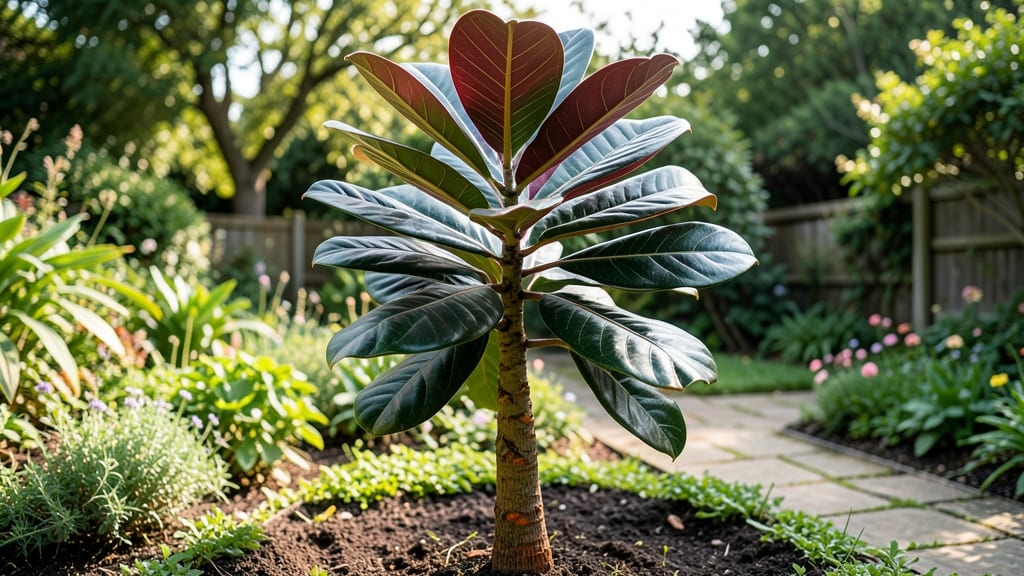
If you're asking "how tall does rubber plant grow", you're probably picturing a lush, towering 🌿 that could soon outgrow your living space.
These plants can reach 6 to 10 feet indoors with ideal care, but their growth depends on more than just time—light, pruning, and even your pot size play a surprisingly big role.
Most rubber plants start small—just 1 to 2 feet in their first year—but without intervention, they’ll stretch toward the ceiling faster than you’d expect. The good news? You can easily control their height with simple techniques, like strategic pruning or choosing the right spot near a window.
Whether you want a compact desk companion or a statement piece, I’ll show you how to shape your plant’s future.
Let’s break down what influences their growth—because yes, even houseplants have personalities. Some varieties, like the 'Black Prince', grow taller and faster, while others stay shorter if given the right conditions.
I’ll also share my top pruning secrets to keep your rubber plant at your ideal height without sacrificing its health or beauty.
Ready to stop guessing and start growing? By the end, you’ll know exactly how to manage your rubber plant’s height—so it stays the perfect size for your space, your style, and your sanity. Let’s get started!


Natural height limits of rubber plants: how big can they really get?
Your rubber plant (Ficus elastica) is a stunning houseplant that can grow taller than you might expect—especially if you love its bold, glossy leaves and don’t intervene. On average, these plants reach 6 to 10 feet tall indoors when given ideal conditions, though some varieties stay shorter.
The key factors? Light exposure, pot size, and pruning habits all play a role in determining how towering your plant becomes.
If you’re imagining a 10-foot-tall plant dominating your living room, you’re not alone—many gardeners are surprised by their rubber plant’s growth potential. However, with the right care, you can easily keep it at a manageable 3 to 6 feet, perfect for shelves or countertops.
The secret lies in understanding your plant’s natural growth patterns and adjusting care accordingly.
🌿 Rubber Plant Height Guide
| Variety | Indoor Height Range | Growth Rate | Best For |
|---|---|---|---|
| Standard Rubber Plant | 6–10 ft | Moderate (1–2 ft/year) | Large spaces, statement plants |
| 'Decora' (Dwarf Variety) | 3–6 ft | Slower (6–12 in/year) | Small apartments, shelves |
| 'Black Prince' | 6–10 ft | Fast (1.5–2 ft/year) | Dramatic foliage, larger rooms |
| 'Variegata' | 4–8 ft | Moderate (1 ft/year) | Bright spaces, decorative use |
Height varies with light, pruning, and container size.
One of the most common questions I hear from new rubber plant owners is, “Will my plant outgrow its space?” The answer depends on your light conditions.
Plants in bright, indirect light (like an east- or west-facing window) grow faster and taller, while those in lower light may stay shorter but develop smaller leaves.
For example, a 'Black Prince' variety in a sunroom could hit 10 feet in 5 years, while the same plant in a dim corner might only reach 4 feet.
Pot size also makes a huge difference. Rubber plants in smaller containers (under 12 inches in diameter) grow slower and stay more compact, while those in large pots or garden beds outdoors can shoot up quickly.
If you’re growing yours in a 10-inch pot, expect a 3–5 foot plant in 3 years. But if you upgrade to a 16-inch pot, it could double that height!
Don’t forget about pruning—this is the easiest way to control height. Regular pruning not only keeps your plant manageable but also encourages bushier growth.
I’ll share my go-to pruning methods in the next section, but for now, know that trimming the top 2–3 inches every 6–12 months can prevent your rubber plant from becoming a ceiling obstacle.
Outdoor rubber plants (in USDA Zones 9–11) can grow even taller—sometimes reaching 15 feet or more in tropical climates. If you’re lucky enough to grow yours outside, provide partial shade and well-draining soil to support its rapid growth while preventing root rot.
If you’re worried about your rubber plant becoming a space invader, start by choosing a dwarf variety like 'Decora' or 'Robusta'. These stay under 6 feet and are perfect for smaller homes.
For standard varieties, plan to prune annually and monitor its growth closely—especially if you notice new leaves appearing higher and higher!
Pro tip: Use a moisture meter to check soil conditions. Overwatering can cause leggy growth, while underwatering slows it down. Aim for consistently moist (not soggy) soil to keep your plant healthy and at your desired height.
Pruning secrets to control rubber plant height: step-by-step guide
If your rubber plant (Ficus elastica) is stretching toward the sky like a skyscraper, it’s time to take control. Pruning isn’t just about trimming—it’s about shaping your plant’s future growth.
With the right techniques, you can keep it compact, encourage bushiness, and even create stunning new plants from cuttings. The key is timing, tools, and a little patience.
Before you grab your shears, know that pruning at the right nodes (leaf junctions) stimulates branching, while cutting too close to the base can stunt growth. Rubber plants respond best to spring or early summer pruning, when they’re entering their active growth phase.
Avoid heavy pruning in fall or winter, as this can stress the plant during its dormant period.
Step-by-Step Pruning Guide
- 1 Choose the right time: Prune in spring or early summer when new growth is just starting. Avoid pruning during dormant months (fall/winter).
- 2 Gather your tools: Use sterilized pruning shears or sharp scissors. Wipe blades with rubbing alcohol to prevent disease spread.
- 3 Identify pruning points: Cut just above a leaf node (where leaves grow) at a 45-degree angle. This encourages new shoots to grow from that spot.
- 4 Encourage bushiness: Trim the top 2-3 inches of the main stem to promote side branches. Repeat on new growth to create a fuller shape.
- 5 Propagate cuttings: Place cuttings in water or moist perlite. Roots form in 2-4 weeks. Transplant rooted cuttings to well-draining soil once established.
- 6 Avoid these mistakes: Never prune more than 1/3 of the plant at once. Don’t cut too close to the base—leave 1-2 inches to prevent dieback.
One of the biggest mistakes I see is over-pruning all at once. Rubber plants are resilient, but cutting back too aggressively can shock the plant and slow its recovery.
Instead, prune in stages over a few weeks to give your plant time to adjust. This gradual approach also lets you monitor how the plant responds to each trim.
Did you know you can turn your prunings into new rubber plants? Simply place the cuttings in water, and in just a few weeks, you’ll have roots ready for potting.
This is a great way to expand your collection or share plants with friends—every cutting is a potential new starter! Just ensure the cutting has at least 2-3 nodes for successful propagation.
After pruning, give your rubber plant a light fertilizer boost to support new growth. Use a balanced liquid fertilizer (10-10-10) diluted to half strength, applied every 4-6 weeks during the growing season. This helps your plant bounce back stronger and encourages those new branches to fill out beautifully.
With these pruning secrets, your rubber plant will stay at your desired height while thriving. Whether you want a compact tabletop plant or a tall statement piece, you’re now in control of its growth trajectory. Happy pruning! ✂️🌿