
Plants
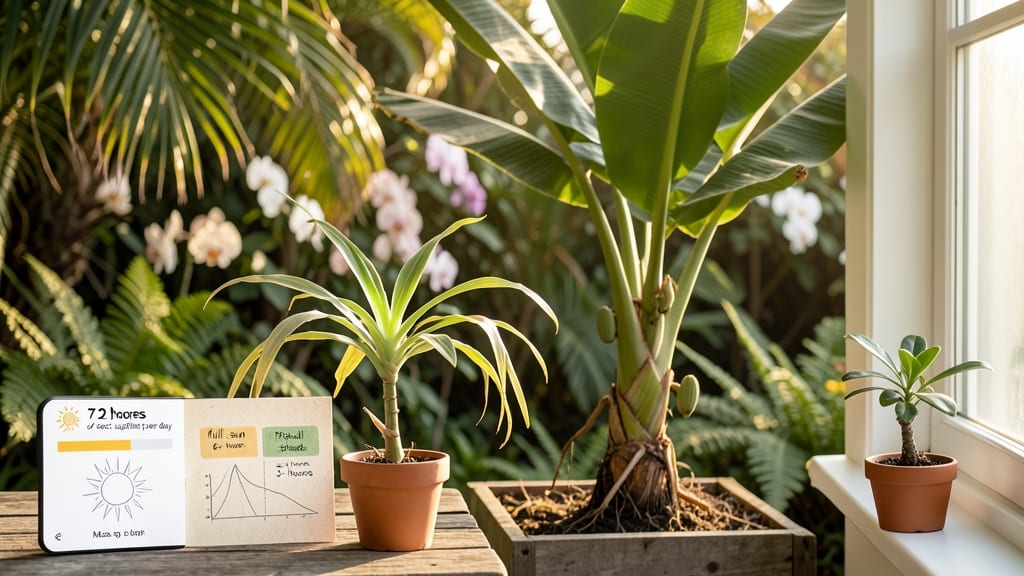
To keep your banana plant 🍌 thriving, you might be surprised to learn that how much light does a banana plant need is often misunderstood—too much or too little can both harm it, yet most growers get the balance wrong.
Whether you're nurturing one indoors near a window or growing it outdoors in your tropical garden, understanding its light needs is the key to lush, healthy leaves and even fruit production.
Banana plants love bright, indirect sunlight for most of the day, but direct afternoon rays in hot climates can scorch those broad leaves faster than you'd think. The trick is finding that goldilocks zone—enough light to fuel growth without causing stress.
I’ll show you exactly how to spot signs of over- or under-exposure and adjust your plant’s environment accordingly.
Indoor growers often struggle with this the most, especially in cooler zones where natural light is weaker. But with a few simple adjustments—like choosing the right window or supplementing with grow lights—you can give your banana plant the perfect light conditions year-round.
Let’s dive into the details so you can keep those leaves vibrant and your plant happy.
From tropical heat to suburban balconies, every growing situation is different. I’ll walk you through the common mistakes that lead to weak growth or leaf burn, and how to fix them before it’s too late. Your banana plant’s future depends on getting this right—and it’s easier than you think!
 Best Window Placement
Ideal sunlight requirements for banana plants: bright indirect light vs full sun
Banana plants are tropical powerhouses that crave bright, indirect sunlight—think of them as sun-worshippers who still need a little shade to avoid getting sunburned. In their native habitats, they grow under the dappled canopy of rainforests, where they receive 6 to 8 hours of filtered light daily.
This means your goal should be to mimic those conditions as closely as possible, whether you're growing them indoors or outdoors.
For outdoor banana plants, aim for 6+ hours of direct sunlight with afternoon shade during peak summer months. Too much harsh afternoon sun can scorch those large, delicate leaves, turning them crispy at the edges.
If you live in a hot, dry climate, providing partial shade (like under a sheer curtain or trees) can prevent heat stress while still allowing enough light for robust growth.
Here’s the key difference: Dwarf banana varieties (like the popular Dwarf Cavendish) tolerate slightly less light than their tall, standard varieties (such as the Musa acuminata). Dwarf types can thrive with 4 to 6 hours of sun, making them better suited for indoor growing or cooler climates.
Meanwhile, larger varieties need full sun exposure to produce those iconic, heavy fruit bunches you’re dreaming of harvesting.
Banana Plant Light Requirements
| Variety | Sunlight Needs | Ideal Location | Signs of Stress |
|---|---|---|---|
| Dwarf Cavendish | 4-6 hours direct sun | Indoors (south window) or partial shade outdoors | Yellowing leaves, slow growth |
| Standard Varieties (e.g., Musa acuminata) | 6-8 hours direct sun | Outdoors (full sun with afternoon shade) | Brown leaf tips, leaf scorch |
| Indoor Banana Plants | Bright indirect light (4-6 ft from window) | South or west-facing window | Leggy growth, pale leaves |
If you’re growing banana plants indoors, position them near a south-facing window where they can soak up bright, indirect light for most of the day.
A west-facing window also works, but avoid placing them in east-facing windows unless you supplement with grow lights, as morning light alone isn’t enough to sustain their energy needs.
For container-grown banana plants, rotate them quarter-turns every few days to ensure even growth and prevent the plant from leaning toward the light source.
One of the biggest mistakes I see is assuming that more sun is always better.
While banana plants love light, excessive direct sunlight—especially during the hottest part of the day (12 PM to 4 PM)—can cause leaf burn, which looks like brown, crispy edges on the leaves.
To prevent this, use a light-colored sheer curtain or a mesh shade cloth to diffuse the light during peak hours. This is particularly important in arid climates like Arizona or California, where the sun is relentless.
On the flip side, too little light leads to weak, leggy growth and small, pale leaves. Your banana plant might even stop producing flowers or fruit if it’s not getting enough light.
If you notice your plant stretching toward the light or developing long, thin stems, it’s a clear sign that it needs more brightness. In this case, consider moving it closer to a window or investing in a full-spectrum grow light to bridge the gap during shorter winter days.
Pro tip: Pay attention to the color of your banana plant’s leaves. Deep green leaves with a slight blue-green tint indicate optimal light conditions. If the leaves turn yellow, it could mean overwatering or too much shade.
If they develop brown patches or crispy edges, it’s a sunburn warning—time to move your plant to a shadier spot or provide afternoon shade. Balancing light is all about observation and adjustment!
For outdoor banana plants, the best time to plant them is in spring or early summer, after the last frost has passed. This gives them plenty of time to establish strong roots before the longer daylight hours of summer.
If you’re in a temperate climate (like USDA Zones 9-10), you can grow banana plants year-round, but they’ll need extra protection during winter, such as mulching or moving them to a greenhouse or indoor space when temperatures drop below 50°F (10°C).
Remember, banana plants are heavy feeders and need fertile, well-draining soil to thrive. Pair their light requirements with regular feeding (every 4-6 weeks during the growing season) and consistent moisture, and you’ll be rewarded with lush foliage and delicious fruit in no time.
With the right light balance, your banana plant will become the star of your garden—or at least the most talked-about houseplant! 🍌
How to adjust light for banana plants in different climates: indoor vs outdoor growing
Banana plants are tropical divas—they love warmth and bright light, but their needs shift dramatically between indoor containers and outdoor beds, especially when moving across climates.
In USDA Zones 10-12, they bask in full sun year-round, while in cooler zones, they’ll need seasonal adjustments to avoid leaf scorch or weak growth. Let’s break down how to tailor light for your banana’s climate, whether it’s a sun-drenched patio or a cozy windowsill.
For outdoor growers, the key is balancing direct sunlight with afternoon shade in hot climates.
In tropical zones, banana plants thrive with 6-8 hours of full sun daily, but in arid regions like Arizona or Nevada, afternoon shade (3 PM–6 PM) prevents leaf burn while maintaining energy for fruiting.
If you’re in a temperate zone (like California’s coastal areas), aim for morning sun + filtered afternoon light to mimic their native canopy conditions.
- South-facing window is ideal for 6+ hours of bright indirect light (rotate plant weekly for even growth).
- Supplement with a 12-14 hour grow light (LED or fluorescent) if leaves pale or stretch toward the window.
- Avoid west-facing windows—intense afternoon sun causes brown leaf tips within days.
- In low-light homes, use a timer-controlled grow light (14 hours/day) to prevent etiolation (weak, leggy stems).
- Mist leaves daily to replicate humidity, but ensure good airflow to avoid fungal spots.
Outdoor banana plants in subtropical zones (like Florida or Hawaii) can handle full sun all day, but mulch heavily to retain moisture. In cooler climates (Zones 8-9), plant them in sheltered microclimates—near walls or fences that absorb heat—while protecting them from winter frosts (they die back at 32°F).
For container growers, move pots to a garage or sunroom when night temps drop below 50°F to extend their lifespan.
One common pitfall is overestimating shade tolerance. Even in hot climates, banana plants need direct sunlight for photosynthesis—without it, they produce fewer flowers and smaller fruit. Test your spot: If a bare hand feels warm after 1 hour in summer, it’s likely safe for full sun.
If it’s too hot to touch, provide dappled shade (like a sheer curtain or lattice).
Pro tip: Acclimate gradually if moving a banana plant from indoors to outdoors. Start with 2-3 hours of morning sun, then increase by 1 hour daily over 1-2 weeks to avoid sun shock (sudden yellowing or crispy edges).
This is especially critical for houseplant bananas transitioning to summer patios. Monitor the undersides of leaves—if they’re dry or papery, it’s a sign of transpiration stress from too much direct light.
Remember, banana plants are not one-size-fits-all. A dwarf variety (like ‘Dwarf Cavendish’) might tolerate partial shade better than a tall ‘Lady Finger’, which craves full sun for robust pseudostems.
Adjust based on your plant’s growth rate and leaf color: Deep green = happy; yellow-green = needs more light; brown edges = too much sun or dry air.
With the right light tweaks, your banana plant will reward you with lush foliage and sweet fruit—no matter where you garden! 🌿☀️