
Plants
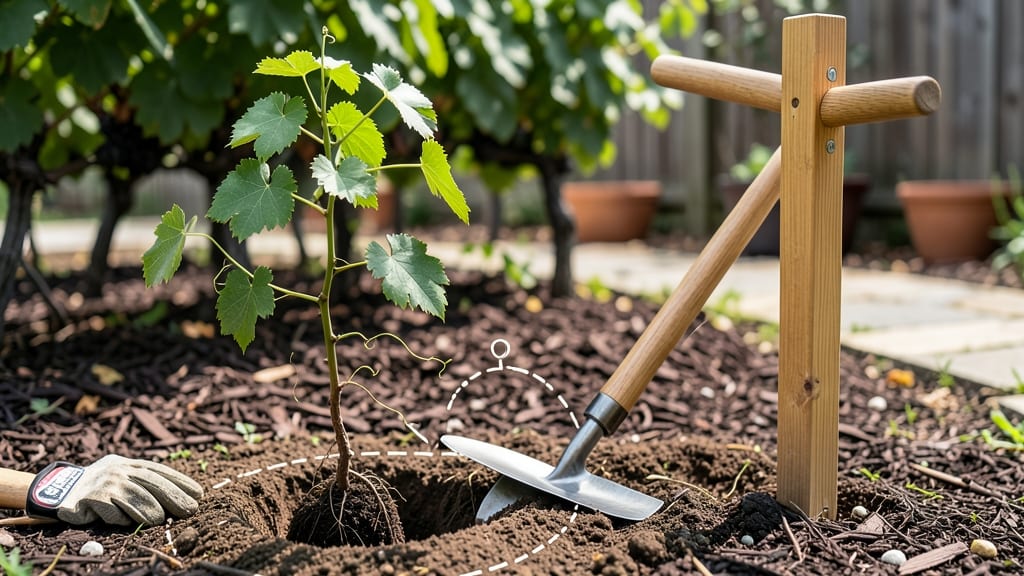
Timing your 🍇 grape vine planting in Zone 7 isn't just about the calendar—it's about matching your vine's chill hour needs with your local frost dates. Plant too early, and you risk frost damage; too late, and your vine might struggle to establish roots before winter.
The perfect window is narrower than you think, and getting it wrong could delay your harvest by a full season.
Most gardeners in Zone 7 assume spring is the only option, but fall planting actually gives your grape vine a head start on root growth before winter dormancy. The key is understanding your specific variety's chill hour requirements—some need 500+ hours below 45°F, while others thrive with fewer.
Without this knowledge, you might end up with a vine that buds out too early and gets fried by late frosts.
In this guide, I’ll break down the exact planting timeline for Zone 7, including soil prep steps you should start 6-8 weeks before your chosen window. We’ll cover everything from adjusting for early-budding varieties to microclimate tweaks that could add 2-3 weeks to your safe planting period.
Ready to avoid the most common mistakes?
Whether you're planting in March or September, the right approach means stronger vines, bigger yields, and grapes that ripen just right for your August-October harvest window. Let’s get your grape vine off to the best possible start.
Optimal planting windows for grape vines in Zone 7 based on chill hours
In Zone 7, the success of your grape vines hinges on understanding chill hours—the accumulated hours below 45°F (7°C) during winter dormancy. Most grape varieties need 500-1,000 chill hours to break dormancy and produce fruit.
Planting too early or late can disrupt this critical cycle, leading to poor yields or even vine death.
Zone 7 spans from Mid-Atlantic states to the Deep South, with microclimates creating 100-1,200 chill hours annually. For example, Virginia averages 800 chill hours, while Georgia may see just 500-600. This variation means your planting window must align with both local frost dates and variety-specific needs.
Here’s the key: Early spring (March-April) is ideal for most grape varieties in Zone 7, but late winter (February) works for early-budding cultivars like Concord. Conversely, late-budding varieties (e.g., Norton) can tolerate early fall (September-October) planting, provided they’re established before first frost.
| Grape Variety | Chill Hours Needed | Best Planting Window | Frost Risk Note |
|---|---|---|---|
| Concord (Early-Budding) | 500-700 | Late Winter (Feb) or Early Spring (Mar) | High risk if planted after March 15 |
| Norton (Late-Budding) | 800-1,000 | Early Spring (Mar-Apr) or Early Fall (Sep) | Low risk in fall if planted by Oct 1 |
| Catawba (Moderate) | 600-800 | Early Spring (Mar-Apr) | Avoid planting after April 15 in colder microclimates |
| Muscadine (Low Chill) | 300-500 | Late Winter (Feb) or Early Fall (Sep-Oct) | Best for southern Zone 7 (e.g., Alabama) |
If you’re planting in early spring, aim for 4-6 weeks before your last frost date (typically mid-April in Zone 7). This gives roots time to establish before active growth begins.
For late winter planting, choose bare-root vines and plant them as soon as soil is workable (40°F+) to minimize transplant shock.
Late-budding varieties like Norton are more forgiving with fall planting because they enter dormancy later. However, avoid planting after September 15 in most of Zone 7, as vines need 4-6 weeks to root before winter. In southern Zone 7 (e.g., Atlanta), you can extend this to October 1.
Microclimates play a huge role. Urban areas with heat islands may have 100+ fewer chill hours than rural zones. Use a local weather station or USDA chill hour maps to adjust your timeline.
For example, Charlottesville, VA (Zone 7a) has 900 chill hours, while Birmingham, AL (Zone 7b) may only see 500.
One common mistake is assuming all grape vines thrive in Zone 7 without adjustments. European varieties (e.g., Chardonnay) often need 800+ chill hours and struggle in southern Zone 7.
Instead, opt for native or hybrid varieties like Norton or Cynthiana, which are bred for lower chill zones.
To extend your planting window, consider container growing. Potted vines can be moved to protected microclimates (e.g., near south-facing walls) to accumulate extra chill hours. Just ensure containers have drainage holes and use well-draining soil mixes to prevent root rot during Zone 7’s humid summers.
Pro tip: If you miss the
Soil preparation timeline: 6-8 weeks before planting grape vines in Zone 7
Getting your grape vine soil ready is just as critical as choosing the right planting window. In Zone 7, where summers can be hot and winters mild, proper soil prep ensures your vines thrive year-round.
Start your soil amendments 6-8 weeks before planting to allow nutrients to integrate naturally.
First, test your soil pH—grapes prefer a slightly acidic range of 6.0-6.5. If your soil is too alkaline, mix in sulfur or peat moss to lower the pH gradually. Avoid quick fixes like lime, which can throw off the balance for grape roots.
Drainage is non-negotiable for grape vines, which hate soggy roots. If your soil is clay-heavy, amend it with compost or coarse sand to improve aeration. Work these amendments into the top 12-18 inches of soil where roots will establish.
🌱 Critical Soil Prep Steps for Zone 7 Grape Vines
- Test pH: Aim for 6.0-6.5; adjust with sulfur if needed.
- Amend clay soil: Mix in 30% compost or sand for better drainage.
- Add organic matter: Work in 2-3 inches of compost or well-rotted manure.
- Improve drainage: Create a slight mound if your yard floods easily.
- Mark planting spots: Space vines 6-10 feet apart for airflow.
Next, focus on organic matter. Grape vines love rich, fertile soil, so incorporate 2-3 inches of compost or well-rotted manure into the planting area. This boosts microorganisms and helps retain moisture during Zone 7’s dry spells. Avoid fresh manure, which can burn tender roots.
If your yard has poor drainage, consider planting on a slight mound or installing a French drain nearby. Grapes despise waterlogged roots, and even Zone 7’s mild winters can lead to rot if excess moisture lingers. A permeable soil layer is your best defense.
Finally, mulch heavily around the planting area with wood chips or straw. This retains moisture, regulates soil temperature, and suppresses weeds—critical in Zone 7’s hot summers. Apply mulch 2-3 inches thick, keeping it 4 inches away from the vine trunk to prevent rot.
With your soil prepped, your grape vines will have the perfect foundation to establish strong roots before their first growing season. Timing these steps right ensures your vines hit the ground running when you plant! 🍇