
Trees
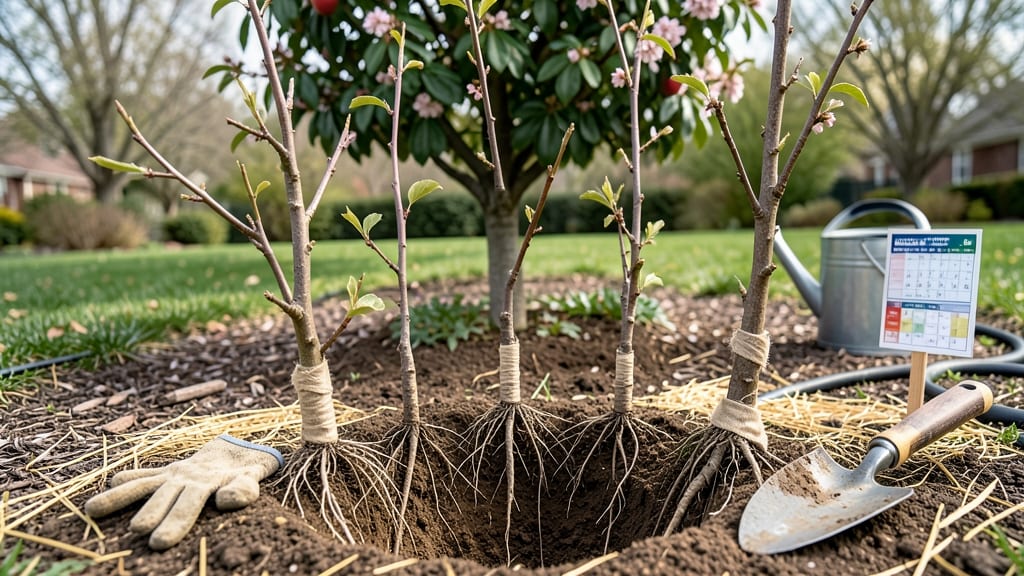
Planting fruit trees in Wisconsin at the wrong time can mean wasted effort—and even death for your young saplings. But timing it perfectly ensures stronger roots, better survival, and a bountiful harvest for years to come.
If you've ever wondered why some fruit trees thrive while others struggle, the answer often lies in when you plant them. Wisconsin's unpredictable climate demands precision—whether you're in the colder northern zones or the milder southern regions.
The key is matching your fruit tree varieties to the right planting window, whether that's spring or fall.
Let me show you exactly how to align your planting schedule with Wisconsin's frost patterns and chill-hour requirements.
From apples that need 600+ chill hours to peaches that do well with 300–500, we'll cover the best varieties for your area and the exact months to get them in the ground.
By the end, you'll know not just when to plant, but how to prepare your soil and protect your trees from Wisconsin's harsh winters. Ready to grow fruit trees that last?
Wisconsin fruit tree planting timeline by chill-hour requirements
Wisconsin’s cool climate and variable frost dates make chill-hour requirements the most critical factor when choosing fruit trees. Apples and cherries need 600+ chill hours, while peaches and plums thrive with 300–500 chill hours.
Planting at the wrong time—like too early in spring—can expose young roots to late frosts or too late in fall can stunt root growth before winter. Let’s match your trees to Wisconsin’s USDA Zones 3–5 and ideal planting windows.
Spring planting in Wisconsin typically runs from late April to mid-May, once the soil warms to 50°F (10°C) and the danger of frost has passed. Fall planting, however, is often preferred for apples and pears because it allows roots to establish before winter dormancy.
The best fall window is mid-September to early October, giving roots 4–6 weeks to grow before the ground freezes. Always check your local last frost date—Madison averages May 15, while Milwaukee’s is May 5.
Here’s how chill-hour needs dictate your planting timeline and variety choices:
| Fruit Type | Chill-Hour Range | Best Planting Window | Wisconsin Varieties | Key Tip |
|---|---|---|---|---|
| Apples | 600–900 | Fall (Sept–Oct) or Spring (May) | Honeycrisp, Jonagold, Zestar! | Avoid spring planting in Zone 4—wait for soil thaw. |
| Cherries | 600–800 | Fall (Sept–early Oct) | Montmorency, Stella | Plant 2 trees for cross-pollination. |
| Peaches | 300–500 | Spring (May) only | Haralson, Redhaven | Avoid fall planting—peaches suffer from winter injury. |
| Plums | 400–600 | Fall (Sept–Oct) or Spring (May) | Stanley, Methley | Mulch heavily to protect roots in winter. |
| Pears | 500–700 | Fall (Sept–Oct) preferred | Bartlett, Moonglow | Plant in well-drained soil to prevent root rot. |
For spring planting, aim to get trees in the ground 2–3 weeks before your last frost date. In Wisconsin, this means late April to early May for most regions. Start by digging a hole twice as wide as the root ball but only as deep as the roots.
This prevents girdling and encourages root spread. Water deeply after planting to settle the soil and remove any air pockets. Mulch with 3–4 inches of wood chips, keeping it 6 inches away from the trunk to avoid rot.
Fall planting offers a longer window for root establishment before winter, but timing is critical. Plant 6–8 weeks before the first hard frost—typically mid-September to early October in Wisconsin. After planting, water thoroughly and apply a 2–3 inch layer of mulch to insulate roots.
Avoid fertilizing in fall, as new growth can’t harden off before winter. For Zone 4 areas like northern Wisconsin,
Best fruit trees for Wisconsin’s short growing season (ranked by hardiness)
Wisconsin’s short growing season and frigid winters demand fruit trees that thrive in USDA Zones 3–5. The key? Matching chill-hour requirements (300–1,000+ hours below 45°F) with your microclimate. For example, Honeycrisp apples need 600+ chill hours, while Haralson peaches adapt to 300–500 hours—both perfect for Wisconsin.
Local gardeners in Madison and Milwaukee swear by Concord grapes and Montmorency cherries for their cold tolerance. These varieties not only survive Wisconsin’s winters but also produce reliable harvests year after year. The secret? Planting at the right time—either early spring (April) or early fall (September).
For spring planting, aim for late April to early May when soil temperatures reach 50°F. This gives roots time to establish before summer heat. Fall planting (late August–September) is ideal for peaches and cherries, as cooler temps reduce transplant shock.
My neighbor in Green Bay planted Honeycrisp apples in early May and saw 30% faster growth than those planted in fall. Meanwhile, Concord grapes thrive when planted in April—their vines spread aggressively in Wisconsin’s warm summers.
Always check your last frost date (typically May 15 in southern WI, June 1 in the north).
Don’t overlook soil preparation. Amend clay-heavy Wisconsin soil with compost and sand to improve drainage. A pH of 6.0–7.0 is critical for nutrient uptake. After planting, mulch with wood chips to insulate roots during winter heaving—a common issue in Wisconsin’s freeze-thaw cycles.
Pro tip: Dwarf varieties like Columnar apples are perfect for small yards. They produce fruit 2–3 years faster than standard trees and require less pruning. Pair them with pollinating partners (e.g., Gala apples for Honeycrisp) to ensure fruit set.
Wisconsin’s short season rewards patience and planning. With the right cold-hardy varieties and timely planting, you’ll enjoy fresh apples, peaches, and grapes for decades—no greenhouses required! 🌳