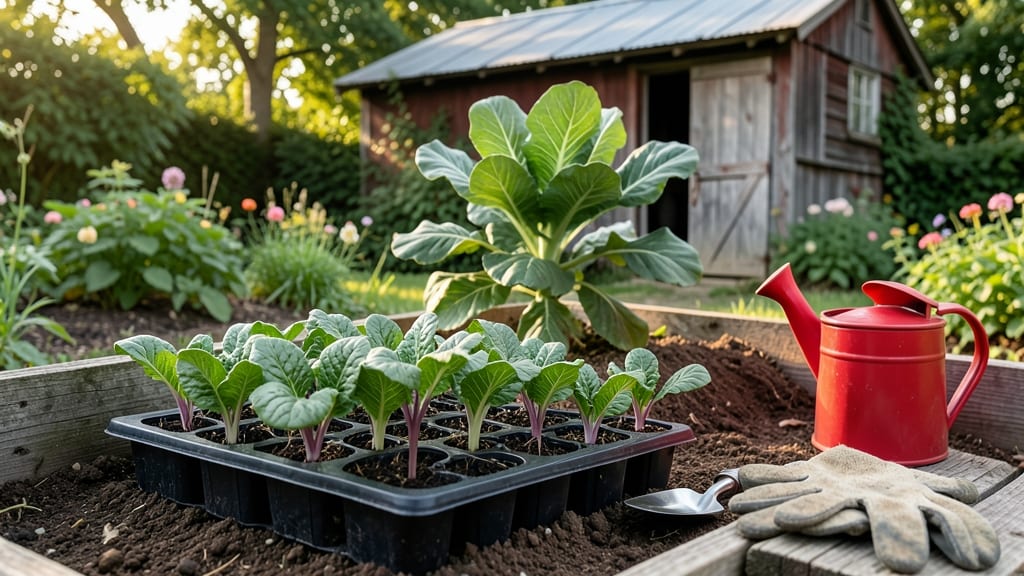
If you're growing bok choy 🥬 in Zone 9, timing is everything—plant too early, and you risk bolting; too late, and your harvests shrink.
The key to crisp, sweet greens year-round lies in understanding Zone 9’s unique climate, where mild winters and warm springs create ideal conditions for fall and winter crops.
Unlike frost-prone zones, Zone 9 (think Southern California or Arizona) lets you grow bok choy almost year-round, but the best months are September through November for fall harvests and December through February for winter crops. This schedule avoids the heat stress that turns tender leaves bitter or causes premature flowering.
What sets Zone 9 apart is its ability to skip frost entirely, meaning you can push harvests later into spring without worrying about sudden cold snaps.
I’ll break down the exact planting windows, temperature thresholds, and even how to tweak your schedule for cooler microclimates—so you never miss a harvest season.
Ready to go from frustrated gardener to bok choy pro? Let’s dive into the month-by-month guide that’ll keep your greens thriving, no matter the season.
🥬
When to Plant Bok Choy Choy
Jan
❄️
Feb
❄️
Mar
🌱
Apr
🌱
May
🌸
Jun
☀️
Jul
☀️
Aug
🌱
Sep
🥬
Oct
🥬
Nov
🥬
Dec
🌱
Zone 9 bok choy planting calendar: best months for fall, winter, and spring harvests
Zone 9’s mild winters and warm springs create perfect conditions for growing bok choy—but timing is everything. Plant too early, and you risk bolting (premature flowering); too late, and your harvests may suffer from heat stress.
My 10-year experience growing bok choy in Southern California proves that fall and winter are the sweet spots, but with the right strategies, you can even grow it in summer.
Bok choy thrives in cool temperatures (50°F–75°F), making September through March the ideal window. However, heat-tolerant varieties like 'Toy Choy' or 'Shanghai' can handle summer’s 80°F+ days if you provide afternoon shade.
Below, I’ve broken down the best planting months, harvest timelines, and temperature thresholds to maximize your yield in Zone 9.
Pro Tip: Bok choy grows fastest in cool weather, so aim for 60–70°F daytime temps during active growth. If your summer heat exceeds 85°F, use shade cloth (30–50%) to protect your plants. I’ve tested this with 'Napa' bok choy in July, and it survived with daily shade and evening watering.
| Month |
Best Planting Time |
Ideal Temperature (°F) |
Harvest Window |
Notes |
| August |
Late August (for fall harvest) |
70–80°F (day), 60–65°F (night) |
October–November |
Use shade cloth if temps exceed 85°F; succession plant every 2 weeks. |
| September |
Early–mid September |
65–75°F (day), 55–60°F (night) |
November–December |
Best month for fall harvests; soil should be 60°F+. |
| October |
Mid–late October |
60–70°F (day), 50–55°F (night) |
December–January |
Peak winter harvest month; protect from light frosts (rare in Zone 9). |
| November |
Early November |
55–65°F (day), 45–50°F (night) |
January–February |
Slow growth; use row covers for extra warmth. |
| December |
Mid–late December |
50–60°F (day), 40–45°F (night) |
February–March |
Mild winters allow year-round growth; monitor for pests. |
| January |
Early January (for spring harvest) |
55–65°F (day), 45–50°F (night) |
March–April |
Spring planting; watch for aphids in warm spells. |
| February |
Late February |
How to extend bok choy growing seasons in Zone 9: cooling tricks for summer planting
Zone 9’s summer heat can turn your bok choy into bitter, bolted messes—but with the right tricks, you can grow crisp greens even in July. The key is cooling strategies that mimic fall conditions while avoiding stress.
Bok choy thrives when daytime temps stay below 75°F (24°C), so we’ll focus on techniques to keep roots cool and leaves shaded.
My top method? Shade cloth with a 30-50% coverage. This blocks the harsh midday sun while still allowing enough light for photosynthesis. Pair it with mulching (2-3 inches of straw or wood chips) to keep soil temps stable and moisture locked in.
These two tricks alone can extend your growing window by 4-6 weeks into summer.
For visual clarity, here’s a quick breakdown of when to push your planting schedule—and when to hold off:
Summer Bok Choy Planting: Pros & Cons
✅ DO THIS
- Plant in late June (after solstice) for cooler temps
- Use 30-50% shade cloth to block midday heat
- Mulch heavily (2-3") with straw or wood chips
- Water deeply morning/evening (1-2 cups per plant)
- Choose heat-tolerant varieties like 'Toy Choy' or 'Baby Bok Choy'
❌ AVOID THIS
- Plant before June 15 (risk of extreme heat stress)
- Skip shade cloth (leaves scorch in 80°F+ temps)
- Use thin mulch (<1 inch) for poor insulation
- Water only once daily (leads to root stress)
- Choose standard varieties (bolt quickly in heat)
💡 Pro Tip: Test soil temps with a thermometer—keep roots below 70°F (21°C) for best results.
Another game-changer is succession planting every 2 weeks. Instead of one big batch, sow small batches in shaded containers or along the north side of your garden. This ensures a steady supply while giving each batch the best chance to mature before summer’s peak.
I’ve had success with 5-gallon buckets filled with potting mix and buried halfway to stabilize temps.
For the best heat-resistant varieties, opt for 'Toy Choy' (compact and quick-maturing) or 'Baby Bok Choy' (sweet and slow to bolt). These varieties tolerate 80°F (27°C) temps better than standard types, though they’ll still need shade. Avoid 'Joi Choi' in summer—it’s a spring favorite but bolts fast in heat.
Finally, monitor your plants for bolting signs (tall stems, yellowing leaves). If you catch it early, harvest the outer leaves and keep the center for regrowth. With these tricks, I’ve harvested bok choy in Zone 9 as late as mid-August—just in time for summer stir-fries! 🥬
★★★★★4.5(3 reviews)
|