
Plants
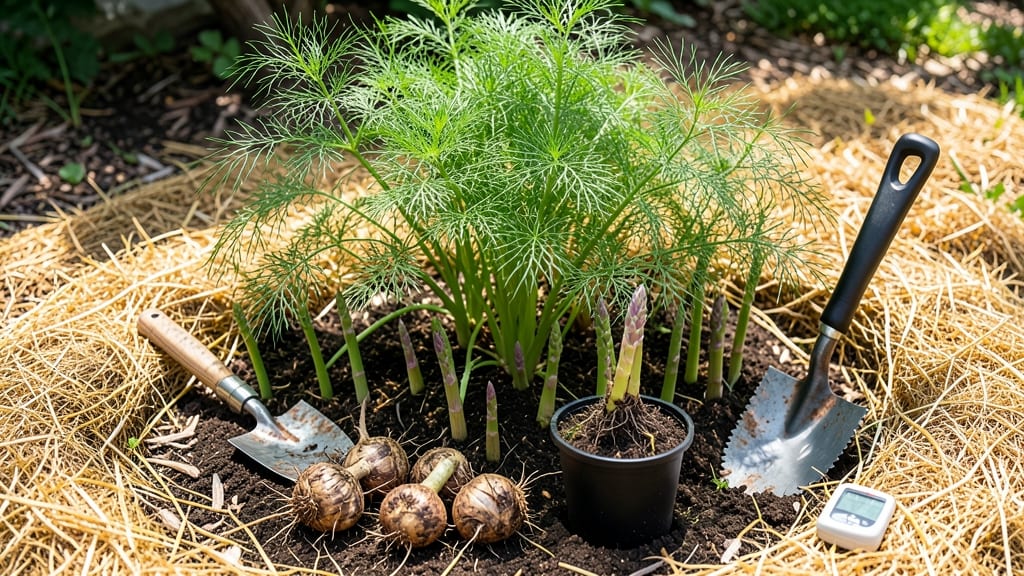
Planting asparagus in Minnesota isn’t just about timing—it’s about beating the clock before frost strikes or the soil warms too fast.
The key to a thriving 🌱 asparagus patch lies in a narrow window where cold-hardy crowns can root before the ground thaws completely, yet avoid the risk of frost heave that stunts growth.
Most gardeners in USDA Zones 4a-5b swear by early spring planting (March to April), but there’s a trickier option: fall planting for crowns that need time to establish roots before winter.
The difference between success and failure often comes down to soil temperature checks and knowing your last frost date—especially when Minnesota’s weather can flip from snow to 60°F in a single week.
In this guide, I’ll break down the exact steps to time your planting for maximum yield, from soil prep to post-planting care tailored to Minnesota’s climate. You’ll learn how to read the signs (like soil temperature and crown maturity) and avoid common pitfalls that waste years of effort.
Whether you’re a first-time gardener or a seasoned pro, these cold-hardy strategies will help you grow asparagus that thrives for decades—no guesswork required.
Minnesota’s ideal asparagus planting window: month-by-month breakdown
Minnesota’s USDA Zones 3-5 demand precision when planting asparagus crowns. The ideal window spans from late March to mid-April, when soil temperatures hover between 40-50°F—cold enough to prevent premature sprouting but warm enough for root establishment.
This timing aligns with Minnesota’s average last frost date (April 15), giving crowns 4-6 weeks to root before active growth begins.
For gardeners in northern MN (Zone 3), aim for early April to avoid late-season frosts that can damage tender shoots. In southern MN (Zone 5), you can push planting to mid-April without risking frost heave.
The key is planting 4-6 weeks before your last frost date, not after—this ensures roots anchor before the soil warms.
While spring planting is standard, fall planting (September-October) is an option for crowns purchased early in the season. This method leverages Minnesota’s cool fall temperatures to establish roots before winter dormancy. However, fall-planted crowns require extra mulch (6-8 inches) to insulate roots from freeze-thaw cycles.
Seed-starting indoors in February is another strategy, but asparagus seeds germinate slowly (30-60 days) and require consistent warmth (70°F)—challenging in Minnesota’s fluctuating indoor temps. Most gardeners opt for pre-grown crowns for reliability.
| Month | Soil Temp Goal (°F) | Action | Notes |
|---|---|---|---|
| March | 40-50°F | Plant crowns 4-6 weeks before last frost | Northern MN: Wait until soil thaws |
| April | 50-60°F | Finalize planting by mid-April | Southern MN: Can plant into early April |
| September | 50-60°F | Fall planting (crowns only) | Add 6-8" mulch for winter protection |
| October | 40°F+ | No planting; focus on soil prep | Avoid disturbing soil after mid-October |
Minnesota’s microclimates play a critical role in timing. Urban areas like Minneapolis often experience earlier soil warming than rural zones, while the North Shore can delay planting by 1-2 weeks.
Use a soil thermometer to confirm temperatures—planting when the soil hits 45°F at 4" depth is ideal for crown rooting.
One common misconception is that asparagus can be planted as soon as the ground is workable. However, cold soil slows root growth, and planting too early (before 40°F) risks frost heave, where roots lift out of the soil.
Test soil moisture too—it should be damp but not soggy to prevent rot.
After planting, mulch heavily (4-6 inches) with straw or shredded leaves to retain moisture and regulate soil temperature. This is especially critical in Minnesota’s spring frost pockets, where nighttime temps can drop below freezing even after the last frost date.
For gardeners in Zone 4a (northern MN), extend the planting window by 1-2 weeks using black plastic mulch to warm the soil faster. Remove it once shoots emerge to prevent overheating. Always monitor your local MN State University Extension frost forecasts for real-time adjustments.
Remember: Asparagus is a perennial investment. A well-timed planting in Minnesota’s short season can yield harvests for 15-20 years—making precision worth the effort. Start with small batches (5-10 crowns) to test your local conditions before expanding.
5 Critical factors that determine your planting success in Minnesota
Timing your asparagus planting in Minnesota isn’t just about picking a month—it’s about reading the soil temperature, understanding microclimates, and knowing when your crowns are ready to root. The last frost date (typically mid-April) is just one piece of the puzzle.
For example, in Zone 4a (northern MN), you might plant in early April, while Zone 5b (southern MN) could wait until late March. The difference? Soil warmth and crown maturity.
I’ve learned the hard way that planting too early—when the ground is still frozen or soil temps hover around 40°F—leads to frost heave, where crowns pop out of the soil and die. Conversely, waiting until the soil is too warm (above 70°F) stunts root growth.
The sweet spot? 50-60°F soil with consistent daytime temps above 55°F. This balance ensures your crowns establish roots before the rush of spring growth begins.
Here’s the breakdown of the 5 critical factors that separate successful asparagus patches from failed experiments in Minnesota:
-
1. Soil Temperature
Wait until soil reaches 50-60°F at 4" depth. Use a soil thermometer—cold soil delays root growth.
-
2. Last Frost Date
Plant 4-6 weeks before your average last frost (check MN DNR maps). Northern MN: aim for April 1-15.
-
3. Crown Maturity
Choose 1-year-old crowns with 3-5 healthy buds. Older crowns (2+ years) root faster but cost more.
-
4. Microclimates
South-facing slopes warm 2-3°F faster than low-lying areas. Test your spot with a frost blanket trial.
-
5. Soil Drainage
Asparagus hates soggy soil. Amend clay soil with compost + sand (50/50 mix) to prevent rot.
Let’s talk microclimates for a minute—this is where most Minnesota gardeners trip up. A spot near your house’s south wall might be 10°F warmer than your backyard, giving you an extra week or two of planting time.
I once planted asparagus in a low-lying area in Zone 4a and lost half the crowns to frost heave. The same variety thrived just 10 feet away on a slight slope. Always test your microclimate by planting radishes first—they’ll tell you when the soil is truly ready.
Another game-changer is crown maturity. I’ve seen gardeners rush to plant 2-year-old crowns in hopes of faster harvests, but these often struggle to root in Minnesota’s short season. 1-year-old crowns with 3-5 buds are the gold standard—they’re cheaper, root faster, and give you a 2-year head start on spears.
Pro tip: Soak crowns in water for 2 hours before planting to kickstart root growth.
Finally, don’t overlook the soil prep checklist—this is your insurance against failure.
Before planting, verify: - pH 6.5-7.5 (test with a kit) - Well-draining soil (no standing water after rain) - 6-8 inches of compost mixed into the top 12" of soil - No fresh manure (wait 6 months to avoid burn) Once your asparagus is in the ground, water deeply once a week (1-1.5 inches) and avoid harvesting for 3 years—this lets the roots establish fully for decades of harvests.
With these factors nailed down, you’re not just planting asparagus—you’re setting up a perennial powerhouse that’ll outlast your garden tools. The key? Patience and precision. Skip the guesswork, and you’ll be enjoying homegrown spears by June—no Minnesota frost in sight. 🌱