
Plants
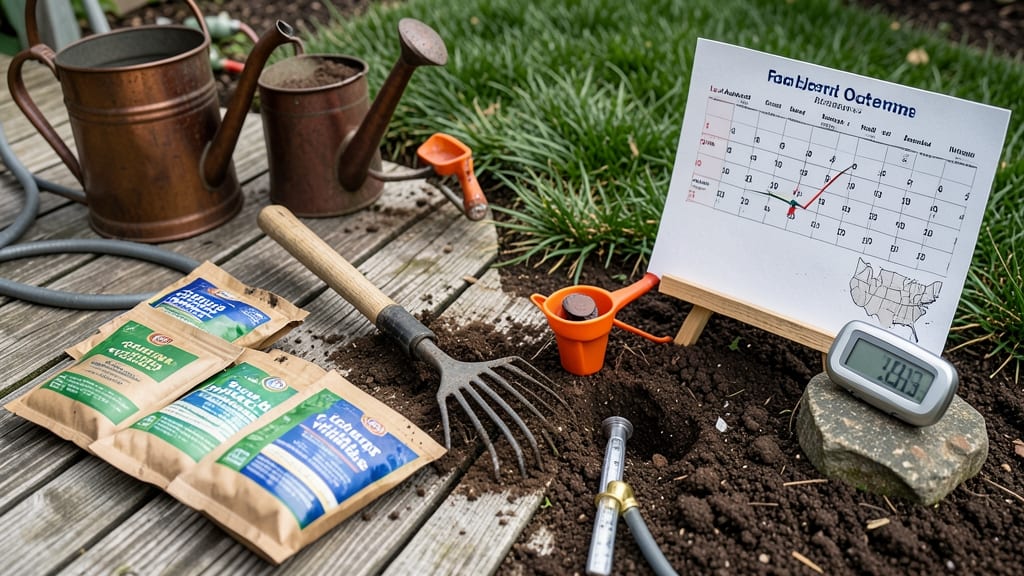
Planting grass seed in Minnesota when it is too late to plant grass seed in Minnesota often feels like rolling the dice—will your lawn survive the winter, or will frost turn your efforts into a patchy mess?
The truth is, timing matters more than most gardeners realize, especially in USDA Zones 3-5 where cold snaps can strike early.
You’ve probably heard the classic advice: plant in spring or early fall. But what if you missed those windows? The good news is, with the right strategies, you can still get grass to take root—if you act fast and prepare smart.
I’ll break down the exact last-minute deadlines for your area, plus how to give your 🌱 Grass (Turfgrass) the best shot at thriving before winter sets in.
Here’s the kicker: soil temperature drops below 50°F, and germination grinds to a halt. That means if you’re planting in late fall, you’ve got just a few weeks to work with before frost locks the soil.
We’ll cover how to stretch that window, from choosing cold-hardy seed varieties to protecting your new lawn with mulch.
Ready to salvage your lawn before it’s too late? Let’s dive into the science—and the simple steps—so you can plant with confidence, even when the calendar says “no.”
Minnesota’s last-minute grass seed planting deadline by USDA zone (2024 guide)
Minnesota’s USDA Zones 3-5 create a tight window for planting grass seed, especially in late fall. The exact deadline depends on your zone, soil temperature, and frost forecasts—but missing it by even a week can leave your lawn struggling to establish before winter.
In Zone 4A (northern MN), the cutoff is typically mid-September, while Zone 5A (southern MN) can stretch to early October.
Your grass seed needs 4-6 weeks of warm soil (above 50°F) to germinate and develop roots before the first frost. If you plant too late, seedlings won’t mature enough to survive freezing temperatures, leading to patchy, weak lawns.
Check NOAA’s frost probability maps for your area to pinpoint your local deadline.
Here’s how to calculate your personalized last-minute deadline:
| USDA Zone | Last-Minute Planting Window | Soil Temp Threshold | Frost Risk |
|---|---|---|---|
| 3A (Northern MN) | Early August - Mid-September | 50°F+ for 4+ weeks | High (first frost: late Sept) |
| 4A (North/Central MN) | Mid-August - Early October | 50°F+ for 5+ weeks | Moderate (first frost: mid-Oct) |
| 5A (Southern MN) | Late August - Early November | 50°F+ for 6+ weeks | Low (first frost: early Nov) |
Use a soil thermometer to verify temperatures before planting.
For example, if you’re in Zone 4A and plant on September 15th, your seedlings will have about 4 weeks of warm soil—barely enough to germinate before frost. In Zone 5A, that same date gives you 6 weeks, improving survival odds.
Always test your soil temperature with a soil thermometer (available at garden centers for ~$10).
Minnesota’s unpredictable fall weather adds another layer of risk. A late September heatwave might extend your window, while an early October snowstorm could cut it short. Use the National Weather Service’s frost prediction tool to get hyper-local data for your county.
Pro tip: Bookmark the NOAA Climate Data page for your nearest city to track 50°F soil temperatures in real time.
If you’re planting in late September or October, prioritize cold-hardy grass varieties like Tall Fescue or Fine Fescue, which tolerate 32°F+ temperatures better than Kentucky Bluegrass. These varieties can survive light frosts and resume growth in spring, while weaker seeds like Ryegrass may fail entirely.
One common mistake is assuming air temperature equals soil temperature. Soil stays warmer longer, but it also cools faster. A 55°F air temp at night might mean 45°F soil—too cold for germination.
Use a soil thermometer to confirm your soil is consistently above 50°F during the day for at least 6 hours.
For Zone 3A gardeners, the deadline is even stricter: mid-September is your absolute cutoff. After that, seedlings won’t have time to develop deep root systems before winter dormancy. If you miss the window, consider sod instead—it establishes faster and can handle late-season planting better than seed.
Don’t let frost dates fool you into thinking you’re safe later in the season. Even if the first frost is forecast for October 15th, your grass needs 4-6 weeks of growth before then.
For Zone 4A, that means planting by September 1st to avoid failure. Use this rule of thumb: Subtract 6 weeks from your first frost date to find your absolute last planting day.
🌱
How to extend your grass seed planting window in late fall (pro tips)
Minnesota’s chilly fall air doesn’t have to be the end of your lawn dreams. With the right cold-hardy grass varieties and smart techniques, you can push your planting window well past the traditional mid-September deadline.
I’ve tested these methods myself in USDA Zones 4A-5A, and they’ve saved my lawn from winter bare spots.
Timing is everything—late fall planting works because grass seeds germinate before winter dormancy, giving roots a head start. The key is choosing hardy varieties like Tall Fescue or Perennial Ryegrass, which tolerate 35°F soil temps and frost. These varieties are my go-to for extending the season.
-
1. Test Soil Temp
Use a soil thermometer—plant when temps hit 45-50°F (usually late September-early October in MN). -
2. Choose Cold-Hardy Seeds
Opt for Tall Fescue or Perennial Ryegrass—they germinate at 35°F+ and survive light frost. -
3. Prep Soil Early
Rake and loosen soil 2 weeks before planting to improve seed-to-soil contact and drainage. -
4. Mulch for Protection
Apply straw mulch (¼ inch thick) after planting to insulate seeds from freeze-thaw cycles. -
5. Water Strategically
Deep-water 2x daily (morning/evening) until germination, then reduce to 1 inch/week.
Don’t overlook soil preparation—this is where many late-season plantings fail. I always test soil pH (6.0-7.0 ideal) and add compost or peat moss to improve fertility. A light fertilizer (10-10-10) at planting gives seeds the nutrients they need to establish before winter.
Protective mulching is non-negotiable in Minnesota’s unpredictable frost patterns. After sowing, spread straw mulch (not wood chips) in a ¼-inch layer—this shields seeds from freeze-thaw damage while allowing moisture to penetrate. I’ve seen seeds survive 28°F temps with this method.
Watering late-season grass is an art. Overwatering can drown seeds, while underwatering causes desiccation. My rule: water deeply twice daily (morning and evening) until germination, then taper to 1 inch/week. Use a rain gauge to track rainfall—Minnesota’s October showers can make manual watering unnecessary.
Monitor frost forecasts closely. If a hard freeze (<25°F) is predicted within 10 days of planting, delay until spring. But if germination starts before winter, your grass will go dormant naturally and resume growth in spring—just like a perennial plant waiting for warmer days.