
Plants
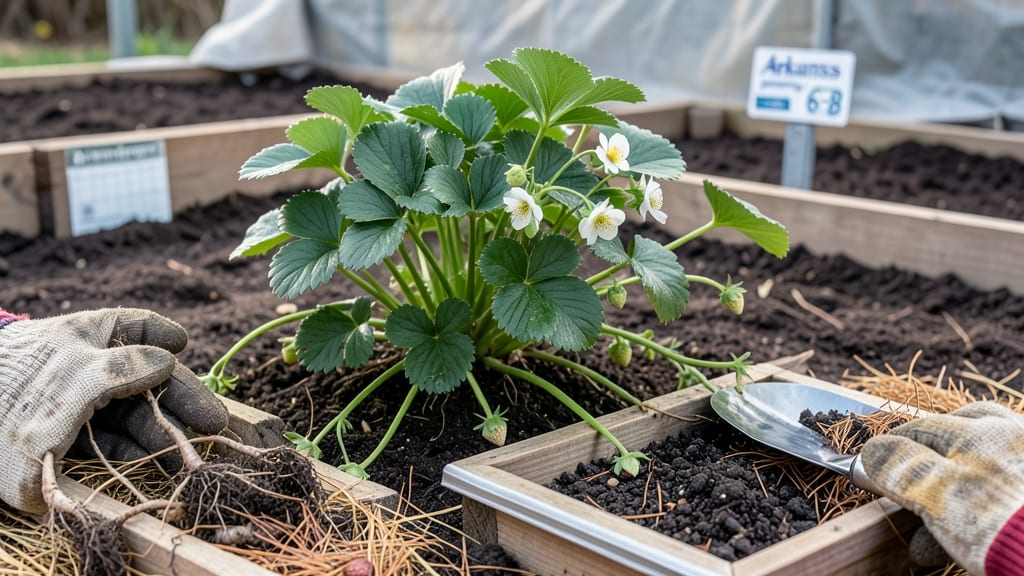
Planting strawberries in Arkansas isn't just about grabbing a pack of 🍓 plants—it's about outsmarting the state's unpredictable frosts and microclimates. Whether you're in the humid Delta or the cooler Ozarks, getting the timing wrong can mean the difference between a bountiful harvest and wasted effort.
Most gardeners assume spring is the only window, but Arkansas' mild winters actually make fall planting a smart strategy for many varieties. The key is planting 6-8 weeks before your first frost, which typically lands in late September to early October.
This gives roots time to establish before winter sets in.
I've learned the hard way that rushing too early in spring (before the last frost, usually around March 15) or dragging your feet in fall can leave your plants vulnerable.
Let me walk you through the exact planting schedule that works for Arkansas' USDA zones 7a-8b, including when to prep your soil and how to protect young plants from late surprises.
You'll discover how to choose between bare-root plants (cheaper but more delicate) and potted varieties (pricier but easier to transplant), plus regional adjustments that could add weeks to your harvest window. Ready to turn your Arkansas garden into a strawberry powerhouse?
Best planting months for strawberries in Arkansas by region (with frost risk data)
Arkansas’ three distinct regions create unique challenges for strawberry growers. The Ozarks’ cooler climate (USDA zones 6b-7a) allows earlier spring planting, while the Delta’s humidity (zones 7b-8a) demands fall planting precision. Central Arkansas (Little Rock’s zone 7b) falls right in the middle—giving you two safe windows each year.
Historical frost data from the National Weather Service shows North Arkansas averages its last frost by March 15, while South Arkansas holds off until March 20-25. First frosts arrive earliest in the Ozarks (November 10-15) and latest in the Delta (November 20-25).
These dates are your planting anchors—but local microclimates can shift them by weeks.
For June-bearing varieties (like ‘Chandler’), aim for early spring (February-March) to maximize summer harvests. Everbearing types (such as ‘Ozark Beauty’) thrive with fall planting in September, while day-neutral varieties (like ‘Seascape’) offer flexibility for both seasons.
Here’s how to align your planting with Arkansas’ regional patterns:
In the Ozarks, I’ve seen gardeners successfully plant as early as February 1 using row covers to shield young plants from late frosts. The key is monitoring soil temperatures—they should stay above 40°F (4°C) for 7+ days before planting. Use a soil thermometer to avoid false starts.
Central Arkansas gardeners often split their efforts: half in spring for June-bearing varieties and half in fall for everbearing types. The Little Rock area’s longer growing season lets you experiment with successive plantings every 2-3 weeks for extended harvests. Just beware of humidity-related diseases like gray mold in summer.
For the Delta region, fall planting is non-negotiable. The hotter summers stress strawberries, and spring plantings often suffer from heat stress before fruiting. I recommend day-neutral varieties here—they’ll produce smaller but consistent yields year-round if given proper care.
Pro tip: Arkansas’ clay-heavy soils need amendment with compost or sand to improve drainage. Mix in 2-3 inches of organic matter at planting time, and consider raised beds in low-lying areas prone to waterlogging. Mulch with straw to retain moisture and suppress weeds—critical in Arkansas’ humid summers.
Remember, these dates are guidelines, not rules. Check the National Weather Service’s 30-day forecast before planting, and have row covers ready for unexpected cold snaps. With Arkansas’ unpredictable weather, flexibility is your best friend in the strawberry patch.
🌱
How to extend your Arkansas strawberry season using microclimate hacks
Arkansas’ unpredictable frost dates can turn your strawberry dreams into a gamble—but not if you leverage microclimate hacks. By strategically using protective covers, mulching techniques, and site selection, you can safely plant strawberries 4-6 weeks earlier in spring or 2-3 weeks later in fall.
The key? Understanding how your yard’s unique conditions (like south-facing slopes or low-lying areas) create microclimates that defy the average frost date.
For example, a south-facing slope in the Ozarks might warm up 5-7 days faster than a valley, while a low-lying area in the Delta could trap cold air and delay spring planting by 10 days or more.
These tweaks aren’t just about pushing limits—they’re about maximizing your harvest window without risking frost damage to your June-bearing, everbearing, or day-neutral varieties.
🌱 Top 5 Microclimate Hacks for Arkansas Strawberries
- 1. Cold Frames: Extend spring planting by 4-6 weeks using clear plastic or glass frames. Ideal for bare-root plants in January-February—just remove covers by mid-March to avoid overheating.
- 2. Row Covers: Lightweight frost blankets add 2-4°F protection and let you plant 2 weeks earlier in spring or 3 weeks later in fall. Secure edges with bricks or soil to prevent wind damage.
- 3. Straw Mulch: Apply 4-6 inches of straw around plants to insulate roots. This delays early spring frosts by 1-2 weeks and suppresses weeds—critical for Arkansas’ clay-heavy soils.
- 4. South-Facing Slopes: Plant on sunny, elevated beds to warm up 5-7 days faster than flat ground. Avoid low-lying areas, which trap cold air and risk late frosts.
- 5. Black Plastic Mulch: Spread black landscape fabric in late winter to absorb heat and warm soil. Lift covers by planting time to prevent overheating roots.
Let’s talk cost-benefit analysis—because not every hack pays off equally. A $20 cold frame might save you $50 worth of lost plants in a late frost, while $15 row covers can extend your fall harvest by 3 weeks.
Straw mulch ($10 for 4 cubic feet) is the most budget-friendly option, offering year-round soil protection beyond frost dates. For high-value varieties like ‘Chandler’, investing in protective measures is a no-brainer.
Site selection is where microclimates get personal. In North Arkansas (USDA Zone 7a), prioritize south-facing slopes for early spring planting—these spots can be 10°F warmer than valleys by dawn. In Central Arkansas (Zone 7b-8a), raised beds with black plastic mulch create a warmer microclimate for January plantings.
Meanwhile, South Arkansas (Zone 8a-8b) gardeners can often plant bare-root strawberries in December thanks to milder winters.
Don’t overlook the psychological win of microclimate mastery: You’ll beat neighbors who follow “one-size-fits-all” frost dates and enjoy earlier harvests or longer seasons. For example, using row covers in September can push your everbearing variety into December harvests—just remove covers by early November to avoid winter rot.
The trade-off? A little extra monitoring for pests like slugs or birds under covers.
Pro tip: Combine two hacks for double the protection. Pair straw mulch with a row cover in late October to shield fall-planted strawberries from blackberry frost events. Or use a cold frame with black plastic mulch underneath to create a 15°F warmer microclimate for January plantings.
Just remember: Ventilate covers during warm days to prevent overheating—strawberries wilt at 90°F.
Start small with one hack this season—maybe straw mulch or a row cover—and track your results. You’ll quickly see how microclimates turn Arkansas’ challenges into opportunities.
Before you know it, you’ll be the gardener with strawberries in January and December harvests, while others are still waiting for May. 🍓