
Plants
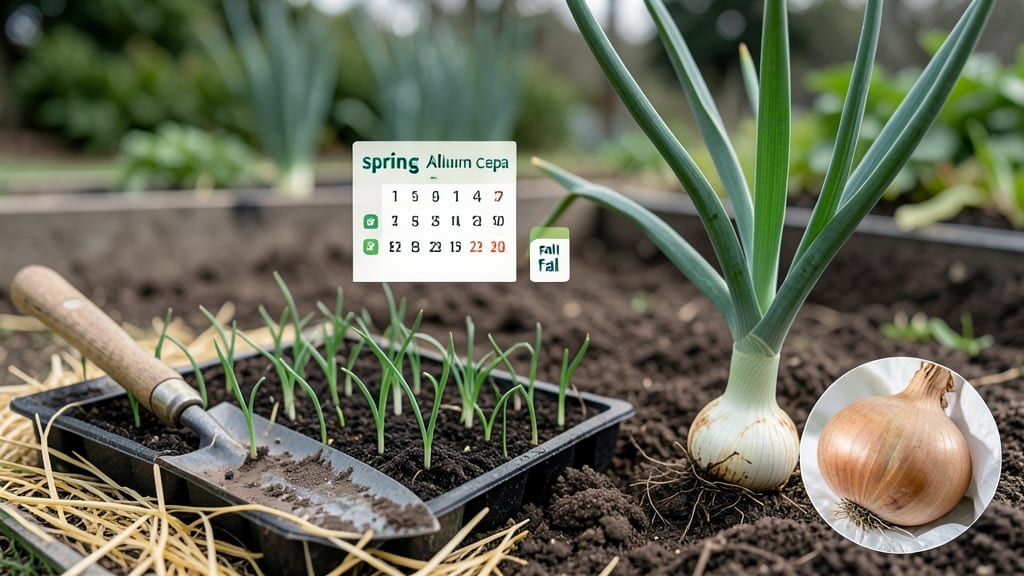
If you’ve ever wondered when to plant onions in Ohio, the answer lies in timing—and avoiding those bitter, bolted 🧅 surprises. Planting onions in Ohio isn’t just about tossing sets into the dirt; it’s about working with the state’s 6a climate to prevent those frustrating, flavor-ruining bolts.
Most Ohio gardeners make one of two mistakes: planting too early and risking frost damage, or waiting too long and triggering bolting before bulbs mature.
The sweet spot? March to April for spring onions and August to September for fall varieties—both aligned with Ohio’s last frost date of April 15 and first frost of October 15.
Here’s the game-changer: whether you’re using sets, transplants, or seeds, the key is soil temperature and variety selection. Short-day onions thrive in Ohio’s summers, while long-day types need precise timing to prevent bolting.
Let’s break down the exact schedule—and how to adjust for your yard’s microclimate—to guarantee a harvest of plump, flavorful bulbs.
Ready to stop guessing and start growing? I’ll walk you through the step-by-step planting calendar, soil prep secrets, and Ohio-specific tricks to maximize your onion yield—no more wasted efforts or bitter surprises.
Ohio onion planting calendar: best months by variety for zero-bolt success
Ohio’s unpredictable spring weather makes onion planting tricky, but nailing the timing can mean the difference between sweet, tender bulbs and bitter, bolted greens. Onions are day-length sensitive, meaning their growth triggers depend on how many daylight hours they experience.
In Ohio’s USDA Zone 6a, we grow three main types: short-day, intermediate-day, and long-day varieties—each with its own ideal planting window.
Planting too early or late can force onions into premature bolting (flowering), ruining your harvest. The key is matching your variety to Ohio’s 165 frost-free days and adjusting for soil temperature (wait until it’s at least 40°F).
Spring-planted onions need 90-120 days to mature, while fall-planted varieties should establish roots before winter but avoid early bolting from short days.
Short-day onions (like Texas Early White) thrive in Ohio’s longer summer days and are best planted in late spring (May) for a fall harvest. Intermediate-day varieties (like Yellow Sweet Spanish) are the most versatile, adapting to Ohio’s variable daylight when planted in early spring (March-April). Long-day onions (like Sweet Sandwich) are Ohio’s classic choice, needing cool spring planting (March) to develop properly.
For spring planting, aim to get onions in the ground 4-6 weeks before Ohio’s last frost date (April 15).
If you’re using onion sets, they’ll sprout faster than seeds, giving you a head start. Transplants (young plants) can also be planted in early spring, but they’re pricier and require more care.
The earlier you plant long-day varieties, the larger your bulbs will grow—just don’t rush it if the soil is still cold or wet.
Ohio’s fall planting window is shorter but rewarding. Plant short-day or intermediate-day onions in August-September to overwinter and harvest the following summer. The goal is to establish roots before the ground freezes but avoid bolting from Ohio’s short winter days.
Use straw mulch (4-6 inches) to insulate the soil and protect young plants from temperature swings.
Watch for soil temperature cues: Onions won’t thrive in cold, soggy soil. Wait until the ground reaches 40°F at a 4-inch depth.
A simple trick is to press your finger into the soil—if it feels cool but not icy, it’s ready. Overwatering or excess nitrogen can also trigger bolting, so stick to a balanced fertilizer (like 10-1
Ohio onion planting calendar: best months by variety for zero-bolt success
Ohio’s 6a climate means onions need precise timing to avoid bolting. The last frost date (April 15) and first frost (October 15) are your anchors. Spring onions go in March to April, while fall varieties need August to September planting.
The key? Matching variety day-length needs to Ohio’s seasonal shifts.
Short-day onions (like Texas Early White) bolt if exposed to long daylight too soon. Long-day types (such as Yellow Sweet Spanish) need early planting to mature before summer’s heat triggers bolting. Intermediate-day varieties (like Candy) offer flexibility but still require careful timing.
Here’s the breakdown for Ohio gardeners to maximize yields and avoid bitter surprises:
For spring onions, aim to plant 4–6 weeks before last frost (mid-February to early March). This gives roots time to establish before soil warms. Fall onions need 8–10 weeks before first frost (late July to early September) to mature bulbs before cold sets in.
Ohio’s unpredictable springs can delay planting. If frost lingers past April 15, use row covers to protect young plants. For late starters, opt for shallots or green onions, which tolerate cooler soil better than bulbing types.
Pro tip: Test your soil’s pH (6.0–7.0) and add compost to improve drainage. Poor soil conditions are a top cause of bolting in Ohio gardens. Adjust your schedule based on your yard’s microclimate—south-facing beds warm faster than shady spots.