
Plants
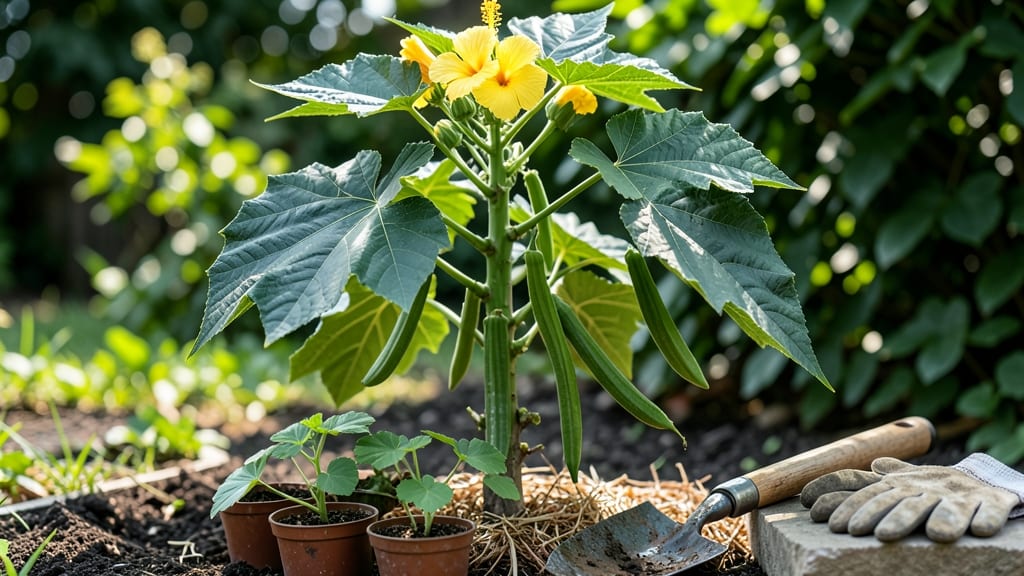
Planting okra in Arkansas at the right time makes all the difference between a bountiful harvest and a disappointing failure.
Since okra is a heat-loving 🌱 that thrives in Zone 8A's long summers, timing your planting after the last frost—typically mid-April to mid-June—is critical to avoid stunted growth or bolted plants.
But here's the catch: Arkansas' unpredictable spring weather can throw off even the most experienced gardeners. Waiting until soil temperatures hit a steady 60°F ensures strong germination, while planting too early risks frost damage.
I’ll walk you through the exact window for your region, whether you're in the Delta or the Ozarks, so you can maximize your yield.
You’ll also discover how to extend your okra season with simple tricks like row covers or soil warming, plus how to spot common mistakes that Arkansas gardeners make—like overwatering or ignoring heat stress.
By the end, you’ll have a foolproof plan to grow okra from seed to harvest, no matter when you start.
Ready to turn your garden into a productive okra patch? Let’s dive into the timing secrets that will have you harvesting tender pods from July to October—just like the pros do.
Optimal okra planting dates in Arkansas zone 8A: frost-free timeline
Arkansas’ Zone 8A climate gives okra a 190-day frost-free window, but timing is critical. The last frost typically occurs between April 15–May 1, but soil warmth matters more than air temperature. Okra seeds need 60°F+ soil to germinate—waiting for this threshold ensures strong starts and avoids frost damage.
Planting too early risks seed rot or stunted growth, while delaying past June 15 shortens your harvest. Arkansas gardeners often split plantings: early May for heat-tolerant varieties and late June for a fall crop. Here’s your precise timeline with backup strategies for unpredictable springs.
For northern Arkansas (e.g., Bentonville), aim for May 1–15 to avoid late frosts. Southern areas like El Dorado can start as early as April 20 if soil is warm. Test soil with a thermometer—okra seeds won’t germinate below 60°F, even if air temps are mild.
Use black plastic mulch 2 weeks before planting to warm soil faster. In clay-heavy soils (common in Arkansas), mix in compost to improve drainage. Okra hates soggy roots, so raised beds are ideal for Delta regions with heavy rainfall.
If spring is unpredictable, start seeds indoors March 1–15 under grow lights. Transplant seedlings after May 1 when soil is consistently warm. This method extends your harvest by 4–6 weeks compared to direct sowing.
Okra thrives in Arkansas’ hot summers, but bolt-resistant varieties like 'Emerald' or 'Burgundy' handle heat better. Plant in full sun (6+ hours daily) and space rows 2–3 feet apart to prevent overcrowding. Thin seedlings to 12–18 inches apart for optimal pod production.
Monitor soil moisture—okra needs 1–2 inches of water weekly, but Arkansas’ humidity can cause fungal issues. Water at soil level (not overhead) to avoid powdery mildew, common in humid Arkansas summers. Mulch with straw to retain moisture and suppress weeds.
Harvest begins 50–60 days after planting. Pick pods when they’re 2–3 inches long for tender okra. In Arkansas, this typically starts in late June for early plantings and continues until first frost (usually mid-November). Succession plant every 2 weeks for a continuous harvest.
Pro tip: Use a planting calendar to track soil temps and Arkansas’ historical frost dates. Local extensions (e.g., UA Cooperative Extension) offer free frost data—perfect for fine-tuning your okra schedule. With the right timing, you’ll enjoy fresh pods from July through October!
How to extend okra’s growing season in Arkansas: heat tolerance hacks
Arkansas’ long, hot summers make okra a perfect fit, but what if you want to push your harvest even further? Whether you’re in the humid Delta or the cooler Ozarks, extending okra’s growing season means later plantings or earlier starts with protective tools.
The key is working with—not against—Arkansas’ Zone 8A climate to avoid heat stress or premature bolting.
Okra thrives when soil temps hit 60°F+, but Arkansas’ spring can be unpredictable. By using row covers, cold frames, or black plastic mulch, you can trick okra into germinating earlier or keep it producing well into October.
The right variety selection also makes a difference—some types handle Arkansas’ 90°F+ afternoons better than others.
- 1. Start with black plastic mulch to warm soil 10°F faster than bare earth. Lay it down 2 weeks before planting in May for June harvests.
- 2. Use row covers (floating or low tunnels) to protect late-June plantings from early autumn frosts in the Ozarks.
- 3. Choose heat-tolerant varieties like ‘Clemson Spineless’ (Delta-friendly) or ‘Emerald’ (Ozarks-adapted) for extended harvests.
- 4. Water deeply at soil level (not overhead) to prevent powdery mildew during Arkansas’ 90% humidity summers.
- 5. Harvest aggressively—every 2-3 days—to encourage continuous pod production until first frost.
For Delta gardeners, where summers stretch into October, focus on late-June plantings with drip irrigation to avoid fungal issues. In the Ozarks, prioritize early-June starts under hoop houses to capitalize on the longer daylight of summer.
Both regions benefit from compost-amended soil—okra’s deep roots need nutrient-rich conditions to handle Arkansas’ intense heat.
Pro tip: Succession plant every 2 weeks from June to July for a staggered harvest. This works especially well in the Mississippi River Valley, where heat lingers later. Pair okra with companion plants like basil or marigolds to deter pests without chemicals.
If you’re pushing the envelope with August plantings, opt for short-day varieties like ‘Arkansas Wonder’, which matures faster in shorter daylight conditions. Just be prepared to harvest pods faster—they’ll bolt quicker in fall’s cooling temps.
With these heat tolerance hacks, you can enjoy fresh okra straight from your garden until November’s first frost.
Remember: Okra’s secret weapon is its heat resilience. By leveraging Arkansas’ long growing season and microclimate differences, you can turn a single planting into a month-long harvest.
Just keep those soil temps warm, water consistently, and harvest often—your taste buds (and dinner plate) will thank you! 🌱☀️