
Plants
Planting grass seed in Colorado at the wrong time can turn your dream of a lush lawn into a frustrating gamble—especially when frost dates and elevation zones play such a big role.
Whether you're in the Front Range or the high-altitude Foothills, getting the timing right means the difference between strong root establishment and wasted effort.
Most Colorado gardeners know spring is the prime window, but did you realize early fall can actually be even better for certain grass varieties? The key lies in understanding your specific USDA zone—whether you're in Zone 5 or Zone 8—and how local microclimates affect soil temperatures and moisture.
I’ve helped countless Colorado homeowners avoid the most common mistakes, like planting too late in the season when heat stress sets in or too early when frost can still damage tender seedlings.
What you’ll discover here are the exact months to plant based on your elevation, plus pro tips for preparing your soil and choosing the right grass type for your yard.
Ready to transform your patchy lawn into a vibrant, resilient carpet of green? Let’s dive into the best planting schedule tailored to Colorado’s unique climate challenges.
Best grass seed planting months in Colorado by elevation Zone
Colorado’s elevation zones create dramatic differences in planting windows. Front Range cities like Denver (Zone 5-6) have a 6-8 week window between frost dates, while mountain regions (Zone 3-4) face shorter seasons. Even high desert areas like Grand Junction (Zone 7) need precise timing to avoid summer drought stress.
Cool-season grasses like Kentucky Bluegrass and Fescue dominate Colorado lawns, thriving when soil temps hit 50-60°F. Warm-season Bermuda grass is rare but needs 70°F+ soil—common only in southern Colorado. Your elevation determines whether you plant in early spring or late summer.
Here’s how to match your location to the perfect planting window:
| Elevation Zone | USDA Zone | Ideal Planting Window | Soil Temp Goal | Key Varieties |
|---|---|---|---|---|
| Front Range (Denver, Boulder) | 5-6 | March 15–April 30 | 50–60°F | Kentucky Bluegrass, Tall Fescue |
| Foothills (Fort Collins, Colorado Springs) | 6-7 | March 1–May 15 | 55–65°F | Fine Fescue, Bluegrass Blends |
| Mountains (Aspen, Vail) | 3-5 | May 1–June 15 | 45–55°F | Alpine Bluegrass, Fescue |
| High Desert (Grand Junction) | 7-8 | August 1–September 15 | 70–80°F | Buffalo Grass, Tall Fescue |
| Eastern Plains (Pueblo) | 6-7 | April 1–May 10 | 60–70°F | Tall Fescue, Ryegrass |
*Adjust dates 2–4 weeks based on local frost records.
For Front Range gardeners, aim to plant 4-6 weeks before the last frost (typically mid-March to late April). This gives seeds time to germinate before summer heat arrives. Mountain regions should wait until late May to avoid late snow or frost.
In southern Colorado, late summer planting (August–September) works for drought-tolerant varieties like Buffalo Grass. The key is avoiding peak summer heat, which can dry out seeds before roots establish. Always check 7-day soil temperature forecasts before planting.
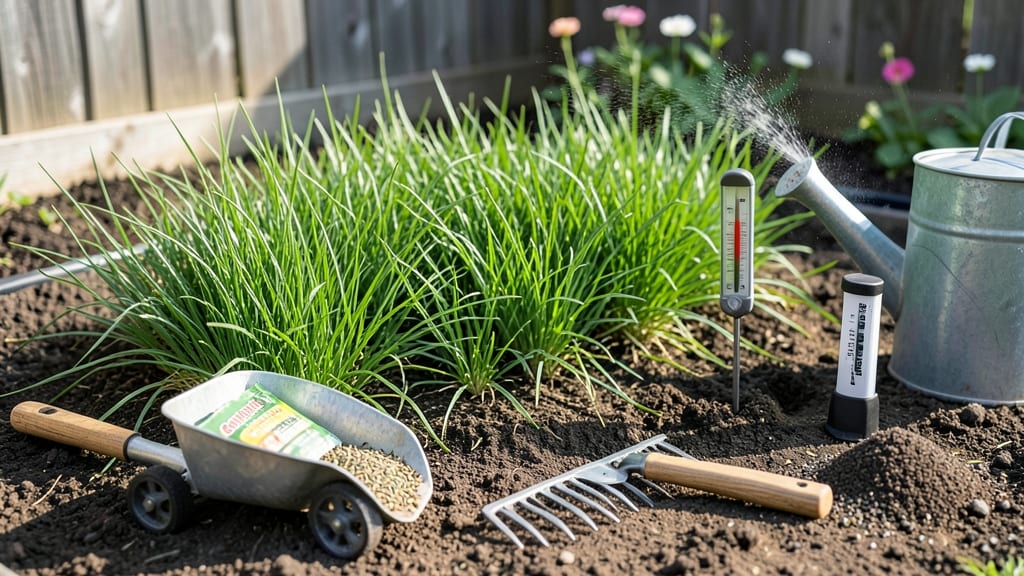
Pro tip: Use a soil thermometer to confirm temps. 50°F+ is ideal for cool-season grasses, while warm-season types need 70°F+. If your soil is too cold, wait—rushing leads to weak germination and patchy lawns.
Colorado’s microclimates mean your neighbor’s perfect timing might fail for you. For example, Denver’s urban heat island can push planting dates 1-2 weeks earlier than rural areas. Always monitor local weather and adjust accordingly.
Once you’ve picked your window, prepare soil 1-2 weeks ahead by removing debris, leveling low spots, and adding compost for nutrients. Lightly rake to create a fine seed bed—this prevents seeds from washing away during watering.
After planting, water lightly daily (keep soil moist but not soggy) until seeds sprout in 10-21 days. Then, increase to 1-1.5 inches per week, focusing on deep, infrequent watering to encourage strong roots.
Timing isn’t just about months—it’s about soil temperature, moisture, and sunlight. Get these right, and your Colorado lawn will outperform neighbors who guessed wrong. 🌱
How to adjust your planting schedule for Colorado’s microclimates
Colorado’s microclimates create unique challenges for grass seed planting. While the Front Range might get 60 days of frost-free growing season, mountain regions can have only 40 days. These differences mean your neighbor’s perfect planting window might not work for your yard.
The key to success? Adjusting your schedule based on local frost dates, soil temperatures, and whether you’re growing cool-season or warm-season grasses.
Cool-season grasses like Kentucky Bluegrass and Tall Fescue thrive when planted in early spring or early fall, while warm-season varieties such as Bermuda Grass prefer late spring. But here’s the catch: high-altitude areas (like Denver’s Foothills) have cooler soil temperatures, delaying germination.
Meanwhile, lower elevations (like Colorado Springs) can experience heat stress if planted too late.
- Check your last frost date—plant 4-6 weeks before for cool-season grasses or after for warm-season types.
- Test soil temperature—ideal range is 55-75°F for germination. Use a soil thermometer!
- Adjust for elevation—mountain regions (6,000+ ft) need earlier spring planting than Front Range areas.
- Choose the right grass type—cool-season grasses dominate Colorado, but warm-season grasses work in southern zones.
- Water deeply after planting—keep soil consistently moist for the first 3-4 weeks.
- Mulch lightly—use straw or peat moss to retain moisture and protect seeds from wind.
- Monitor weather forecasts—avoid planting before 3 consecutive frost-free days.
Let’s say you’re in Denver (Zone 5). Your best bet is to plant cool-season grasses between March 15 and April 15 or September 1 and September 30.
But if you’re in Colorado Springs (Zone 7), you can extend your window to late April or early May for warm-season varieties. The rule of thumb? Plant when soil temps hit 55°F and stay above 60°F for consistent growth.
Don’t overlook soil conditions—Colorado’s alkaline soils can stunt grass growth. Before planting, test your soil pH and amend with sulfur or compost if needed. Aim for a pH of 6.0-7.0 for optimal nutrient uptake.
I’ve seen many gardeners skip this step and end up with patchy lawns, even with perfect timing.
Another pro tip: Overseed in fall for a thicker lawn. Cool evenings and warm days in September-October create ideal conditions for Kentucky Bluegrass and Fine Fescue to establish deep roots before winter. Just be sure to avoid planting when frost is forecasted—seeds need consistent warmth to germinate.
Finally, watch for local weather patterns. Some years, an early heatwave can dry out seeds in April, while others bring late frosts into May. Use weather apps or check with your local Cooperative Extension office for real-time updates.
With these adjustments, you’ll give your grass seed the best shot at thriving in Colorado’s unpredictable climate. 🌱