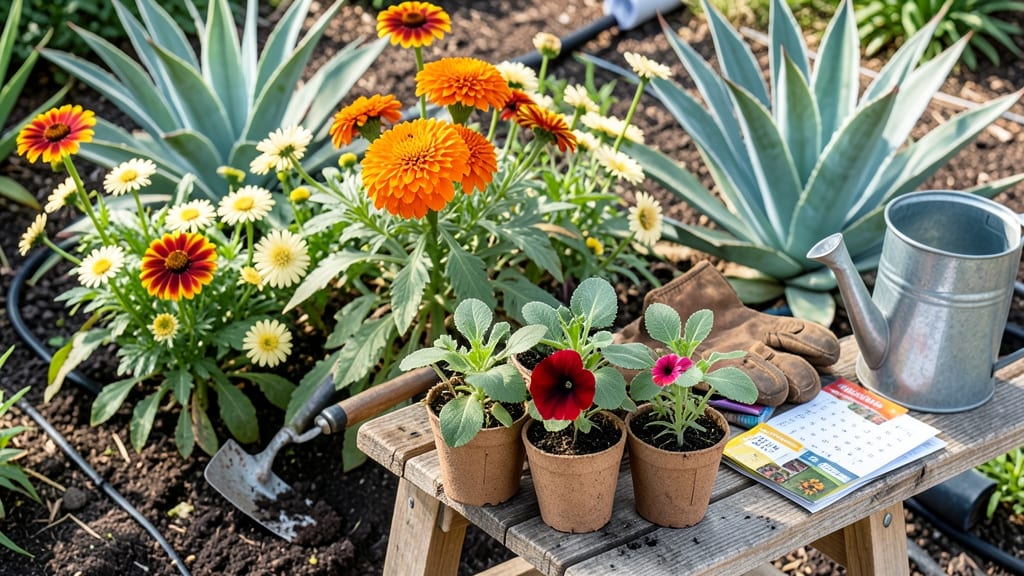
Planting flowers in Arizona isn't just about picking the right blooms—it's about outsmarting the desert's heat and timing your moves perfectly to avoid stressing your plants. With 365 frost-free days in most areas, you might think you can plant anytime, but the scorching summers demand strategy.
Fall is your golden window—think September through November—when temperatures cool just enough to give young roots a fighting chance. This is when I always start my garden, and it's the secret to thriving 🌸 flowers that bloom beautifully through spring.
The key? Planting before the real heat kicks in, so your flowers establish strong roots while avoiding the brutal midday sun.
But here's the twist: Arizona's microclimates mean what works in Phoenix won't always suit Flagstaff. Low desert areas can handle winter planting too, while higher elevations might need a slightly earlier start.
I'll break down exactly when to plant in your specific zone, plus which heat-loving flowers will reward you with nonstop color—even when others wilt.
Ready to transform your yard into a desert oasis? Let's dive into the exact planting schedule that'll keep your flowers happy, healthy, and blooming all year long—no guesswork required.
🌸
When to Plant Flowers
Jan
❄️
Feb
❄️
Mar
🌱
Apr
🌱
May
🌸
Jun
☀️
Jul
☀️
Aug
🌱
Sep
🌸
Oct
🌸
Nov
🌸
Dec
🌱
Arizona flower planting calendar by microclimate: low-desert vs. high-desert zones
Arizona’s two distinct microclimates—the low-desert (Phoenix, Tucson) and high-desert (Flagstaff, Prescott)—create wildly different planting windows. The low desert enjoys 365 frost-free days, while high desert areas can experience light frosts even in winter. Understanding these zones helps you avoid heat stress in summer or frost damage in winter.
In the low-desert, temperatures soar above 100°F in summer, making fall planting (September-November) ideal for most flowers. Meanwhile, the high-desert has cooler nights and shorter heatwaves, allowing for a slightly extended spring planting window (March-May). Let’s break it down by month for each zone.
🌱 Key difference: Low-desert zones (like Phoenix) can plant year-round for heat-tolerant species, while high-desert zones (like Flagstaff) must wait until after last frost (typically mid-May).
| Month |
Low-Desert (Phoenix/Tucson) |
High-Desert (Flagstaff/Prescott) |
Best Flowers to Plant |
Critical Notes |
| January |
🌱 Bulbs (tulips, daffodils) |
❄️ Wait (frost risk) |
Paperwhites, desert marigolds |
Low-desert bulbs need cool nights but no frost. |
| February |
🌱 Annuals (pansies, snapdragons) |
❄️ Wait (frost risk) |
Sweet alyssum, lantana |
High-desert: Start seeds indoors. |
| March |
🌱 Heat-tolerant perennials (bougainvillea, desert rose) |
🌱 Cool-season crops (calendula, violas) |
Blanket flower, zinnia |
Low-desert: Avoid transplant shock with shade cloth. |
| April |
⚠️ Pause (extreme heat approaching) |
🌱 Transplant seedlings (after last frost) |
Russian sage, penstemon |
High-desert: Harden off seedlings gradually. |
| May |
🌱 Monsoon-prep flowers (portulaca, gaillardia) |
🌱 Summer annuals (marigolds, cosmos) |
Desert sunflower, verbena |
Low-desert: Mulch heavily to retain moisture. |
| June |
⚠️ Minimal planting (only drought-resistant species) |
⚠️ Minimal planting (shade-loving flowers) |
Aloe, yucca (succulents) |
Both zones: Drip irrigation only—no overhead watering. |
| September |
Best heat-tolerant flowers for Arizona planting: top picks by season
Arizona’s extreme heat demands flowers that thrive under 110°F+ temperatures and minimal water. The key is selecting native and adapted species that naturally handle our low humidity and intense sunlight. These top picks bloom reliably while conserving water—perfect for desert gardens.
For spring planting (Feb–March), focus on flowers that establish roots before summer’s peak heat. Desert marigold (Baileya multiradiata) and blanket flower (Gaillardia) are my go-to choices—they’re drought-resistant and attract pollinators like bees and butterflies.
🌸 Top Heat-Tolerant Flowers for Arizona
- 🌿 Desert Marigold – Feb–March | Full sun | Drought-proof | Yellow blooms
- 🌻 Blanket Flower – Feb–April | Full sun | Low water | Red/orange blooms
- 🌷 Bougainvillea – Feb–March | Full sun | Heat-loving | Vibrant colors
- 🌹 Mexican Sunflower – March–April | Full sun | Tolerates heat | Bright yellow
- 🌵 Agave (non-flowering) – Year-round | Full sun | Zero water | Architectural
Summer planting (June–July) is tricky, but heat-loving annuals like celosia and portulaca thrive when planted after monsoon rains. These flowers handle intense afternoon sun and require minimal irrigation once established.
For fall planting (Sept–Oct), prioritize cool-season bloomers like pansies and snapdragons. These handle mild temperatures and even light frosts in high deserts. Mulch heavily to retain moisture during Arizona’s cool, dry winters.
Pro tip: Always water deeply after planting—even drought-tolerant flowers need 1–2 inches of water weekly for the first month. Use drip irrigation to avoid wetting foliage, reducing fungal risks in our hot, dry climate.
Native flowers like desert bluebells and ocotillo are my secret weapons—they’re self-sufficient and low-maintenance, perfect for Arizona’s water-conscious gardens. 🌵
★★★★★4.5(14 reviews)
|