
Plants
Planting dahlias in Georgia at the wrong time can turn your dream garden into a sad, wilted mess—but getting the timing right guarantees months of bold, show-stopping blooms that’ll make your neighbors jealous.
The key lies in waiting until after your last frost (typically mid-April) when soil temperatures hit that sweet spot of 60°F.
I’ve learned the hard way that rushing dahlias 🌼 into Georgia’s still-chilly spring soil leads to weak stems and stunted growth. Instead, focus on late April to early May, when the risk of frost has faded and your tubers can finally root without stress.
This window gives your dahlias the head start they need to thrive through our long, humid summers.
What makes Georgia’s Zone 8A perfect for dahlias? The 215 frost-free days mean you’ve got plenty of time to enjoy blooms from July through October. But timing isn’t just about the calendar—it’s about soil prep, tuber chitting, and even protecting against slugs that love our warm, damp climate.
Let’s break down exactly how to sync your planting with Georgia’s unique growing conditions so you end up with a garden bursting with color—not a graveyard of half-dead stems. Ready to turn your dahlias into the star of your summer?
Best planting timeline for dahlias in Georgia’s heat zone 8A
Georgia’s Heat Zone 8A offers gardeners a long growing season—but dahlias demand precise timing to thrive. Planting too early risks frost damage, while late planting cuts bloom time short. The key is waiting for soil temperatures to stabilize above 60°F and last frost dates to pass safely.
In most of Georgia, this window opens in mid-April to early May, but northern regions may need to wait until late May.
Dahlias are tender perennials that won’t tolerate frost, making spring timing critical. Unlike hardy perennials, they need warm soil to establish roots quickly. Georgia’s unpredictable spring weather—with late frosts possible until mid-April—means gardeners should monitor local forecasts and use frost cloth as a precaution for early plantings.
Soil temperature is your best guide: Use a soil thermometer to confirm readings above 60°F at 6-inch depth. In Zone 8A, this typically aligns with late April to early May, but clay-heavy soils common in Georgia may warm slower. Amend beds with compost or aged manure 2-3 weeks before planting to accelerate warming.
| Stage | Action | Georgia 8A Timeline | Key Consideration |
|---|---|---|---|
| Pre-Chitting | Sprout tubers indoors | Start 6-8 weeks before last frost (Feb-March) | Speed up growth in cool springs |
| Hardening Off | Acclimate to outdoor temps | 2-3 weeks before planting (late March) | Prevent transplant shock |
| Planting Window | Set tubers in soil | Mid-April to early May (after 60°F soil) | Avoid late frosts (common until April 15) |
| First Blooms | Expect flowers to open | July-August (60-90 days after planting) | Full sun (6+ hours daily) is critical |
| Frost Prep | Cut back and dig tubers | Mid-November (before first frost) | Store tubers in cool, dry place |
For Georgia gardeners, pre-chitting tubers is a game-changer. Start tubers indoors 6-8 weeks before your target planting date (typically February to early March). Place them in trays with moist peat moss, keeping them in bright, warm conditions (70°F).
When sprouts reach 2-3 inches, they’re ready for hardening off—gradually exposing them to outdoor temps for 1-2 weeks before planting.
Northern Georgia’s cooler microclimates (e.g., Blue Ridge Mountains) may require delayed planting until late May to avoid late frosts. Use USDA Plant Hardiness Zone Map tools to pinpoint your exact last frost date.
In southern Georgia, where Zone 8A transitions to 8B, you can plant as early as late March, but monitor soil temps closely.
Container gardening offers flexibility for urban gardeners. Plant dahlias in large pots (12+ inches deep) filled with well-draining potting mix. These can be moved to protected spots during cool snaps and brought outdoors once night temps stay above 50°F. Just ensure containers have drainage holes to prevent root rot in Georgia’s humid summers.
After planting, mulch heavily with straw or pine needles to retain moisture and regulate soil temps. Dahlias in Zone 8A will reward you with continuous blooms from July through frost—but only if planted at the optimal window.
Miss the mark, and you’ll sacrifice vibrant color and long-lasting stems.
Pro tip: Mark your planting date on a calendar and set reminders for fertilizing (every 4-6 weeks) and deadheading (weekly). In Georgia’s heat, dahlias need consistent watering (1-2 gallons per plant, 2-3x weekly) to prevent bud drop.
With the right timing, your dahlias will outshine any summer garden.
🌼
How to prepare dahlia tubers for Georgia’s soil and climate
Georgia’s clay-heavy soils and humid summers demand extra prep work to get your dahlia tubers off to the right start. I’ve found that skipping these steps often leads to poor root development and pest invasions—especially from slugs and earwigs that love our warm, damp conditions.
The key is to cut tubers properly, harden them off, and amend the soil to create the perfect growing environment.
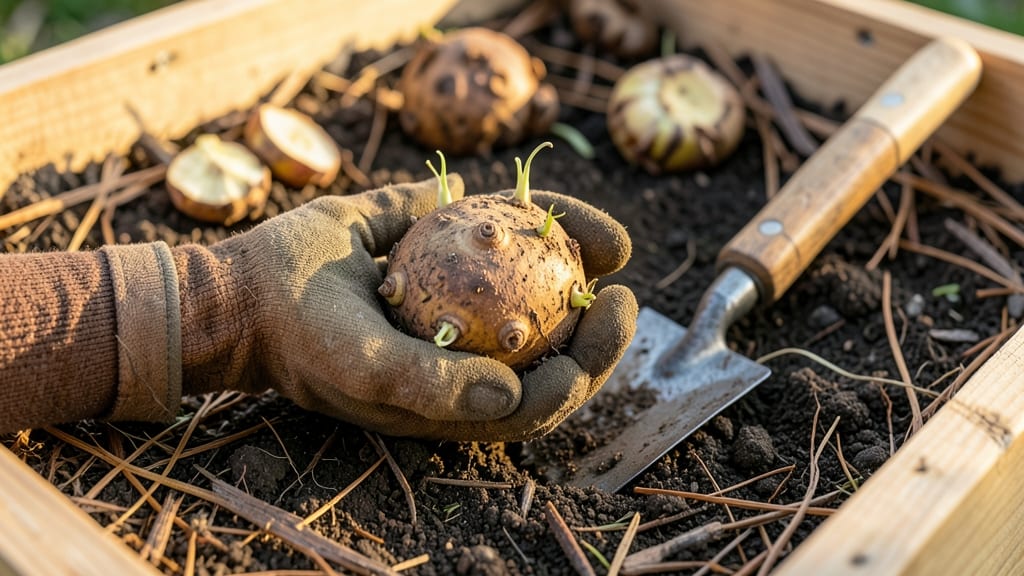
First, let’s tackle the tubers themselves. Most garden centers sell dahlia tubers in clusters, and you’ll want to separate them before planting. Each tuber should have at least one healthy eye (the little bump where growth starts).
Use a sterilized knife to cut through the connecting tissue, leaving each tuber with its own set of eyes. This ensures each plant gets enough energy to grow strong stems and abundant blooms.
Step-by-Step Dahlia Tuber Prep for Georgia
- 1. Separate Tubers: Gently pull apart clusters, ensuring each has 1-2 eyes. Discard any soft, shriveled, or moldy tubers.
- 2. Soak in Fungicide: Submerge tubers in 10% hydrogen peroxide for 10 minutes to prevent rot in Georgia’s damp soil.
- 3. Cut and Callus: Trim tubers to 2-3 inches, leaving 1 eye per tuber. Let cuts dry for 1-2 hours to prevent infection.
- 4. Harden Off: Place tubers in a cool, bright spot (50-60°F) for 7-10 days to toughen them up for Georgia’s heat.
- 5. Amend Soil: Mix compost and perlite into clay soil to improve drainage—critical for preventing root rot.
- 6. Plant Deep: Bury tubers 4-6 inches deep with 12-15 inches between plants to support tall varieties.
- 7. Pest-Proof: Apply diatomaceous earth around planting holes to deter slugs and earwigs before they arrive.
Georgia’s heavy clay soil can be a double-edged sword—it retains moisture well but drains poorly, which is a recipe for root rot if you’re not careful. I always mix in compost and perlite to lighten the soil and improve aeration.
This simple amendment can make all the difference in keeping your dahlias thriving through our long, humid summers. Aim for a soil mix that’s 60% native soil, 30% compost, and 10% perlite for the best results.
Don’t overlook the importance of hardening off your tubers before planting. This process helps them adjust to Georgia’s fluctuating temperatures and intense sunlight. Place your tubers in a cool, bright location (like a garage or shed with natural light) for 7-10 days before transplanting.
Start with 4-6 hours of indirect light per day and gradually increase exposure to mimic outdoor conditions. This step is especially critical if you’ve been storing tubers indoors over winter.
Once your tubers are ready, it’s time to tackle Georgia’s slug and earwig problem. These pests thrive in our warm, damp climate and can decimate young dahlia foliage overnight.
I’ve had the most success using diatomaceous earth as a natural barrier—simply sprinkle it around the base of your plants and reapply after rain. For extra protection, consider using copper tape around planting holes, which creates a mild electric barrier that slugs avoid.
These simple precautions can save your dahlias from becoming a buffet for garden pests.
Finally, remember that dahlias are heavy feeders, so give them a balanced fertilizer (like 5-10-10) once they’ve sprouted and again mid-summer to keep them blooming. In Georgia’s heat, mulching with straw helps retain moisture and keeps roots cool.
With these steps, your dahlias will be ready to put on a bold, colorful show from summer through frost.