
Plants
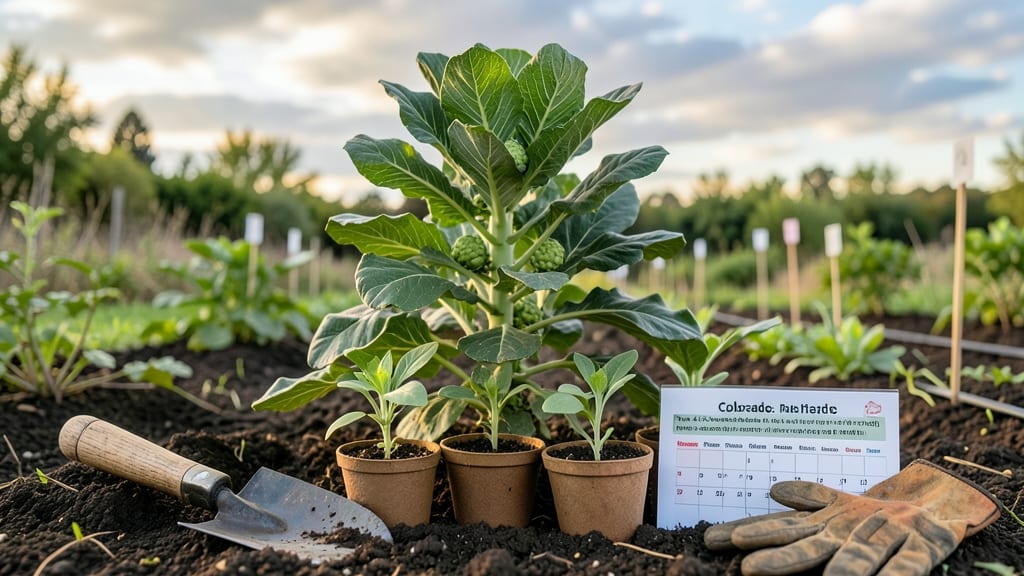
Timing your 🥦 brussel sprouts planting in Colorado isn’t just about checking a calendar—it’s about outsmarting the state’s wild elevation swings and frost surprises. One wrong move, and your crop could bolt before summer’s last heatwave or freeze before your first harvest.
The secret? Planting 8-10 weeks before your zone’s first frost—but with Colorado’s USDA 5-7 zones and microclimates, that window shifts dramatically from Denver’s Front Range to Aspen’s high country.
If you’ve ever stared at a seed packet, confused about whether to start indoors in March or rush outdoors in May, you’re not alone. The good news?
With the right frost-free timeline, you can stretch your growing season from mid-April to early September, ensuring sweet, homegrown sprouts by October. I’ll break down exactly when to plant—whether you’re direct-sowing seeds or transplanting seedlings—and how to adjust for your specific elevation.
Let’s cut to the chase: Lowland Colorado gardeners (like those in Zone 6-7) can afford to wait until late April, while mountain growers (above 7,000 feet) should start indoors by March 15 to beat the early frosts.
I’ll walk you through the exact dates, soil prep tips, and even how to protect your plants if a late snowstorm sneaks in.
By the end, you’ll know not just when to plant, but how to maximize your harvest—whether you’re aiming for 90-day varieties or pushing the limits with cold-hardy sprouts that survive until December. Ready to turn your Colorado garden into a brussel sprouts powerhouse?
Colorado’s Brussels sprouts planting calendar by elevation zones (lowland to mountain)
Colorado’s elevation zones create wildly different planting windows for Brussels sprouts—what works in Denver (5,280 ft) fails in Aspen (7,800 ft). The key is aligning your planting with frost-free days and microclimates.
Lowland areas (2,500–5,000 ft) enjoy 180+ frost-free days, while high mountain zones (7,000–10,000 ft) struggle with just 90–120 days. This mismatch forces gardeners to adjust timing or use frost protection.
For spring planting, aim to sow seeds 4–6 weeks indoors before your last frost date, then transplant outdoors when soil reaches 40°F. In Colorado’s Front Range (USDA Zone 5–6), this means starting seeds in mid-March for outdoor planting by mid-April.
High-altitude gardeners (Zone 4–5) should delay until late April to avoid early frost.
Fall planting is trickier—Brussels sprouts need 90–120 days to mature, so sow seeds 8–10 weeks before first frost. In Denver (first frost: Oct 1), this means seeding by early July. Mountain gardeners (first frost: Sept 15) must plant by mid-June or risk stunted growth.
🌱
🥦 Colorado Brussels Sprouts Planting Guide by Elevation
| Elevation Zone | USDA Zone | Last Frost | Spring Planting | Fall Planting | Harvest Window |
|---|---|---|---|---|---|
| Lowland (2,500–5,000 ft) | 5–6 | May 1–15 | Mid-March–Mid-April (indoors), April 15–May 15 (outdoors) | Late July–Early Aug | Oct–Dec |
| Foothills (5,000–7,000 ft) | 4–5 | May 10–25 | Late March–Early April (indoors), May 1–15 (outdoors) | Mid-June–July 1 | Sept–Nov |
| High Mountain (7,000–10,000 ft) | 3–4 | May 20–June 1 | Early April–Mid-April (indoors), May 15–30 (outdoors) | Late June–Early July | Sept–Oct |
💡 Pro Tip: Adjust for microclimates—south-facing slopes warm faster!
Direct-sowing outdoors is risky in Colorado’s unpredictable springs. Instead, start seeds indoors under grow lights for 4–6 weeks before transplanting. Harden off seedlings by placing them outdoors for 2–3 hours/day for 1 week before permanent planting. This extra step buys you 2–3 weeks of flexibility in your planting window.
Soil temperature is critical—Brussels sprouts germinate best in soil between 40–85°F. Use a soil thermometer to confirm readiness. In high-altitude zones, soil may stay cold longer; opt for black plastic mulch to warm it faster.
For lowland areas, watch for soil drying—Brussels sprouts wilt quickly in hot, dry conditions.
Succession planting works well in Colorado’s shorter growing seasons. Sow new seeds every 2 weeks from mid-June to early July for a staggered harvest. This ensures you’re not overwhelmed with overripe sprouts all at once. In mountain regions, limit succession to 1–2 plantings due to shorter seasons.
🌿
Harvest timing varies by elevation: lowland sprouts mature by October–December, while mountain sprouts may not be ready until
How to extend your Colorado Brussels sprouts season with frost protection
Colorado’s unpredictable frost dates can make or break your Brussels sprouts harvest. But with the right frost protection strategies, you can safely extend your planting windows by 4-6 weeks—both earlier in spring and later into fall.
Whether you're gardening in Denver’s urban heat islands or Aspen’s high-altitude chill, these methods will help your sprouts thrive when temperatures dip.
For lowland areas (2,500–5,000 ft), focus on row covers and black plastic mulch to warm the soil and delay frost. In mountain regions (7,000–10,000 ft), prioritize cold frames and succession planting to protect tender seedlings.
The key is matching your elevation’s microclimate risks with the right tools—let’s break down what works best for each zone.
Frost Protection Methods for Colorado
Pros: Extends season by 2-3 weeks, protects from light frosts (28°F), reusable, easy to install.
Best for: Front Range (Denver, Fort Collins), spring/fall planting.
Cons: Can overheat plants in summer heat, requires staking, may trap excess moisture.
Avoid for: High Mountain (Aspen, Vail) if temps drop below 20°F.
Pros: Protects from hard frosts (<15°F), doubles growing season, can be used year-round.
Best for: Foothills (Boulder, Colorado Springs), late fall harvests.
Cons: Expensive upfront cost, requires monitoring for overheating, limited mobility.
Avoid for: Urban gardens with space constraints.
Pros: Warms soil by 5-10°F, suppresses weeds, speeds up germination.
Best for: Early spring planting (March-April) in all elevations.
Cons: Can dry out soil quickly, requires removal after season, not reusable.
Avoid for: Drought-prone areas without supplemental watering.
If you’re aiming for a fall harvest in Colorado’s high country (7,000+ ft), try succession planting every 2 weeks from late June to early August.
This staggered approach ensures a continuous supply of mature sprouts before the first hard frost—typically around October 1 at lower elevations but as early as September 15 in mountain regions.
For Denver gardeners, urban heat islands can create microclimates where row covers alone might suffice, but always pair them with drip irrigation to prevent soil moisture stress. In contrast, Aspen’s alpine conditions demand cold frames or even greenhouse extensions to safeguard your crop through unpredictable late-season frosts.
Pro tip: Monitor your local Colorado State University Extension frost alerts and adjust your strategy. For example, if a light frost (<28°F) is forecasted, a simple lightweight row cover will do. But for hard frosts (<20°F), combine a cold frame with straw mulch for maximum protection.
With these techniques, you can confidently push your planting windows and enjoy homegrown Brussels sprouts well into December—even in Colorado’s most challenging climates. Start small, test what works for your microclimate, and soon you’ll be harvesting sweet, frost-sweetened sprouts long after your neighbors’ gardens have gone dormant. 🥦❄️