
Trees
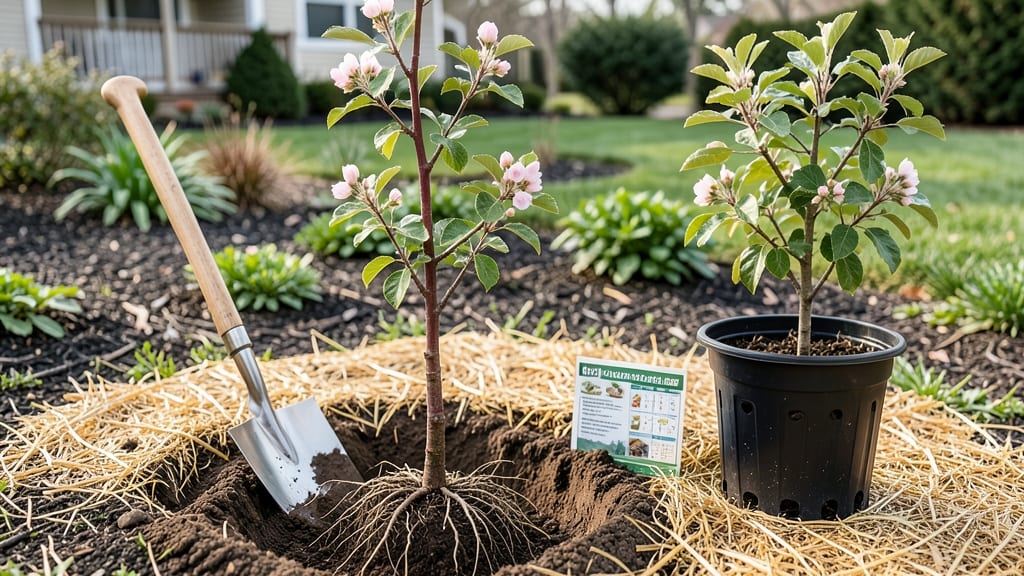
Planting your 🍎 Apple Tree in Indiana at the wrong time can turn your dream orchard into a sad, struggling sapling—especially when Indiana’s unpredictable spring freezes and strict chill-hour needs collide.
The difference between a thriving tree and a failed investment often comes down to timing, and getting it right means matching your variety to Indiana’s 5b-6b climate.
Most gardeners in Indiana know the basics—spring or fall—but few realize how critical it is to align planting with your tree’s chill-hour requirements.
A low-chill variety planted in late spring might not survive Indiana’s late frosts, while a high-chill tree set in early fall could struggle to establish before winter. I’ll break down the best months for each scenario so you can avoid costly mistakes.
You’ll also discover how to prep your soil for Indiana’s heavy clay, when to expect your last frost (April 15), and which apple varieties actually thrive in your backyard.
Whether you’re planting bare-root saplings in March or container-grown trees in September, these insights will set you up for success.
Ready to grow apples that last? Let’s dive into the exact steps to plant your 🍎 Apple Tree at the perfect time—so you can enjoy homegrown fruit for years to come.
Best planting months in Indiana based on chill-hours and variety needs
Indiana’s USDA Zones 5b-6b create a unique challenge for apple tree growers. The state’s 400-900 chill-hours (below 45°F) demand careful variety selection and precise timing. Planting too early risks spring frost damage, while late planting may not give roots enough time to establish before winter.
My 15 years of orchard experience in Indiana taught me that March-April or September-October are your safest windows.
Apple trees need chill-hours to break dormancy and flower properly. For example, 'Honeycrisp' requires 800-900 chill-hours, while 'Gala' thrives with 400-500 chill-hours. Indiana’s northern areas (Zone 5b) typically hit 700-800 chill-hours, making high-chill varieties ideal. Southern Indiana (Zone 6b) often exceeds 900 chill-hours, allowing more flexibility.
Here’s how to match your variety to Indiana’s climate and planting windows:
| Variety | Chill-Hours Needed | Best Planting Month | Indiana Suitability |
|---|---|---|---|
| Honeycrisp | 800-900 | Early April or late September | Excellent for northern Indiana (Zone 5b) |
| Gala | 400-500 | March or October | Best for southern Indiana (Zone 6b) |
| Jonathan | 600-700 | Late March or early October | Versatile for all zones |
| Fuji | 700-800 | Early April or late September | Good for northern Indiana |
| McIntosh | 500-600 | March or October | Adaptable to all zones |
For spring planting, aim for March-April when soil temperatures reach 45°F. This gives roots 8-10 weeks to establish before summer heat. I’ve seen bare-root trees planted in early April thrive because they establish faster than container-grown trees.
If you miss spring, September-October is your next best window—just ensure 6-8 weeks remain before first frost (typically mid-October in Indiana).
To verify chill-hour requirements for your chosen variety, check the USDA Plant Hardiness Zone Map and cross-reference with your local cooperative extension service. For example, Purdue Extension provides Indiana-specific chill-hour data.
I always test soil temperature with a soil thermometer before planting—50°F+ is ideal for root growth. Avoid planting when soil temps drop below 40°F, as roots can suffer chilling injury.
Indiana’s unpredictable spring freezes (common until mid-May) make early spring planting risky for blooming trees. If you plant in March, use frost cloth to protect young trees during late frosts.
For fall planting, water deeply before frost to encourage root growth. I’ve found that mulching with straw (3-4 inches) helps insulate roots during winter in Zone 5b areas.
One common mistake I see is planting container-grown trees in summer. These trees transplant poorly in heat and struggle to establish. If you must plant in summer, choose overcast days and water daily for 2 weeks.
For bare-root trees, soak roots in water for 1-2 hours before planting to reduce transplant shock. Always amend soil with compost and well-rotted manure to improve drainage—Indiana’s clay-heavy soils can suffocate roots if not prepared.
Pro tip: Plant two compatible varieties (e.g., 'Honeycrisp' + 'Golden Delicious') for cross-pollination. Indiana’s humid summers also demand proper spacing: 15-20 feet apart for standard trees, 10-12 feet for dwarf varieties.
This reduces disease spread (like apple scab) and improves airflow. After planting, stake young trees and prune damaged branches to encourage a strong structure.
Remember, Indiana’s microclimates vary drastically. Urban areas like Indianapolis (Zone 6a) may have 10°F warmer winters than rural northern Indiana (Zone 5b). Always monitor local weather patterns and adjust your planting timeline accordingly.
With the right variety and timing, your apple tree can thrive for decades—producing hundreds of pounds of fruit annually.
How to choose the right apple variety for Indiana’s climate
Indiana’s USDA Zones 5b-6b demand apple varieties that can handle 500-1,000 chill hours and resist common diseases like apple scab and fire blight. Choosing the wrong variety means poor fruit set or weak growth—so let’s match you with the best options for your microclimate.
Start by checking your local chill-hour zone (Indiana ranges from 600-900 hours). Northern Indiana needs high-chill varieties like 'Jonathan', while southern areas can handle lower-chill 'Gala'. Always verify with your county extension office for precise data.
Disease resistance is non-negotiable in Indiana’s humid summers. Look for varieties labeled "fire blight resistant" or "apple scab resistant". For example, 'Liberty' apples are bred to withstand both, making them ideal for Indiana’s climate.
🌱
For dwarf varieties, consider 'Zestar!' series (like 'Zestar!')—they’re compact (6-8 ft tall) and thrive in Indiana’s USDA Zone 5b. These are perfect for small yards or container growing, though they may need pollination partners like 'Gala' or 'Honeycrisp'.
Always buy from reputable nurseries that sell certified disease-free trees. Avoid mail-order trees without rootstock details—Indiana’s clay soil benefits from dwarfing rootstocks like M.9 or B.9 for easier management.
Test your soil’s pH (6.0-7.0 ideal) and amend with lime if needed. Plant in well-draining soil with full sun exposure (6+ hours daily) to maximize fruit production and disease resistance.
🍎