
Plants
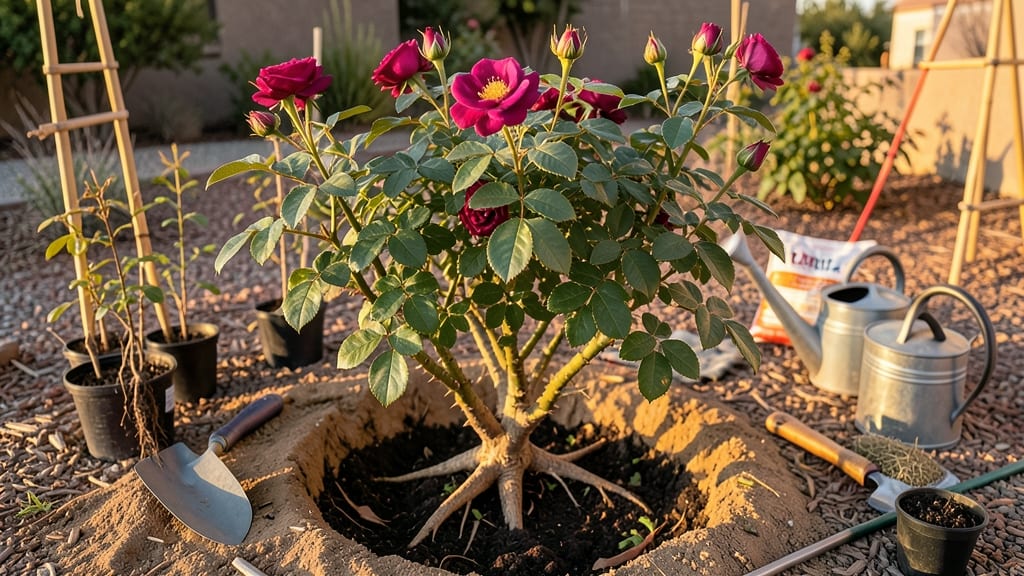
Planting roses in Arizona at the best time to plant roses in Arizona can mean the difference between a thriving 🌹 garden and struggling plants that never recover from the heat. Most gardeners make the mistake of planting in spring, only to watch their roses wilt under the relentless sun.
But Arizona’s cooler months—from November through February—offer the perfect window for establishing strong root systems before the heat kicks in. This is especially true in USDA Zone 9b, where summer temperatures can exceed 100°F.
Whether you're in Phoenix, Tucson, or Flagstaff, timing matters more than you think. I’ll walk you through the exact steps to prepare your soil, choose the right varieties, and keep your roses healthy through Arizona’s unique microclimates.
Let’s get those roses planted the right way—so they bloom beautifully all season long.
You’ll discover why fall planting is your secret weapon, how to protect young roses from desert winds, and which drought-resistant varieties thrive without constant watering. Ready to grow roses that survive—and even flourish—in Arizona’s toughest conditions?
Best months to plant roses in Arizona: avoiding heat stress and dormancy pitfalls
Arizona’s extreme climate demands precise timing when planting roses. The best months to plant roses in Arizona are November through February, when soil temperatures dip below 75°F (24°C) and daytime highs stay mild.
Planting outside this window risks heat stress, which stunts root growth and weakens young plants before summer’s brutal sun arrives.
Many gardeners mistakenly plant roses in spring (March-May), but the 100°F+ temperatures and intense UV radiation create a deadly combination for tender new roots. Even container-grown roses struggle to establish without the cooler conditions of late fall or winter.
The key is to give your roses a 3-4 month head start before Arizona’s peak heat arrives in June.
Here’s how Arizona’s microclimates affect planting windows:
In low-desert areas like Phoenix, aim for November 15 to February 15—this gives roots time to establish before temperatures climb above 90°F (32°C) in April.
The high-desert regions (Flagstaff, Prescott) can plant as early as mid-September thanks to cooler nights, but avoid planting after April 15 when daytime highs exceed 80°F (27°C).
One common mistake is planting bare-root roses in spring because they’re available at nurseries. However, these dormant plants wake up too soon in Arizona’s heat, leading to transplant shock.
The solution? Buy container-grown roses in spring and keep them in pots until fall planting season arrives. This buys you time to harden off plants gradually.
Soil temperature is more critical than air temperature for roses. Use a soil thermometer to confirm readings are below 75°F (24°C) before planting. In low-desert zones, this often means waiting until late November—earlier planting risks root rot from lingering summer heat stored in the soil.
For high-desert areas, soil cools faster, allowing earlier planting.
Another pitfall is dormancy confusion. Some Arizona gardeners assume roses need a cold period to bloom, but most modern hybrid roses (like Knock Out roses) don’t require dormancy. Instead, they need consistent moisture and cool roots to thrive.
Planting in fall or winter ensures roots stay cool while tops enjoy mild temperatures—perfect for establishing a strong framework before summer.
If you must plant in spring (March-April), choose shade-tolerant varieties like ‘Earth Kind’ roses and provide 50% shade cloth for the first 4-6 weeks. Water deeply every 2-3 days at dawn to prevent heat stress.
However, even with these precautions, spring-planted roses often struggle to bloom their first year due to the energy spent surviving extreme heat.
Pro tip: Mulch heavily (3-4 inches of organic mulch) after planting to insulate roots and retain moisture. In Arizona’s low-desert, use straw or wood chips; in high-desert areas, gravel mulch works better to prevent soil compaction.
This simple step can improve survival rates by 40% in Arizona’s challenging climate.
Remember, the goal is to establish roots before the heat. With the right timing, your roses will burst into bloom by next spring—beating the heat instead of wilting under it. 🌹
Step-by-step rose planting guide for Arizona’s climate: soil prep to first watering
Arizona’s desert climate demands careful preparation before planting roses. The key to success lies in amending heavy clay soils with sand and compost to improve drainage while retaining moisture. I’ve found that a 50-50 mix of native soil and organic matter works best for most Arizona gardens.
Start by testing your soil’s pH—roses prefer a slightly acidic range of 6.0 to 6.5. If your soil is alkaline (common in Arizona), add sulfur or peat moss to adjust it gradually over a few weeks.
Choose a sunny, wind-protected spot with at least 6 hours of direct sunlight daily. Desert winds can dry out young roses quickly, so consider planting near a fence or wall for natural windbreak.
Avoid low-lying areas where cold air settles, as even Arizona’s mild winters can cause frost damage to tender new growth. If you’re planting in containers, use a lightweight potting mix with perlite to prevent root rot from poor drainage.
Your Arizona Rose Planting Checklist
- 🌱 Test soil pH (aim for 6.0–6.5)
- ✂️ Amend soil with sand + compost (50/50)
- 🪴 Dig hole twice as wide as root ball
- 💧 Soak roots in water for 1–2 hours
- 🪣 Add mulch (2–3 inches of wood chips)
- ☀️ Water deeply at planting and weekly after
For bare-root roses, soak the roots in water for 1–2 hours before planting to rehydrate them. Gently loosen the roots if they’re circling and position the graft union (visible bump near the base) 2 inches below soil level to prevent it from drying out.
If planting container-grown roses, remove the plant from its pot and tease apart any root-bound roots to encourage outward growth. Arizona’s alkaline soil can stress roots, so a mycorrhizal fungus added to the planting hole can boost root establishment.
After planting, water deeply to eliminate air pockets and encourage root contact with the soil. I recommend 1–2 gallons of water per plant applied slowly over 15–20 minutes. Avoid overhead watering, which can spread disease.
Instead, use a soaker hose or drip irrigation to deliver water directly to the root zone. In Arizona’s intense sun, mulch heavily with 2–3 inches of wood chips or straw to retain moisture and regulate soil temperature. Replenish mulch as it breaks down to maintain its protective layer.
In the first 2–3 weeks, monitor your roses closely for signs of stress like yellowing leaves or wilting. If you notice these, increase watering slightly and check for pests like aphids, which thrive in Arizona’s dry heat.
A neem oil spray applied in the evening can deter pests without harming beneficial insects. Remember, roses planted in late fall may need light frost protection (like a frost cloth) if temperatures dip below 25°F, though this is rare in most of Arizona.
Once your roses are established, adjust your watering schedule to deep soaks every 7–10 days during cooler months and every 5–7 days in summer. The goal is to encourage deep root growth rather than shallow, frequent watering, which promotes weak stems.
With the right preparation, your Arizona roses will reward you with vibrant blooms from spring through fall—proving that even in the desert, roses can thrive with the right timing and care.