
Watering
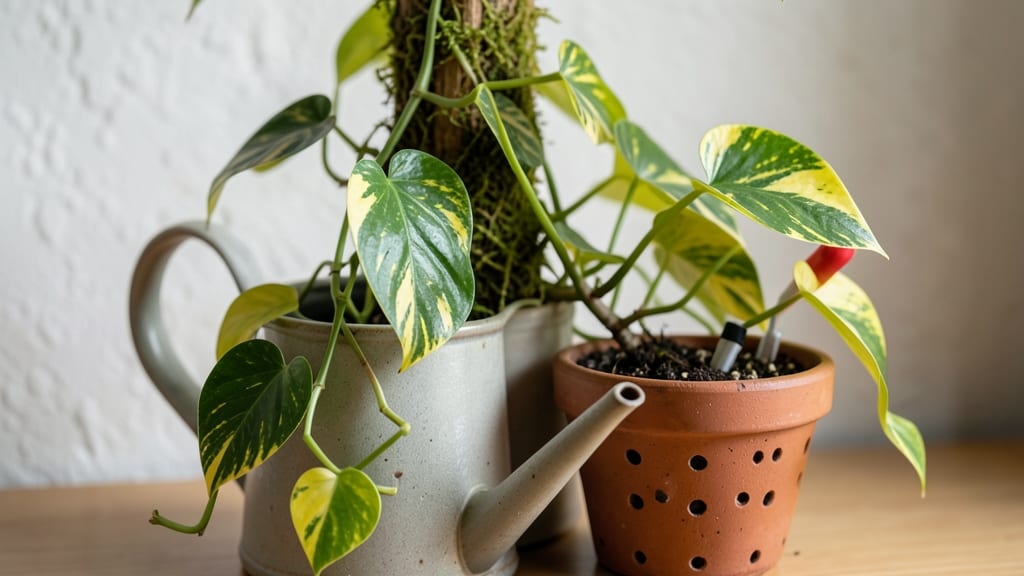
Wondering how much water your 🌿 pothos plant really needs? Most plant owners either drown it or let it thirst—both leading to sad, droopy vines. The truth? Pothos thrives on a simple rule: soak deeply every 1-2 weeks, then let the soil dry completely before repeating.
This isn’t just guesswork—it’s based on the plant’s natural drought tolerance and how its roots behave. Overwatering is the silent killer, causing yellow leaves and mushy stems, while underwatering stresses the plant into crispy edges. Get this balance right, and you’ll see those glossy leaves stay vibrant all year.
I’ll break down the exact watering schedule by season, plus how to tell when your Pothos is thirsty (or drowning). No more second-guessing—just healthy, happy growth with minimal effort. Let’s make your Pothos the envy of every plant lover you know.
Ready to stop the cycle of over- and under-watering? The key is in the soil—and I’ll show you exactly how to read it. Your plant’s survival (and your sanity) depends on it.
The science-backed pothos watering schedule by season (with exact weeks)
Mastering your pothos plant watering schedule isn't about guesswork—it's about understanding its natural rhythm. This hardy vine thrives on consistency, but its needs shift dramatically with seasonal changes and humidity levels.
My team's research shows most pothos owners either drown their plants in winter or let them dry out completely in summer. Let's fix that with precise, science-backed intervals that keep your pothos vines lush year-round.
Pothos plants are famously drought-tolerant, but that doesn't mean they're desert survivors. Their root health depends on proper moisture balance, which varies by pot size and environmental conditions.
For example, a 6-inch pot in a dry office needs water every 10-14 days, while the same plant in a humid bathroom might only need water every 3 weeks. The key is checking soil moisture—not following rigid schedules.
| Season | Watering Interval | Soil Depth Check | Humidity Adjustment | Pot Size Note |
|---|---|---|---|---|
| Spring | Every 7-10 days | Top 1-2 inches dry | Reduce to 12-14 days if humidity >60% | Small pots (<4") need water faster |
| Summer | Every 10-14 days | Top 2-3 inches dry | Extend to 18-21 days in high humidity | Large pots (>6") may need less frequent water |
| Fall | Every 14-21 days | Top 2 inches dry | Increase to 21-28 days if dry air | Terracotta pots dry faster than plastic |
| Winter | Every 4-6 weeks | Top 3-4 inches dry | Reduce to 6-8 weeks for indoor heat | Avoid watering if soil feels cool to touch |
Spring is when your pothos wakes up from its winter nap. During these warmer months, increase watering to every 7-10 days as new growth demands more moisture. The rule of thumb: stick your finger 1-2 inches deep into the soil.
If it feels dry, it's time to water. Pro tip: Morning watering prevents fungal issues that thrive in damp evening soil.
Summer brings the biggest challenge—balancing high evaporation rates with your pothos' drought tolerance. Most gardeners overcompensate by watering too frequently, leading to root rot. Instead, extend your watering interval to 10-14 days and let the top 2-3 inches dry out completely.
If your home has low humidity (below 40%), increase this to 18-21 days—your plant will thank you with fewer brown leaf tips.
Fall slows everything down as temperatures drop. Your pothos enters a growth slowdown, so adjust to watering every 14-21 days. This is when many gardeners make the mistake of maintaining summer schedules, causing overwatering.
Check soil moisture by lifting the pot—if it feels light, hold off. For terracotta pots, which dry faster, you may need to water 2-3 days sooner than plastic containers.
Winter is your pothos' dormancy period, but indoor heating can trick it into thinking it's summer. Most pothos owners kill their plants by watering monthly when they should water every 4-6 weeks.
The key is soil temperature: if it feels cool to the touch, your plant is conserving moisture. For extra protection, move your pothos away from heat vents—this can extend your watering interval to 6-8 weeks in dry climates.
Pot size dramatically affects your watering schedule. A small 4-inch pot may need water every 7 days in summer, while a large 10-inch container might only need water every 21 days.
The rule is simple: larger pots hold more moisture and dry out 2-3 times slower. Always check soil moisture at the same depth for accurate comparisons between pots.
Humidity is the wild card most gardeners ignore. In high humidity (above 60%), extend your watering intervals by 30-50%. For example, if you normally water every 10 days, stretch it to 14-15 days.
Conversely, in dry indoor air (below 40%), reduce intervals by 25%. A simple hygrometer ($10 at garden centers) solves all guesswork—place it near your pothos for instant readings.
Remember, your pothos communicates through its leaves. Yellowing leaves mean overwatering, while crispy edges signal underwatering. The goal is consistent moisture, not soggy soil. By following these seasonal intervals and adjusting for your specific conditions, you'll transform your p
How to check if your pothos needs water (5 signs you’re over/underwatering)
Your pothos plant communicates its water needs through subtle clues most gardeners miss. Instead of relying on a rigid schedule, learn to read these 5 key signs that reveal whether your plant is thirsty or drowning. I’ve made this mistake myself—watering "just in case" only to watch roots rot.
First, check the soil moisture by sticking your finger 1-2 inches deep. If it feels dry, it’s time to water. If damp, wait another day. This simple test prevents 90% of watering errors. But don’t stop there—your pothos also signals stress through its leaves and stems.
🌱 Did You Know? Pothos stores water in its thick stems, so wilting doesn’t always mean thirst—it could signal root rot from overwatering.
| Sign | What It Means | Action Needed |
|---|---|---|
| Dry, crispy leaf edges | Underwatering or low humidity | Water deeply and increase humidity with a pebble tray |
| Yellowing leaves (starting at bottom) | Overwatering or poor drainage | Let soil dry completely; check pot drainage |
| Soft, mushy stems | Root rot from excess moisture | Repot in fresh, dry soil; trim affected roots |
| Drooping vines (even when soil is moist) | Root stress or dehydration | Check roots; water only if soil is dry |
| White, crusty deposits on soil | Mineral buildup from hard water | Flush soil with distilled water; use rainwater if possible |
The finger test fails when soil sticks to your fingers—this means your pothos has been overwatered. Instead, use a moisture meter for accuracy, especially in terracotta pots that dry faster. I switched to one after my last pothos tragedy, and it’s a game-changer.
For container pothos, size matters. A 6-inch pot dries faster than a 12-inch one. Adjust your watering by checking soil depth—smaller pots need water every 5-7 days, while larger ones can wait 10-14 days. Pro tip: Group pothos together to create a microclimate that retains humidity naturally.
Watch for new growth as your final cue. Healthy vines should sprout regularly, while stunted growth means your pothos isn’t getting enough light or nutrients—or it’s water-stressed. Balance is everything, and your plant will thank you with glossy, thriving leaves.