
Plants
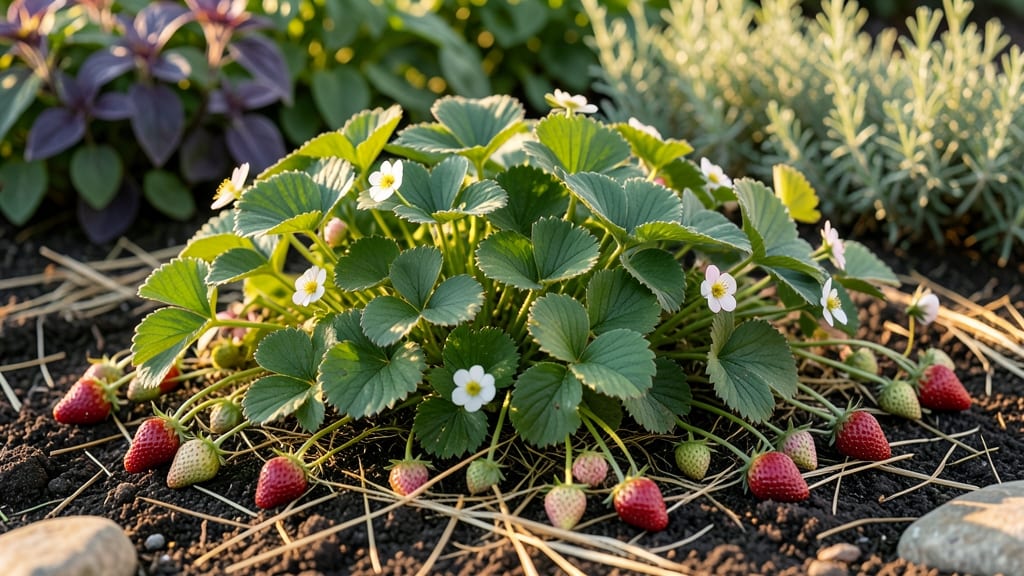
If you’ve ever wondered how tall your 🍓 strawberry plants will grow before deciding where to plant them, you’re not alone—this tiny detail can make a big difference in your garden’s layout.
Most varieties stay surprisingly compact, typically reaching just 6 to 12 inches tall, making them perfect for small spaces or containers.
The key to maximizing your harvest lies in understanding how different strawberry types grow. June-bearing varieties, for example, might sprawl slightly more, while everbearing and day-neutral types often stay shorter and bushier. Knowing these differences helps you plan spacing and support systems before planting.
For gardeners working with limited space, choosing the right variety can save you from dealing with unruly vines. I’ll show you how to pick compact types and manage growth—whether you’re growing in raised beds, hanging baskets, or even windowsill planters.
Let’s break down the height ranges, growth habits, and practical tips to keep your strawberry patch tidy and productive. You’ll discover how to create an efficient, high-yielding garden without sacrificing beauty or space.


Strawberry plant height ranges: compact varieties vs. vining giants explained
Strawberry plants are famously adaptable, but their height can vary dramatically depending on the variety and growing conditions. Most gardeners expect 6–12 inches of growth, but some varieties stretch up to 18 inches or more with proper support.
Understanding these differences helps you choose the perfect plants for your space—whether you're working with a tiny balcony or a sprawling in-ground bed.
The height of your strawberry plants directly impacts your garden's layout. June-bearing varieties, like 'Jewel' or 'Chandler', typically stay on the shorter side (6–10 inches), while everbearing and day-neutral types, such as 'Albion' or 'Seascape', may vine slightly taller (8–12 inches) due to their continuous fruiting habits.
Let’s break down the key differences so you can plan your garden like a pro.
Here’s the game-changer: dwarf varieties like 'Tristar' or 'Mignonette' max out at just 4–8 inches, making them ideal for containers, hanging baskets, or windowsill gardens. These compact plants produce high yields in small spaces, perfect for urban gardeners or those with limited square footage.
Meanwhile, traditional varieties like 'Ozark Beauty' can reach 12–18 inches when given room to sprawl.
🌱
| Variety Type | Height Range | Growth Habit | Best For |
|---|---|---|---|
| June-Bearing | 6–10 inches | Compact, low-vining | In-ground beds, small plots |
| Everbearing | 8–12 inches | Moderate vining | Containers, raised beds, trellises |
| Day-Neutral | 10–14 inches | Sprawling, high-yield | Vertical gardens, large containers |
| Dwarf Varieties | 4–8 inches | Ultra-compact, bushy | Balconies, hanging baskets, windowsills |
| Standard Varieties | 12–18 inches | Aggressive vining | Large gardens, trellis systems |
🌿 Note: Height can vary by 1–2 inches based on sunlight, soil quality, and pruning.
If you’re growing strawberries in containers, height becomes even more critical. Most dwarf varieties thrive in 5–7 gallon pots, while standard types need 10+ gallon containers to accommodate their sprawling roots and vines.
I’ve found that hanging baskets work beautifully for dwarf varieties like 'Mignonette', allowing the plants to trail elegantly while keeping the berries within easy reach.
One common misconception is that taller strawberry plants always produce more berries. In reality, compact varieties often yield just as much—if not more—because they focus their energy on fruit production rather than excessive leaf growth.
For example, 'Albion' (an everbearing variety) stays around 10 inches tall but produces fruit continuously from spring to frost, making it a powerhouse for small spaces.
For gardeners in USDA Zones 5–9, height can also influence winter survival. Shorter varieties like 'Seascape' (8–12 inches) handle cold snaps better because their lower center of gravity reduces wind damage.
In contrast, taller vining types may need mulch or row covers to protect them during harsh winters. Always check your variety’s cold hardiness rating before planting.
🪴
Pruning plays a huge role in controlling height. If your strawberries start to outgrow their space, pinching back the tips of new growth can encourage bushier, more compact plants. I recommend pruning in early spring to remove weak or leggy stems, which helps redirect energy to fruit production.
For everbearing varieties, light pruning after the first harvest can extend the season by promoting new growth.
Pro tip: If you’re growing strawberries in raised beds, space them 12–18 inches apart to give them room to spread without crowding. For containers or vertical gardens, reduce spacing to 8–12 inches and use trellises or stakes to guide the vines upward.
This not only saves space but also makes harvesting easier and reduces the risk of soil-borne diseases from wet foliage.
💡
Let’s address a common follow-up question: Do strawberry plants grow taller each year? The short answer is no. Strawberries are perennial but not woody perennials like shrubs. Their height remains relatively stable from year to year, though productivity may decline after 2–3 years.
That’s why many gardeners replace their plants every few seasons or divide clumps to rejuvenate growth. Renewing your strawberry bed every 3–4 years ensures you get the most out of your space and yield.
Strawberry plant height ranges: compact varieties vs. vining giants explained
Strawberries are famously adaptable, but their height can vary wildly depending on the variety and growing conditions. Most mature strawberry plants top out between 6-12 inches tall, but some everbearing types can stretch up to 18 inches with vigorous runners.
Understanding these differences helps you choose the right plants for your space—whether it's a balcony container or a sprawling in-ground bed.
The three main strawberry types—June-bearing, everbearing, and day-neutral—each have distinct growth habits. June-bearing varieties, like 'Jewel', focus energy on a single harvest but may produce longer runners (up to 12 inches).
Everbearing types, such as 'Seascape', stay more compact (6-10 inches) but yield smaller berries. Day-neutral varieties, like 'Albion', strike a balance with moderate height (8-12 inches) and continuous fruiting.
| Variety Type | Height Range | Runner Length | Best For |
|---|---|---|---|
| June-bearing | 6-12 inches | 12-24 inches | Large berries, in-ground beds |
| Everbearing | 6-10 inches | 6-12 inches | Containers, small spaces |
| Day-neutral | 8-12 inches | 8-16 inches | Continuous harvest, trellising |
For dwarf varieties, like 'Alpine' strawberries, expect plants to stay under 4-8 inches tall—perfect for windowsill gardens or hanging baskets. These tiny powerhouses produce smaller berries but thrive in limited spaces.
Meanwhile, standard varieties like 'Chandler' can reach 12-18 inches, making them ideal for raised beds or ground covers where runners can spread freely.
Height isn’t the only factor—vine length also matters. Some varieties, like 'Seascape', produce short, thick runners (6-12 inches), while others, such as 'Chandler', send out long, thin runners (up to 24 inches).
If you’re growing in containers, opt for everbearing or day-neutral types to minimize sprawl and maximize berry production.
Pruning plays a huge role in controlling height. For June-bearing varieties, remove flower buds in the first year to encourage leafy growth and stronger plants. In subsequent years, prune old leaves after harvest to redirect energy to new growth.
For everbearing types, pinch off early flowers to delay fruiting and promote bushier plants.
Light and soil also influence height. Strawberries grown in full sun (6+ hours daily) tend to stay shorter and bushier, while those in partial shade may become taller and leggy.
Amend your soil with compost to ensure balanced nutrients—over-fertilizing with nitrogen can lead to excessive foliage at the expense of fruit production.