
Plants
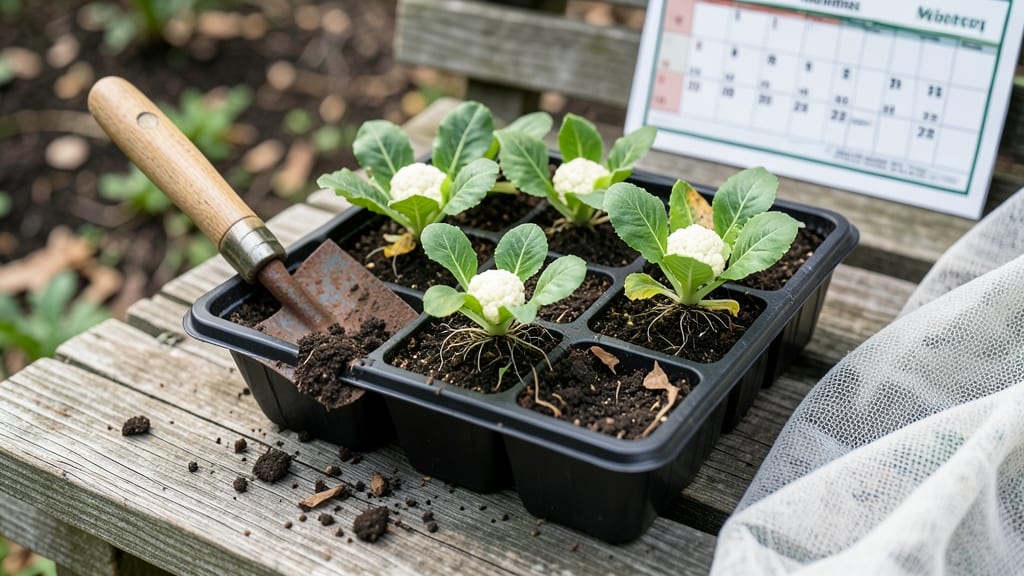
Planting cauliflower in Michigan at the wrong time means watching your hard work turn bitter or bolt into seed before you even harvest 🥬. The key to success lies in a narrow window—too early, and frost zaps your seedlings; too late, and summer heat sends them running to flower.
Here’s how to nail your timing and avoid the two biggest mistakes Michigan gardeners make.
Most gardeners in zones 5b-6b focus on two planting seasons: spring and fall. Spring plantings go in mid-April to early June, while fall crops get their start late July to early August.
But those dates shift depending on where you live—Upper Peninsula growers have a shorter window than those in southern Michigan. The goal? Get seedlings in the ground when soil temps hit 40°F and keep them cool enough to form heads.
Why does this matter? Cauliflower is a diva about temperature—it bolts (goes to seed) faster than you’d expect when stressed by heat or cold.
I’ve lost entire batches to unpredictable Michigan weather, but the right timing and a few simple tricks (like shade cloth for summer plantings) can turn your garden into a cauliflower powerhouse.
Let’s break down the exact deadlines for your region and how to stretch your growing season for bigger harvests.
You’ll also discover which varieties thrive in Michigan’s climate, how to tell when your plants are ready to harvest, and when to pull the plug on fall crops before frost hits. No more guesswork—just a foolproof plan to grow crisp, flavorful cauliflower all season long.
Michigan cauliflower planting deadlines by region (and how to avoid bolting)
Cauliflower thrives in Michigan’s cool-season windows, but timing is critical—plant too early, and frost will kill seedlings; too late, and summer heat will trigger bolting (premature flowering).
Michigan’s USDA Zones 5b-6b mean your exact deadlines depend on whether you’re in the Upper Peninsula, Northern Lower Peninsula, or Southern Michigan. Let’s break it down by region so you can lock in your harvest before the heat sets in.
Bolting happens when cauliflower senses consistent temperatures above 75°F or stress from drought. In Michigan, this typically occurs by mid-June for spring plantings and late August for fall plantings.
To avoid it, aim to harvest heads by late July (spring) or early October (fall)—before the first hard frost or heatwave.
Here’s your region-specific planting timeline based on Michigan’s average last-frost dates and heat thresholds. Use these as your hard deadlines for transplanting seedlings (not direct sowing, which is riskier in Michigan’s climate).
| Region | Last Frost Date | Spring Planting Window | Fall Planting Window | Heat Threshold | Key Risk |
|---|---|---|---|---|---|
| Upper Peninsula (Zone 5b) | May 15–20 | April 20–May 10 (transplant) | July 20–August 5 | 70°F+ for 3+ days | Late frost + short season |
| Northern Lower Peninsula (Zone 6a) | May 1–10 | April 10–May 15 | July 10–August 10 | 72°F+ for 2+ days | Heat arrives early |
| Southern Michigan (Zone 6b) | April 25–May 5 | March 30–April 20 (with row covers) | July 1–August 15 | 75°F+ for 1+ day | Humidity + heat stress |
To calculate your exact planting date, subtract 6–8 weeks from your region’s last-frost date (for starting seeds indoors) and 1–2 weeks for transplanting. For example, if your last frost is May 10, start seeds by March 15 and transplant by April 25.
Use a frost calendar like Michigan State University’s Enviro-weather tool for real-time updates.
For fall plantings, count back 8–10 weeks from your first frost (typically mid-October). This gives cauliflower enough time to mature before winter sets in. In Southern Michigan, you can push it to early September for late harvests, but use row covers to protect against early frosts.
Pro tip: If you’re in Zone 5b (UP), opt for early-maturing varieties (60–70 days to harvest) to avoid bolting. In Zone 6b (Southern MI), you can experiment with late-summer plantings (August) for a fall harvest, but monitor soil temps—cauliflower won’t germinate well above 50°F.
Bolting is your biggest enemy, but shade cloth (30–50%) during heatwaves can buy you extra time. Pair this with consistent watering (1–2 inches per week) and mulch to keep roots cool. Now that you’ve got your deadlines, let’s dive into the step-by-step planting guide tailored for Michigan’s soil and climate.
Step-by-step guide to planting cauliflower in Michigan’s climate
Michigan’s heavy clay and loam soils can make planting cauliflower tricky, but with the right prep, you’ll get a thriving crop. Since direct sowing is unreliable in our cool, unpredictable climate, I always start with transplanting seedlings—here’s how I do it for maximum success.
The key is timing soil prep and transplanting when air temps stay above 50°F but nights remain cool.
Before you even think about seedlings, your soil must be ready. Michigan’s clay-heavy soil drains poorly and compacts easily, which stresses cauliflower roots. I mix in 3-4 inches of compost or well-rotted manure 2-3 weeks before transplanting to improve drainage and fertility.
A soil test is a game-changer—aim for a pH of 6.0-7.0; if yours is off, amend with lime (to raise pH) or sulfur (to lower it).
Now for the transplanting window. Since cauliflower bolts quickly in heat, I schedule transplants for 2-3 weeks before Michigan’s last frost date (typically mid-April in southern Michigan, early May in the UP).
For fall crops, I plant 8-10 weeks before the first frost (late July to early August). Use shade cloth if summer heat sneaks in—it buys you extra time for head formation.
-
1. Harden Off Seedlings
Move seedlings outdoors for 2-3 hours daily, increasing time by 1 hour each day for 1 week. -
2. Prep Planting Holes
Dig holes 12-18 inches apart (24" for large varieties) and 6 inches deep. Add a handful of compost to each hole. -
3. Transplant at the Right Time
Plant when soil temps are 40-50°F and nights stay above 50°F. Southern MI: mid-April; UP: early May. -
4. Bury Deeply
Cover seedlings up to their first true leaves to stabilize stems and encourage root growth. -
5. Mulch Immediately
Apply 2-3 inches of straw or shredded leaves to retain moisture and suppress weeds. -
6. Extend the Season
Use row covers in spring/fall or cold frames to protect from late frosts or summer heat.
After transplanting, water deeply every 2-3 days to keep soil consistently moist—cauliflower hates drying out. I water in the early morning to prevent fungal diseases like downy mildew, which thrives in Michigan’s humid summers.
Fertilize lightly with a balanced 10-10-10 mix 2 weeks after transplanting, then again when heads start forming.
To deter pests like cabbage moths and flea beetles, I plant companion crops like thyme, dill, or onions nearby—their scents mask cauliflower’s aroma. For extra protection, I use floating row covers until flowers appear (but remove them before harvest).
If you’re in the UP, where summers are shorter, opt for early-maturing varieties like ‘Snowball Y Improved’ to avoid bolting.
With these steps, you’ll avoid the two biggest Michigan mistakes: planting too early (frost damage) or too late (bolting). My fall crops often yield the sweetest heads—just be ready to harvest before the first frost hits! 🌿