
Planting
Timing your vegetable garden in California is everything—plant too early, and your 🌱 seedlings might fry in the desert sun; too late, and coastal frosts could ruin your harvest.
The Golden State’s wild climate swings mean your neighbors’ planting schedule might not work for you, even if they’re just a few hours away.
I’ve spent years growing vegetables across California’s microclimates, from the foggy coasts of San Francisco to the scorching valleys of the Central Valley. What works in Zone 7 (like lettuce in winter) fails spectacularly in Zone 10 (where tomatoes thrive year-round).
The key? Knowing your last frost date—and when to ignore it entirely.
In this guide, I’ll break down the exact planting windows for your region, whether you’re in the chilly Sierra foothills or the desert’s heat-loving paradise. No more guesswork—just a roadmap to a garden that produces all season long.
Ready to turn your backyard into a harvest hotspot? Let’s dive into the perfect times to plant, based on where you live—and what you’re growing.
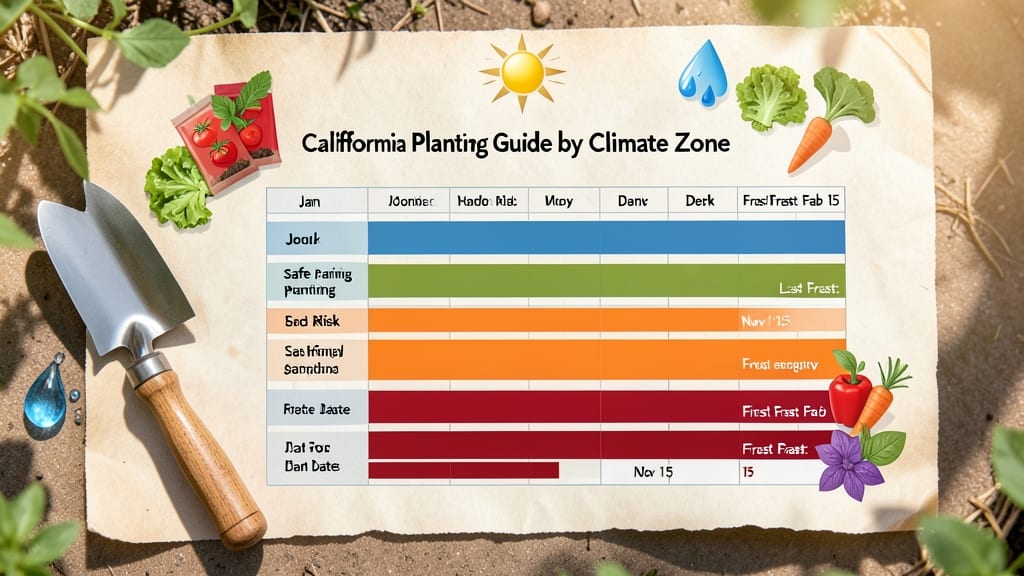
California planting zones: key start dates by coastal, valley, and desert regions
California’s microclimates create a gardener’s paradise—but also a puzzle. Coastal areas stay mild year-round, while inland valleys experience 100°F+ summers, and desert regions can freeze at night. Knowing your frost-free dates and heat tolerance zones is the key to avoiding bolting lettuce or sun-scorched tomatoes.
I’ve broken down the 5 key regions with their optimal planting windows, so you can start seeds or transplant with confidence. Whether you’re in San Francisco’s fog belt or Death Valley’s heat**, these dates will keep your garden thriving year-round.
🌱
In coastal regions, you can plant leafy greens almost year-round, but avoid summer heat for lettuce. The Central Valley offers two perfect growing seasons—spring for cool crops and fall for heat-lovers like tomatoes.
My Sierra foothills garden thrives in short bursts of spring and summer, while desert areas demand quick spring planting before summer scorches the soil.
For high desert gardeners, focus on fast-growing crops like radishes or bush beans. The short growing season means no time for bolting broccoli or slow-starting cabbage. Use row covers to extend your season by 2-3 weeks if frost threatens.
Pro tip: Check your local USDA Plant Hardiness Zone (usually 8-11 in CA) and adjust for microclimates. A south-facing slope in the desert may be 10°F warmer than your neighbor’s yard!
🌡️
Heat-sensitive crops like lettuce and spinach bolt when temperatures hit 75°F. In coastal areas, plant them in shade cloth during summer. Meanwhile, tomatoes and peppers love 80°F+ soil—wait until after your last frost date to transplant them.
My Central Valley garden fails every year when I plant tomatoes too early. The soil stays cool, and the plants rot. Instead, I now wait until mid-April when soil temps hit 65°F consistently. Use a soil thermometer to track progress—it’s a game-changer!
✂️
Remember: Succession planting is your secret weapon. In coastal areas, sow lettuce every 2 weeks from October to March. In the desert, plant bush beans in June for a fall harvest before winter chill sets in. And always mulch heavily in summer to retain moisture.
With these region-specific start dates, you’ll avoid the heartbreak of wilted seedlings and enjoy a garden that produces all year. Happy planting!
Best vegetables for each California season: what to plant when
California’s three distinct growing seasons—fall/winter, spring, and summer—offer opportunities for gardeners to grow fresh produce year-round. The key is matching heat-loving crops with summer months and cool-season vegetables with milder temperatures. Let’s break down what to plant when, tailored to California’s microclimates.
In cooler coastal regions like San Francisco, winter planting (October–March) thrives with leafy greens and root vegetables. Meanwhile, inland valleys such as the Central Valley can extend summer crops into early fall thanks to warmer nights. Understanding these regional differences ensures your garden stays productive all year.
🚨 INSERT SUMMARY-TABLE HERE:
| Season | Vegetable | Planting Time | Microclimate Notes | Succession Tip |
|---|---|---|---|---|
| Fall/Winter | Lettuce, Spinach, Kale | Sept–Nov (coastal), Oct–Dec (valley) | Thrive in 50–65°F soil; protect from frost | Sow every 2–3 weeks for continuous harvest |
| Spring | Tomatoes, Peppers, Cucumbers | Feb–Apr (coastal), Mar–May (valley) | Wait for soil >60°F; use row covers early | Start seedlings indoors 6–8 weeks before last frost |
| Summer | Zucchini, Okra, Sweet Potatoes | May–July (coastal), Apr–Aug (valley) | Heat-tolerant; mulch to retain moisture | Plant fast-growing varieties like bush beans for quick harvests |
| Year-Round (Desert) | Carrots, Beets, Swiss Chard | Oct–Mar (cool season), Apr–Sep (warm season) | Drip irrigation essential; shade cloth in peak summer | Use shade cloth to protect seedlings from intense sun |
For continuous harvests, practice succession planting—sow small batches of fast-growing crops like radishes or bush beans every 2–3 weeks. This keeps your kitchen stocked with fresh produce without overwhelming your space.
In coastal areas, extend the season by planting cold-hardy greens like kale in late summer for fall harvests.
In hotter inland regions, focus on heat-tolerant varieties such as Malabar spinach or yard-long beans during summer. These thrive when other crops wilt. Always check your local frost-free dates—coastal areas like Santa Cruz may have later planting windows than the Central Valley.
Pro tip: Use seasonal markers like blooming California poppies to time your plantings. When they bloom (spring), it’s safe to plant warm-season crops. For fall crops, aim for planting when night temperatures drop below 70°F. With these strategies, your garden will flourish year-round! 🌱