
How To
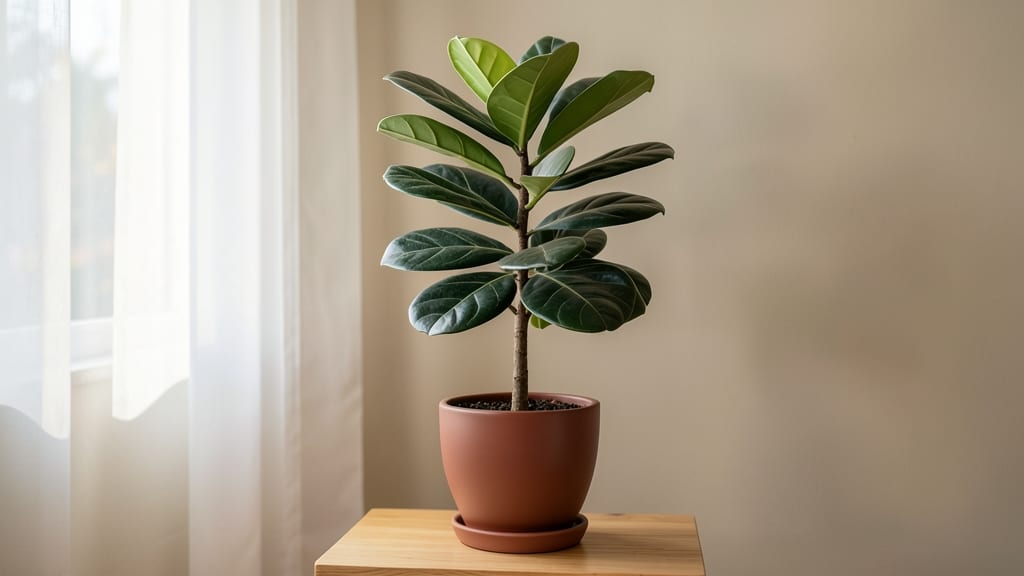
If your rubber plant 🌿 is already stretching toward the ceiling, you’re not alone—many plant parents underestimate just how tall these tropical beauties can grow indoors. The answer depends on your variety, care habits, and a few key tricks most people miss.
Whether you’re dealing with a 6-foot Burgundy or a compact Tineke, understanding growth patterns will help you decide whether to embrace its height or keep it manageable.
Rubber plants (Ficus elastica) are known for their dramatic foliage, but their mature size can vary wildly—from 3 feet in dwarf varieties to towering 10-foot giants in standard types. The key lies in light exposure, pruning techniques, and even the pot you choose.
I’ll break down exactly how to control its growth, so you can enjoy its lush leaves without sacrificing your ceiling space.
What surprises most beginners is how quickly rubber plants grow when given the right conditions. With proper care, yours could reach 2-3 feet in just the first year, doubling in size annually if left unchecked.
The good news? A little strategic pruning can turn a leggy monster into a bushy statement piece. Let’s dive into the science—and the simple steps—to keep your plant thriving at your ideal height.
From choosing the right variety to adjusting your care routine, you’ll learn how to shape your rubber plant’s growth like a pro. Whether you want a topiary-style centerpiece or a floor-filling jungle vibe, this guide covers everything you need to know.
Ready to transform your leafy friend from a space hog into a showstopper?


Average rubber plant height by variety: what to expect indoors
Rubber plants (Ficus elastica) are famous for their dramatic foliage and towering growth—but their mature height varies wildly by variety. Indoors, most rubber plants grow between 3 to 10 feet, but with the right care, some can even reach 12 feet over time.
The key factors influencing height are light exposure, pot size, and pruning habits. Let’s break down what to expect for popular varieties and how to manage their growth.
If you’re choosing a rubber plant for a small apartment, varieties like Burgundy or Tineke stay more compact, while Black Prince or Variegata can become floor-to-ceiling giants. Even within the same variety, a plant in a sunny south-facing window will grow taller than one in a dim corner.
Understanding these differences helps you pick the perfect plant for your space.
Here’s a quick reference for mature heights by variety under average indoor conditions (bright indirect light, 6-inch pot, minimal pruning):
| Variety | Mature Height (Indoors) | Growth Rate (Per Year) | Notes |
|---|---|---|---|
| Burgundy | 6–10 ft | 1–2 ft | Bold deep red leaves; fast-growing in bright light |
| Tineke | 4–8 ft | 1 ft | Variegated pink/white edges; slower growth |
| Black Prince | 8–12 ft | 2–3 ft | Darkest leaves; aggressive grower in ideal conditions |
| Variegata | 5–10 ft | 1.5 ft | Creamy white variegation; needs bright light to maintain pattern |
| White Princess | 4–7 ft | 1 ft | Pure white leaves; slower growth but striking |
The Black Prince variety is the tallest, often reaching 12 feet indoors with optimal care, while Tineke and White Princess stay shorter and more manageable for smaller spaces.
Even within the same variety, a plant in a 12-inch pot will grow taller than one in a 6-inch pot because root restriction slows vertical growth.
For example, my Burgundy rubber plant in a 10-inch pot hit 8 feet in 4 years, while a friend’s in a 6-inch pot maxed out at 5 feet.
Light is another critical factor. Rubber plants thrive in bright indirect light, which encourages faster, taller growth. Place yours near an east- or north-facing window for balanced height.
If your plant is stretching toward a light source (a sign of etiolation), it’s time to move it closer or supplement with a grow light.
I once had a Variegata that shot up 3 feet in 6 months after I moved it to a south-facing window—until it burned its leaves! Always monitor light exposure.
Pruning is your best tool to control height. If your rubber plant is too tall for its space, prune the top 2–3 inches in early spring. The cut stem can be propagated in water or soil to create a new plant.
I prune my Black Prince annually to keep it under 8 feet, and it rewards me with bushier growth and fuller foliage. Just avoid heavy pruning in winter, as the plant enters dormancy and heals slower.
Pot size matters too. Rubber plants are root-bound when their roots circle the pot, which can stunt height. Upgrade to a pot 2–3 inches larger every 2–3 years to encourage vertical growth.
A 14-inch pot can support a 10-foot-tall plant, while a 6-inch pot will keep it under 5 feet. My Tineke grew only 3 feet in its first year in a 6-inch pot but doubled in height when repotted to 10 inches.
Fertilizer also plays a role. During the growing season (spring–summer), feed your rubber plant with a balanced fertilizer (10-10-10) every 4–6 weeks to fuel taller growth. I use half-strength fertilizer to avoid burning roots, and my plants respond with darker leaves and faster vertical growth.
Skip fertilizing in fall and winter, as the plant focuses on root
How to control rubber plant height: pruning and care tips
If your rubber plant (Ficus elastica) is reaching for the ceiling faster than you expected, don’t panic—it’s not out of control! With the right pruning techniques and care adjustments, you can guide its growth to your preferred height.
The key lies in understanding when and how to trim, along with optimizing its environment for balanced development.
Rubber plants naturally grow 6-10 feet tall indoors, but their height is entirely manageable. By pruning at the right nodes and adjusting light, humidity, and fertilizer, you can encourage bushier growth or maintain a more compact stature.
Let’s dive into the step-by-step process to keep your plant at your desired height while keeping it thriving.
🌱 Did You Know?
Rubber plants grow 1-2 feet per year indoors, but their height can be controlled with strategic pruning. The top 6 inches of a stem contains growth hormones—removing this section signals the plant to branch out instead of elongating.
Start by identifying the optimal pruning points on your rubber plant. Look for the leaf nodes, which are the small bumps where leaves and branches emerge. These nodes are where new growth will sprout after pruning.
Use clean, sharp pruning shears to make cuts just above a node at a 45-degree angle to prevent water from pooling on the cut.
For height control, focus on trimming the top 1/3 of the plant during its active growing season (spring and summer). This encourages the plant to redirect energy into lateral branches, creating a fuller, bushier appearance.
If you want to propagate new plants, save the cuttings in water or moist soil—they’ll root easily within a few weeks.
Adjusting your rubber plant’s environment also plays a crucial role in managing its height. Place it in bright, indirect light (like an east-facing window) to slow rapid elongation caused by stretching for sunlight.
Maintain moderate humidity (40-50%) and fertilize lightly with a balanced 10-10-10 fertilizer every 4-6 weeks during spring and summer to support controlled growth.
Finally, rotate your plant quarter-turns every 2-4 weeks to ensure even light exposure on all sides. This prevents lopsided growth and keeps your rubber plant growing uniformly. With consistent care, you’ll have a manageable-height plant that stays lush and vibrant without sacrificing its natural beauty.
With these techniques, your rubber plant will grow at a pace that suits your space—whether you prefer a tall statement plant or a compact centerpiece. Happy pruning! ✂️🌿