
Plants
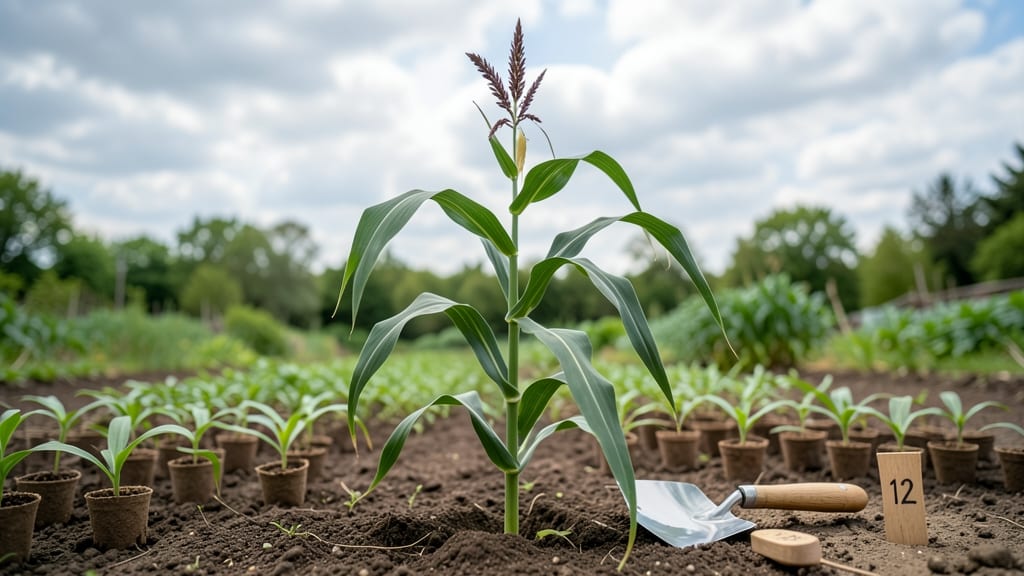
Timing your 🌽 corn planting in Colorado isn’t just about the calendar—it’s about beating frost, warming soil, and matching your elevation to the right variety. Plant too early, and chilly nights will stall germination; too late, and your harvest shrinks before the first frost.
The sweet spot? Mid-April to mid-May for most gardeners, but high-altitude areas near 10,000 feet need to wait until late May or even June.
Why does elevation matter so much? At lower elevations like the Front Range, soil temperatures hit 50°F—the magic number for germination—as early as mid-April. But in the Rocky Mountain foothills, where nights stay cooler, seeds may rot if planted before the ground warms.
Even a 5°F difference can push your planting window weeks later.
You’ll also want to factor in your corn’s maturity days—60 to 120 days to harvest—and Colorado’s 150-day growing season. Early varieties (like ‘Golden Bantam’) work in short-season zones, while slower growers need the warmth of lower elevations.
Let’s break down the exact dates and soil prep tricks to set your corn up for success.
From testing soil moisture to adjusting for wind exposure at high altitudes, these insights will help you avoid common mistakes and maximize your yield. Ready to plant with confidence? Let’s get started.
Colorado corn planting dates by elevation zone: lowlands to mountains
Colorado’s elevation-driven climate means corn planting dates vary dramatically from the Front Range to the Eastern Plains. At lower elevations (2,500–5,000 ft), you can plant as early as mid-April, while high-altitude gardens (7,000+ ft) may wait until late May to avoid frost damage.
The key is aligning your schedule with soil temperatures (corn germinates best at 50°F+) and last-frost dates.
For Denver and surrounding areas (USDA Zones 5-6), aim to plant between April 20 and May 10. This window balances frost risk with warm soil conditions. In Grand Junction and the Western Slope (Zone 6-7), you can push planting to mid-April thanks to earlier warming.
Meanwhile, mountain communities like Boulder County (6,000+ ft) should wait until May 15 to ensure stable temperatures.
Here’s how to match your elevation to the perfect planting window:
Use a soil thermometer to confirm readiness—corn seeds won’t sprout in cold, damp soil. If temperatures dip below 50°F, wait 1–2 weeks or use black plastic mulch to warm the soil faster. For high-altitude gardens, consider row covers to extend the season by 2–3 weeks.
In Denver’s urban gardens, microclimates can shift planting by 10–14 days. South-facing plots warm up faster, while north-facing areas may need to delay until late May.
Always check your local CoCoRaHS station for frost forecasts—Colorado’s rapid temperature swings can turn a safe planting day into a frost trap overnight.
Pro tip: Plant sweet corn varieties with 85–110 days to maturity in lower elevations, but switch to 60–75-day varieties above 7,000 ft. Shorter seasons mean less time for ears to develop fully.
For example, 'Early Sunglow' (72 days) thrives in Boulder County, while 'Peaches and Cream' (90 days) works for Fort Collins.
If you’re unsure about your local frost dates, consult the Colorado State University Extension frost maps or use the Almanac’s Frost Calculator. These tools account for historical data and help you avoid planting too early.
Remember, corn planted in cold soil risks rot or poor germination, so patience pays off in a healthier harvest.
For container growing in Colorado, start seeds indoors 4–6 weeks before your last frost date. Use biodegradable pots to transplant seedlings directly into the garden, minimizing root disturbance. This method extends your planting window by 2–3 weeks compared to direct sowing.
🌽
5 Critical factors that adjust your Colorado corn planting timeline
Colorado’s microclimates mean your corn planting schedule isn’t one-size-fits-all. Five key factors will help you fine-tune your timing: last frost dates, soil temperature, elevation-driven heat units, corn variety maturity, and moisture availability. Each plays a critical role in ensuring your seeds germinate and thrive.
For example, a 50°F soil temperature is the minimum for germination, but high-altitude gardens may need to wait weeks longer than lowland areas to reach this threshold.
Your last frost date is the first benchmark, but Colorado’s dates vary wildly—from April 15 in Denver to June 1 in mountain valleys. Always check your local USDA Plant Hardiness Zone (5-7 for most of Colorado) and add a 2-4 week buffer for safety.
Planting too early in cold soil can stunt growth or invite rot, while waiting too long risks a shorter growing season. For instance, sweet corn needs 75-120 days to mature, so timing is everything.
Next, consider growing degree days (GDD), a measure of heat accumulation. Corn requires 2,000-3,000 GDDs to mature, and Colorado’s elevation zones affect this dramatically. At 5,000 ft, you’ll accumulate GDDs faster than at 8,000 ft, where cooler nights slow growth.
Use a GDD calculator tailored to your elevation—tools like the Colorado State University Extension resource can provide precise local data. This is especially critical for dent corn varieties, which need more heat units than sweet corn.
Check your zone (5-7) and add a 2-4 week buffer. Example: Denver (April 15) vs. Aspen (June 1).
Wait until soil reaches 50°F+ at 4-inch depth. Use a soil thermometer for accuracy.
High elevations (6,000+ ft) need early-maturing varieties (75-day) due to shorter seasons.
Sweet corn: 75-120 days. Dent corn: 100-150 days. Match variety to your frost-free window.
Dry conditions? Use mulch. High winds? Choose shorter varieties or plant near windbreaks.
Don’t overlook moisture availability, especially in Colorado’s arid climates. Corn needs 1-2 inches of water weekly during growth, and drought stress can reduce yields by 50%. In Eastern Plains areas, irrigation is often necessary, while Front Range gardens may rely on natural rainfall.
If your soil feels dry 2 inches below the surface, water deeply before planting. For high-altitude gardens, wind exposure can dry out soil faster—consider planting near windbreaks like shrubs or fences to retain moisture.
Finally, variety selection directly impacts your planting window. Early-maturing varieties (e.g., ‘Ambrosia’ at 75 days) are ideal for high elevations, while late-maturing types (e.g., ‘Golden Bantam’ at 100 days) suit lowland areas with longer growing seasons.
Always check the days to maturity on seed packets and count backward from your first frost date. For example, if frost hits October 15, a 100-day variety planted by July 15 will mature just in time.
By balancing these five factors—frost dates, soil warmth, elevation, variety, and moistureDenver’s urban plots or Western Slope farms. Start with your local Cooperative Extension office for hyper-local advice, and don’t hesitate to experiment with successive plantings if your season allows. 🌽