
Companion Plants
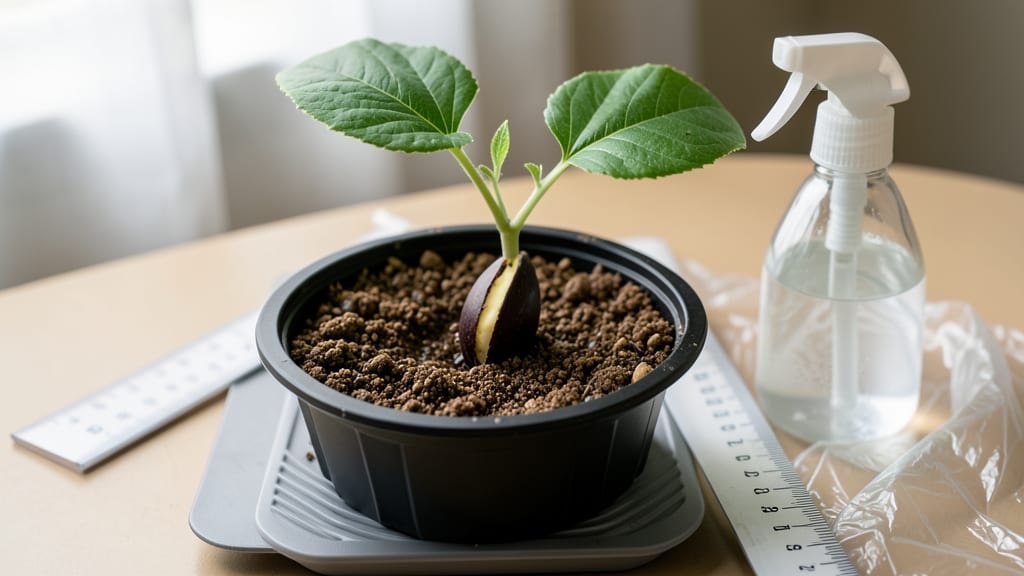
Planting your avocado seed in dirt at the wrong time can turn your patience into frustration—especially when you're eager to see that first 🥑 sprout break through the soil.
The ideal moment isn't just about the calendar; it's about balancing warmth, moisture, and your local climate to give your seed the best shot at life.
Most beginners make the mistake of rushing the process, either planting too early when the soil is still chilly or waiting too long and missing the sweet spot for germination. I’ve learned that spring is your golden window—after the last frost has passed and temperatures consistently stay above 60°F.
But here’s the catch: if you’re in a cooler zone like 6a, you might need to start indoors first to avoid shocking those delicate roots.
What you’ll discover in this guide is how to read your seed’s cues—like root length and leaf development—to know when it’s truly ready for soil.
We’ll also cover the 3-step transition from water to dirt that prevents shock and sets your seedling up for success, whether you’re planting in a pot or directly in the garden.
Ready to turn your kitchen scrap into a thriving 🥑 tree? Let’s dive into the timing, conditions, and pro tips that’ll have your avocado seed not just surviving, but thriving in its new home.
Best time of year to plant avocado seeds in soil
Timing is everything when planting your avocado seed in soil. Unlike many plants, avocado seeds thrive best when transplanted during warm, humid conditions. The ideal window is late spring to early summer, after the last frost date in your region.
For most of the U.S., this translates to May through July, when soil temperatures consistently stay above 60°F (15°C).
Avocado seeds are tropical plants, so they hate cold soil. Planting too early—before the ground warms—can cause root rot or even kill your seedling before it sprouts. Conversely, waiting too long in hot summer months risks exposing delicate roots to heat stress or drought. Balance is key!
Your USDA hardiness zone plays a huge role. In zones 8-11 (warm climates), you can plant outdoors year-round, but spring is still best for new seeds. In cooler zones (like zone 7 or below), wait until after Memorial Day to avoid frost damage.
If you're starting indoors, you can plant your seed anytime year-round in a well-draining pot. But for outdoor planting, align with your local last frost date. Use this simple rule: Wait until nighttime temperatures stay above 55°F (13°C) consistently.
Daylight matters too! Avocado seeds need longer daylight hours (12+ hours) to germinate efficiently. This is why spring and summer are perfect—nature’s extended sunlight gives your seed the energy boost it needs to sprout faster.
Pro tip: Check your local weather forecast for a 5-day warm stretch before planting. This ensures your seedling won’t face sudden temperature drops right after transplanting. A heatwave? Wait a week—your seedling will thank you!
Humidity is another critical factor. Avocado seeds love 60-70% humidity. In dry climates, plant in shaded spots or use a humidity dome until roots establish. If your area is naturally humid (like Florida or Hawaii), you’re golden—just plant and let nature do the work!
Remember, your avocado seed’s first 2-3 weeks in soil are the most vulnerable. Choose a protected location (like a nursery bed or large pot) to shield it from wind, pests, and extreme sun during this critical phase.
For container growing, plant anytime—just ensure your pot has drainage holes and you’re using a light, airy potting mix. Containers warm up faster than garden soil, so they’re a great option if you’re in a cooler zone.
Signs your avocado seed is ready for soil (not too soon, not too late)
Your avocado seed has been patiently growing in water, but how do you know when it's truly ready to transition to soil? The key is watching for three critical signs: root development, stem thickness, and leaf health.
When your seedling shows these indicators, it means its root system is strong enough to support growth in dirt, and its leaves are ready to photosynthesize under sunlight.
First, check the root length. Healthy avocado seedlings should develop 3-6 inches of roots before transplanting. If roots are shorter than 2 inches, they may not anchor well in soil, leading to toppling.
Longer roots (over 6 inches) can signal readiness too, but avoid waiting too long—roots can become root-bound if left in water for months.
Next, examine the stem thickness. A ready seedling will have a pencil-thick stem (about ½ inch in diameter) with a slight woody texture. Thin, bendy stems aren’t strong enough to support the plant’s weight in soil. Gently press the stem—if it snaps easily, it’s not ready yet.
Planting too early can suffocate roots, while waiting too long risks overgrown roots that struggle in soil. Avoid these pitfalls:
- Ignoring root length: Roots under 2 inches = weak anchor.
- Skipping soil prep: Compacted or cold soil = root rot risk.
- Transplant shock: Moving too fast from water to dirt.
Pro Tip: If your seedling has yellow leaves or mushy roots, it’s not ready—return it to water for 1-2 more weeks.
Finally, observe the leaves. Your seedling should have 2-3 sets of mature leaves (not just the first tiny sprout). Healthy leaves are deep green, glossy, and firm to the touch. Yellowing or curling leaves mean the seedling isn’t absorbing nutrients efficiently—delay planting until leaves recover.
Don’t rush the process! If your seedling meets these criteria but it’s still winter in your area, start it indoors under grow lights until soil warms. The goal is to transplant when your seedling is physically ready and the environment is climate-ready—typically late spring for most regions.
Once you’ve confirmed readiness, transition your seedling to soil using a well-draining mix (like cactus/succulent blend) and keep it in bright, indirect light for the first week. This gradual shift prevents shock and sets your avocado seedling up for long-term success.