
Plants
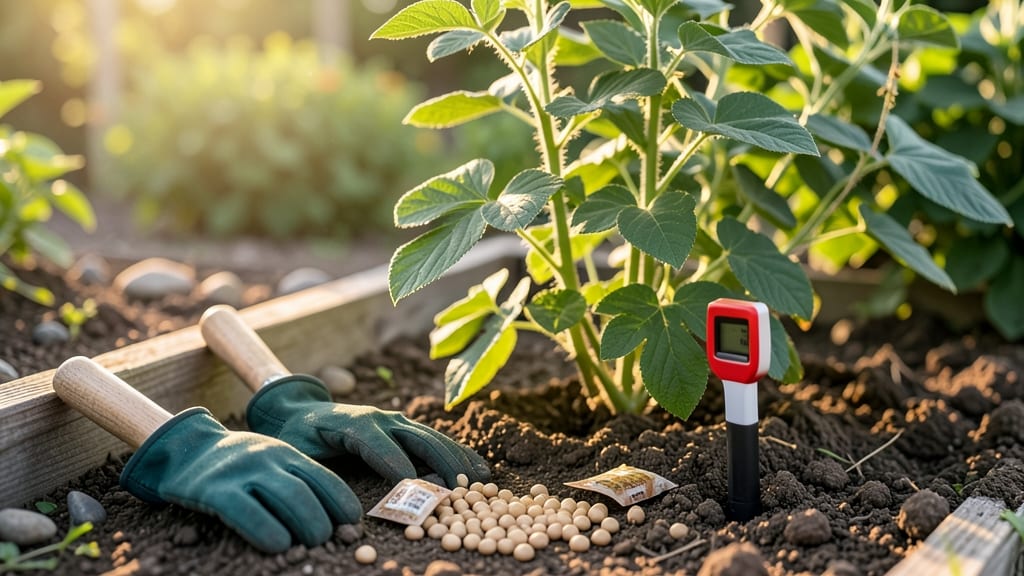
Planting soybeans in Alabama at the wrong time could mean the difference between a thriving harvest and wasted effort. With the state's 7b-8b climate, timing is everything—too early risks frost damage, while planting too late cuts your growing season short.
Most gardeners in Alabama aim to plant soybeans between April and June, when soil temperatures consistently stay above 60°F. This window ensures strong germination and avoids the late-spring frost that can still sneak in before the last frost date around March 15.
But here's the catch: your exact planting date depends on the soybean variety you choose and whether you're growing for home use or larger-scale production. I'll break down the best strategies for Alabama's unique growing conditions, so you can plant with confidence and maximize your yield.
Ready to get started? Let's dive into the science-backed timeline that will help your soybeans 🌱 thrive from seed to harvest.
Optimal soybean planting dates in Alabama (heat zones 7b-8a) for maximum yield
Alabama’s Heat Zones 7b-8a create a unique window for soybean cultivation, where timing directly impacts yield. Unlike northern states, you avoid early frost risks but must balance soil warmth and humidity levels to prevent heat stress.
The ideal planting window spans April through June, with adjustments based on your county’s microclimate and soybean maturity group.
For North Alabama (Zone 7b), aim for mid-April to early May when soil temperatures consistently reach 60°F+. In South Alabama (Zone 8a), you can start as early as late March, but avoid planting before March 15 to prevent cold snaps.
The last frost date (March 15) acts as your baseline—plant at least 2 weeks after this date to ensure seed viability.
| Planting Window | Soil Temp Requirement | Best Variety Groups | Harvest Window |
|---|---|---|---|
| Mid-April to Early May | 60°F+ (consistent) | Group V-VI (short-season) | Late August to Early October |
| Late April to Early June | 65°F+ (optimal) | Group VI-VII (medium-season) | Early September to Mid-October |
| Early May to Mid-June | 70°F+ (high heat tolerance) | Group VIII-IX (long-season) | Mid-September to November |
🌱 Alabama Soybean Planting & Harvest Guide
The Alabama Agricultural Extension recommends using heat unit models to fine-tune dates. For example, Group V soybeans (70-day maturity) should be planted by April 30 in North Alabama to avoid late-season heat stress.
Meanwhile, Group VIII varieties (110+ days) thrive when planted in early May for a November harvest before first frost.
For home gardeners, focus on Group VI-VII varieties like 'Braxton' or 'Dare', which balance yield and adaptability. These mature in 90-100 days, aligning perfectly with Alabama’s 215-day frost-free period. Plant in early May for a September-October harvest when pods are plump and seeds firm.
Soil preparation is critical—aim for pH 6.0-6.5 and well-draining soil to prevent waterlogging. Test your soil 2-3 weeks before planting and amend with compost or aged manure to boost organic matter. Southern Alabama’s clay-heavy soils benefit from raised beds or sand amendments to improve aeration.
Monitor weather forecasts for unexpected cold snaps, especially in North Alabama. The National Weather Service’s 7-day outlook helps adjust planting dates. For example, if a 40°F dip is forecasted in early May, delay planting by 1-2 weeks to protect young seedlings.
After planting, maintain 1 inch of water weekly (or 25mm) during dry spells. Soybeans are drought-tolerant once established but need consistent moisture for flowering and pod set. Use drip irrigation to avoid wetting foliage, reducing fungal risks like Phytophthora.
For large-scale farmers, consider staggered planting—sow 20% of seeds in early May and the remainder in mid-May to extend harvest windows. This strategy mitigates heat stress and pest pressure, common in Alabama’s humid summers.
Finally, mark your planting dates on a calendar and track days to maturity from seedling emergence. Alabama’s long growing season rewards precise timing—plant too early, and you risk frost damage; too late, and yields suffer from heat stress.
Aim for a balanced approach tailored to your county’s microclimate. 🌿
How to adjust planting dates for Alabama’s microclimates and soybean variety types
Alabama’s diverse microclimates mean your soybean planting dates should vary depending on whether you're in North Alabama (Zone 7b) or South Alabama (Zone 8a). Even within these zones, elevation and local frost patterns create microclimates that can shift ideal planting windows by 1-3 weeks.
For example, higher elevations in Madison County may need later plantings than Mobile County due to cooler nights.
Your soybean variety’s maturity group is the single most important factor in determining planting dates. Short-season varieties (Group V) need early planting to avoid heat stress, while long-season varieties (Group VIII-IX) can handle later starts.
Alabama A&M’s heat unit models recommend using 3,000-4,000 growing degree days (GDD) as your baseline for most varieties, but this varies by county.
- Group V (Short-Season): Plant March 20-April 15 in South Alabama; April 1-20 in North Alabama. These varieties (e.g., 'Braxton') mature in 90-100 days and need early starts to avoid summer heat.
- Group VI-VII (Medium-Season): Ideal window is April 15-May 10 statewide. Popular choices like 'AGS 533' thrive with this timing, aligning with 60-70°F soil temps.
- Group VIII-IX (Long-Season): Delay until May 1-15 in South Alabama; May 15-30 in North Alabama. Varieties like 'AGS 560' need 110+ days to mature.
- Heat Unit Rule: Use Alabama A&M’s GDD calculator to adjust dates. For example, Montgomery (Zone 8a) can plant 2 weeks earlier than Huntsville (Zone 7b) for the same variety.
- Late Planting Penalty: Planting Group VI after May 15 reduces yield by 10-15% due to shorter daylight in late summer.
To fine-tune your planting date, check Alabama Extension’s heat unit maps for your county. For instance, Birmingham (Zone 7b) typically has 3,200 GDD by August 1, while Dothan (Zone 8a) accumulates 3,800 GDD by the same date.
This means you can safely plant long-season varieties 2 weeks later in South Alabama without yield loss.
For home gardeners, I recommend starting with Group VII varieties like 'AGS 533', as they offer flexibility. Plant them between April 20-May 5 in most of Alabama.
If you’re in a cooler microclimate (e.g., DeKalb County), err on the earlier side of this window to ensure maturity before the first frost in mid-November.
Pro tip: Use a soil thermometer to confirm temperatures are above 60°F before planting. In Alabama’s humid climate, warm soil speeds germination and reduces disease risk. If your soil is cooler than expected, wait 5-7 days—rushing planting in 55°F soil can lead to poor stands and uneven growth.
Remember, late planting is riskier than early planting in Alabama’s climate. Even if your variety can handle heat, shorter daylight in late summer limits pod development.
For maximum yield, align your planting date with your county’s historical frost-free period and variety maturity—this combo is your ticket to a bountiful soybean harvest 🌱🌿.