
Plants
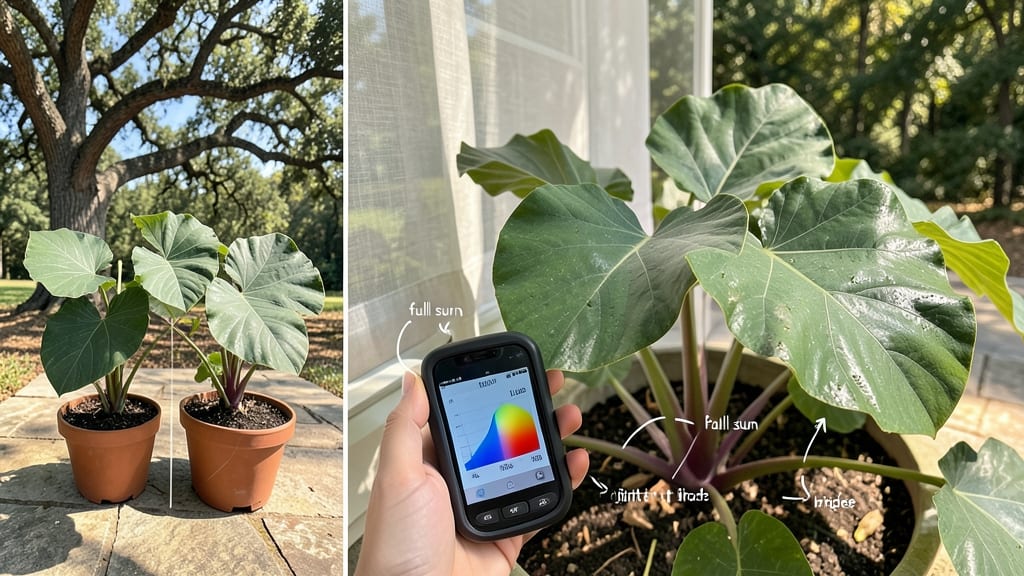
Ideal light requirements for elephant ear plants: bright indirect sunlight explained
Elephant ear plants (Colocasia) thrive in bright indirect sunlight, mimicking their native tropical understory habitats. These plants need 4-6 hours of filtered light daily, but direct afternoon sun can scorch their tender leaves.
Think of it as a gentle dappled light—like what you’d find under a canopy of taller trees in a forest.
The key is balancing morning sun exposure with afternoon shade. Morning sunlight provides the energy they need without the intensity that causes leaf burn. If you’re planting outdoors, position them where they’ll receive east-facing sunlight or west-facing light with afternoon shade.
For containers, place them near a window that gets bright but diffused light.
In temperate climates, adjust their light exposure seasonally. During summer, they may need more shade to prevent leaf scorch, while in cooler months, they can tolerate slightly more direct light to boost growth.
Always monitor their leaves for signs of stress—this is your best indicator of whether they’re getting just the right amount.
🌿
| Light Condition | Ideal Duration | Best For | Signs of Correct Light |
|---|---|---|---|
| Bright Indirect Light | 4-6 hours daily | Outdoor gardens, east-facing windows | Vibrant foliage, no yellowing |
| Morning Sun + Afternoon Shade | 3-4 hours direct sun | Containers, patios, balconies | Strong stems, glossy leaves |
| Low Light (Indoor) | 2-3 hours indirect light | North-facing rooms, offices | Slower growth, paler leaves |
| Full Sun (Avoid) | 6+ hours direct sun | Hot, dry climates | Brown patches, crispy edges |
If you’re growing elephant ears in containers, their light needs are slightly more flexible because you can move them easily. Place them near a south- or east-facing window during winter when light is weaker, but shift them to a shadier spot in summer.
A simple trick is to rotate your containers every few weeks to ensure even growth—this helps prevent them from leaning toward the light source.
For those in hot, dry climates, like the southwestern U.S., elephant ears may need even more protection from direct sun. Use lattice screens or sheer fabric to filter sunlight while still allowing airflow.
This mimics the dappled light they’d receive under taller plants in their natural habitat. In these areas, afternoon shade is non-negotiable—even just a few hours of intense afternoon sun can cause irreversible damage.
In cooler climates, such as the Pacific Northwest or New England, you can push the boundaries slightly. These regions often have softer sunlight, so elephant ears can tolerate more direct light without scorching.
However, always start with partial shade and gradually acclimate them to more sun if they seem to be thriving. Watch for leaf color changes—this is your plant’s way of communicating its needs.
One common mistake is assuming that more light is always better. While elephant ears need plenty of brightness, they’re not sun-worshippers like succulents or cacti. Over time, too much direct sun will cause their leaves to yellow, brown, or develop crispy edges.
On the flip side, too little light leads to leggy growth, pale foliage, and weak stems. The goal is to strike that sweet spot where their leaves stay vibrant, glossy, and upright.
🌱
To test whether your elephant ear plant is getting the right amount of light, perform a simple leaf inspection. Healthy leaves should be deep green, slightly glossy, and firm to the touch. If you notice yellowing between the veins, it’s a sign of too much sun.
Conversely, if the leaves are small, pale, and spaced far apart, your plant is likely craving more light. Adjust their position gradually—never move them from deep shade to full sun overnight, as this can cause shock and stress.
For indoor growers, grow lights can be a lifesaver if natural light is lacking. Use a full-spectrum LED grow light placed 12-18 inches above the plant for 12-14 hours per day.
This mimics the bright indirect light they’d get outdoors. Just be sure to keep the light on a timer to maintain a consistent routine—elephant ears thrive on predictability.
Signs your elephant ear plant isn’t getting enough (or too much) light
Your elephant ear plant (Colocasia) may look stunning in catalogs, but when its light needs aren’t met, it sends out clear distress signals. Too little light causes pale, weak leaves, while too much sun leads to scorched edges and crispy foliage.
Learning to read these signs helps you adjust care before permanent damage occurs.
Start by checking the leaf color—healthy elephant ears boast deep, vibrant hues. If leaves turn yellow or brown, it’s often a light-related issue. Stunted growth or leggy stems also signal insufficient light, while white or bleached patches mean too much direct sun.
These visual cues are your first warning system.
🌱 Key Takeaway: How Much Light Does an Elephant Ear Plant Need?
Pro Tip: Rotate containers weekly for even light exposure. Use sheer curtains to diffuse intense sunlight.
If your plant’s leaves develop brown, crispy edges, it’s suffering from sunburn. This often happens when moved from shade to full sun too quickly. Move it to partial shade immediately and monitor for improvement within 1-2 weeks.
For indoor plants, ensure they’re placed 2-3 feet from an east-facing window.
On the flip side, pale or yellowing leaves indicate low light stress. These leaves often feel thinner and weaker than healthy foliage. To fix this, gradually increase light exposure over 5-7 days—avoid sudden changes to prevent shock.
Consider using a grow light for 12-14 hours daily if natural light is insufficient.
Watch for stretched stems or small leaves, another red flag for insufficient light. This etiolation occurs when the plant reaches for light. Trim back leggy stems to encourage bushier growth and place the plant in a sunnier spot.
For container gardens, group plants together to create a micro-climate with better light distribution.
Remember, elephant ears thrive in partial shade—they’re tropical plants that mimic dappled forest light. With the right adjustments, you’ll see richer colors and stronger growth within weeks. Pay attention to these signs, and your plant will reward you with lush, dramatic foliage all season long! 🌿